18 Small Apartment Bedroom Ideas That Make Every Inch Count
A small apartment bedroom has to do a lot with very little space. The bed takes up most of the floor, but there still needs to be room for clothes, books, lighting, maybe a desk, and all the everyday things that tend to collect around a bedside table.
The trick is to think beyond floor space.
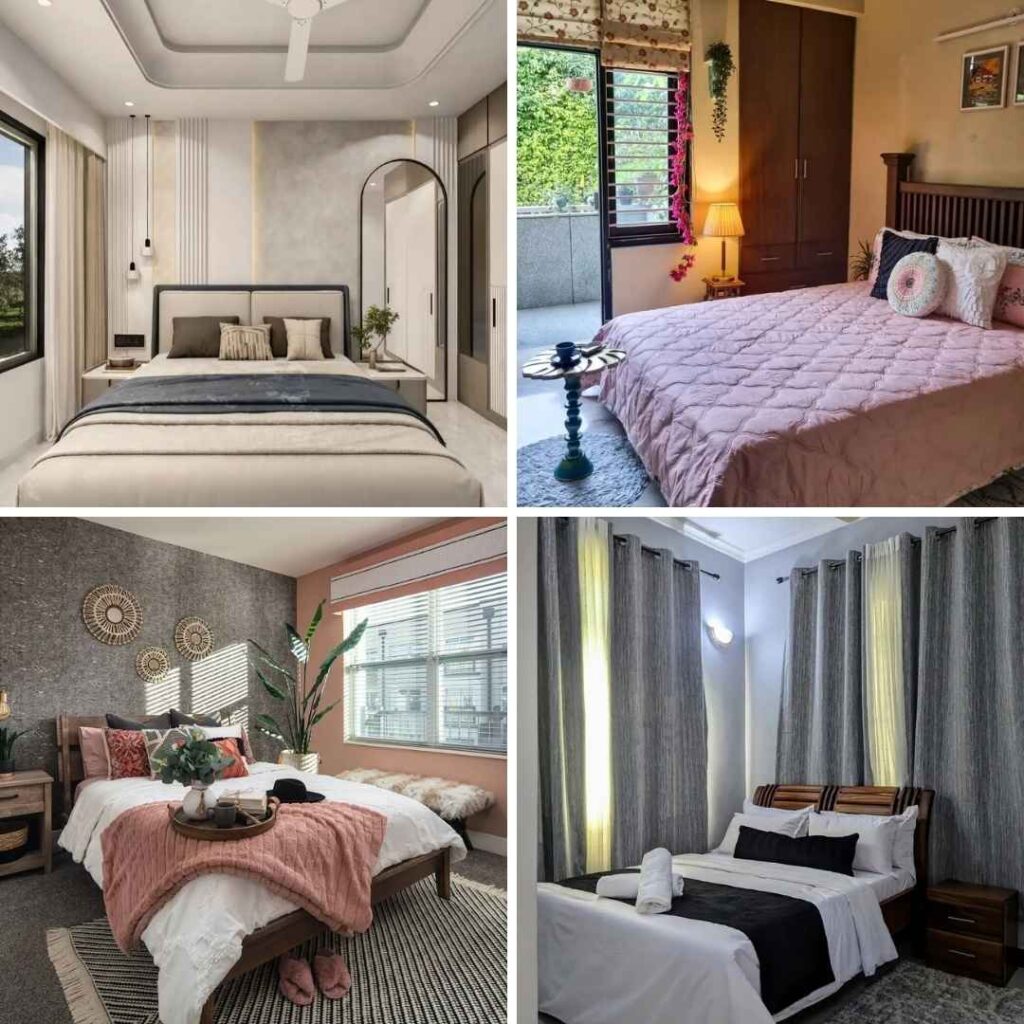
Walls can hold storage. The area beneath a bed can become a useful closet. A narrow corner can accommodate a desk, while a mirror can make a tight room feel more open. Even something as simple as moving a light off the nightstand can give you back a few inches of usable surface.
1. Navy Accent Wall for a Cozy, Layered Look
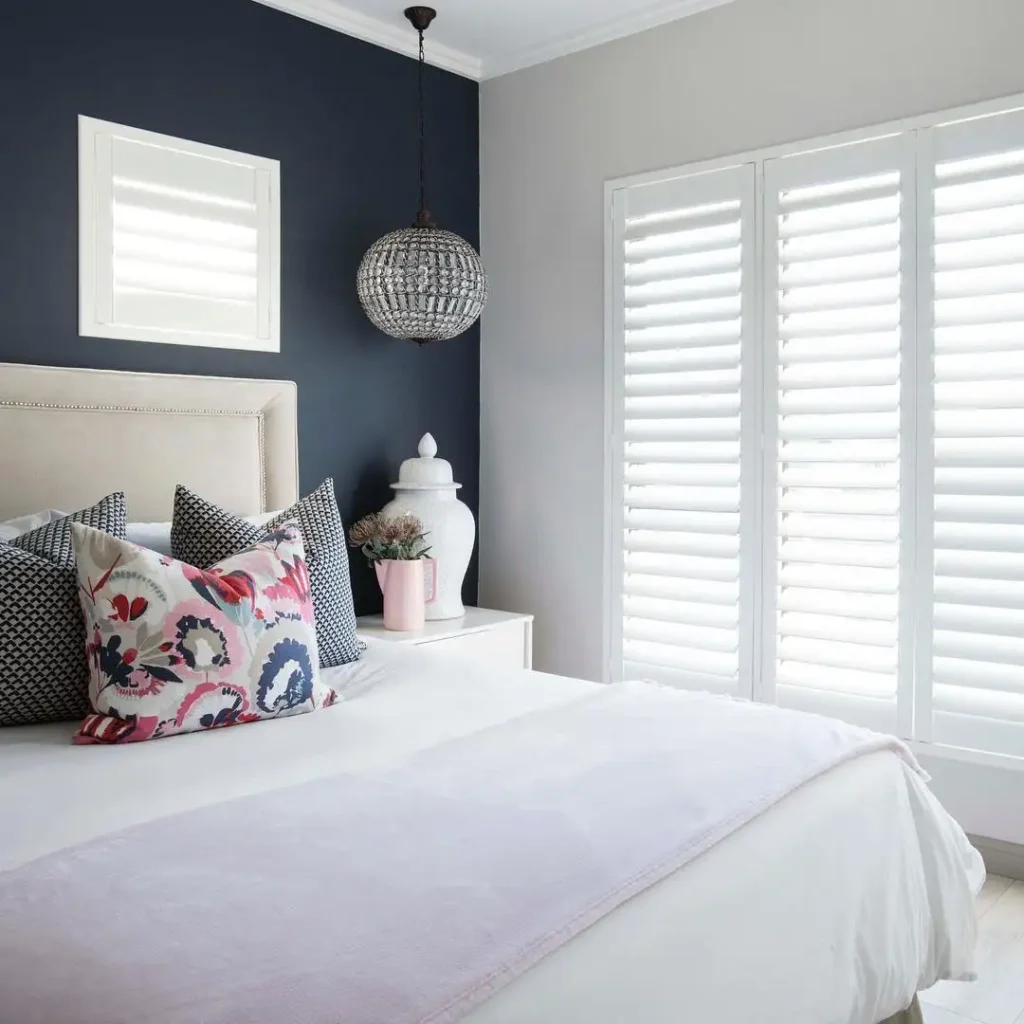
A dark accent wall can actually work in a small bedroom when the rest of the room stays light. This navy backdrop gives the bed a strong focal point, while the cream headboard, pale bedding, and white shutters stop the color from making the space feel closed in.
The bedside pendant is another smart choice. Because the light hangs from above, the small nightstand isn’t taken over by a lamp. There’s still enough room for the things you reach for before bed.
Navy also doesn’t have to stay confined to the wall. A cushion, throw, or small piece of artwork in a similar shade can quietly tie the room together without turning it into a themed space.
A good balance for this look:
- Keep three walls in a warm white or pale gray.
- Use navy on the wall behind the bed.
- Pair dark paint with cream or ivory upholstery.
- Choose a pendant with an adjustable or directional light.
- Use simple window coverings that let you control daylight.
2. Indian Bungalow Style With Plenty of Warmth
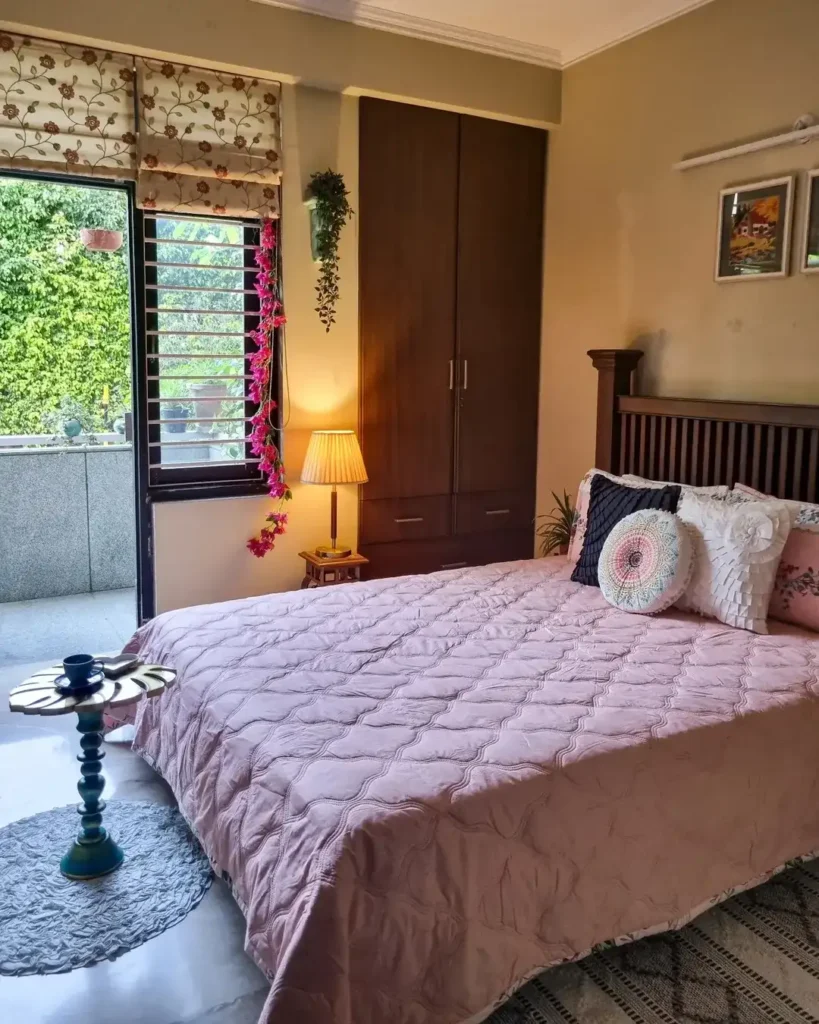
Small bedrooms can have plenty of personality. This one leans into an Indian bungalow-inspired feel with dark wood, floral window treatments, trailing greenery, and a soft blush quilt.
The tall wardrobe is especially useful in a compact room. Rather than spreading storage across several low cabinets, it makes use of the wall’s vertical height. That leaves more floor visible around the bed.
There’s also a nice sense of restraint here. The furniture has character, but the walkway remains open. If your bedroom connects directly to a balcony or another room, that clear route becomes even more important.
Dark wood works particularly well when balanced with lighter fabrics. A pale quilt or upholstered headboard keeps the furniture from becoming visually heavy.
3. A Black-and-White Bedroom With Hotel Appeal
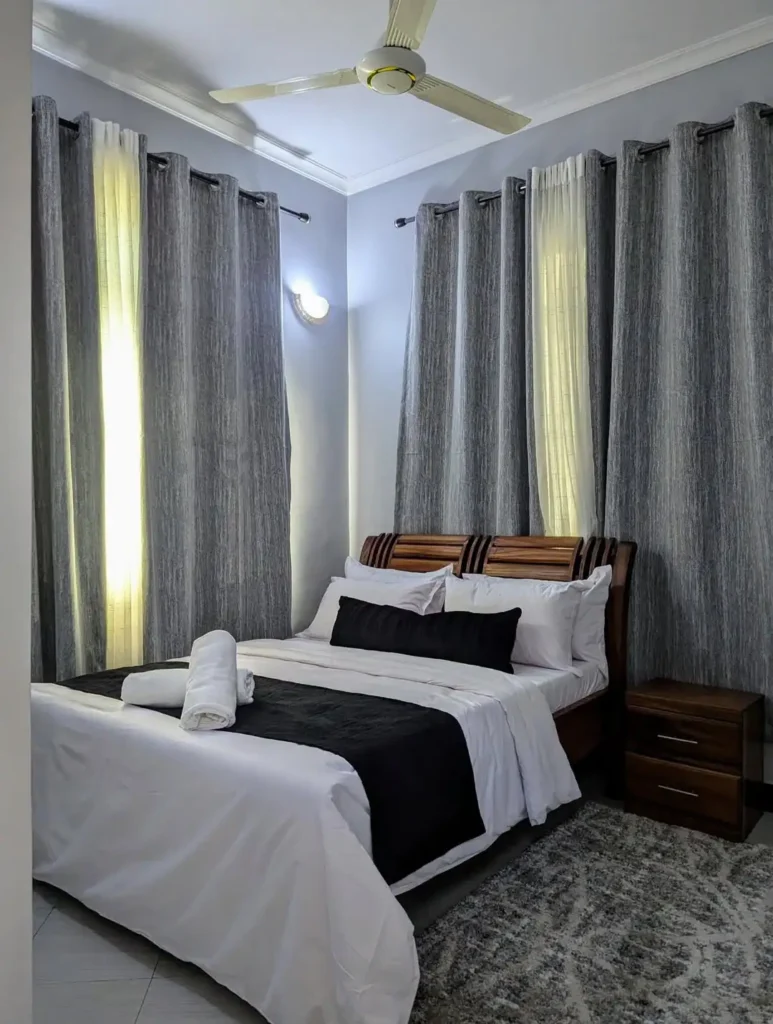
There’s something naturally tidy about a black-and-white bedroom. In a small space, that simplicity can be useful because fewer competing colors make the room easier for the eye to read.
Here, white bedding reflects the available light while black appears mainly through the runner and accent cushion. Gray curtains soften the contrast and add height because they’re installed close to the ceiling.
You don’t need a lot of decorative pieces to get this look. A good rug, crisp bedding, and one or two darker accents can be enough.
If the room is particularly narrow, choose a rug that extends slightly beyond the bed rather than one that stops exactly at its edges. That small change makes the sleeping area feel more intentional.
4. Let a Patterned Floor Carry the Room
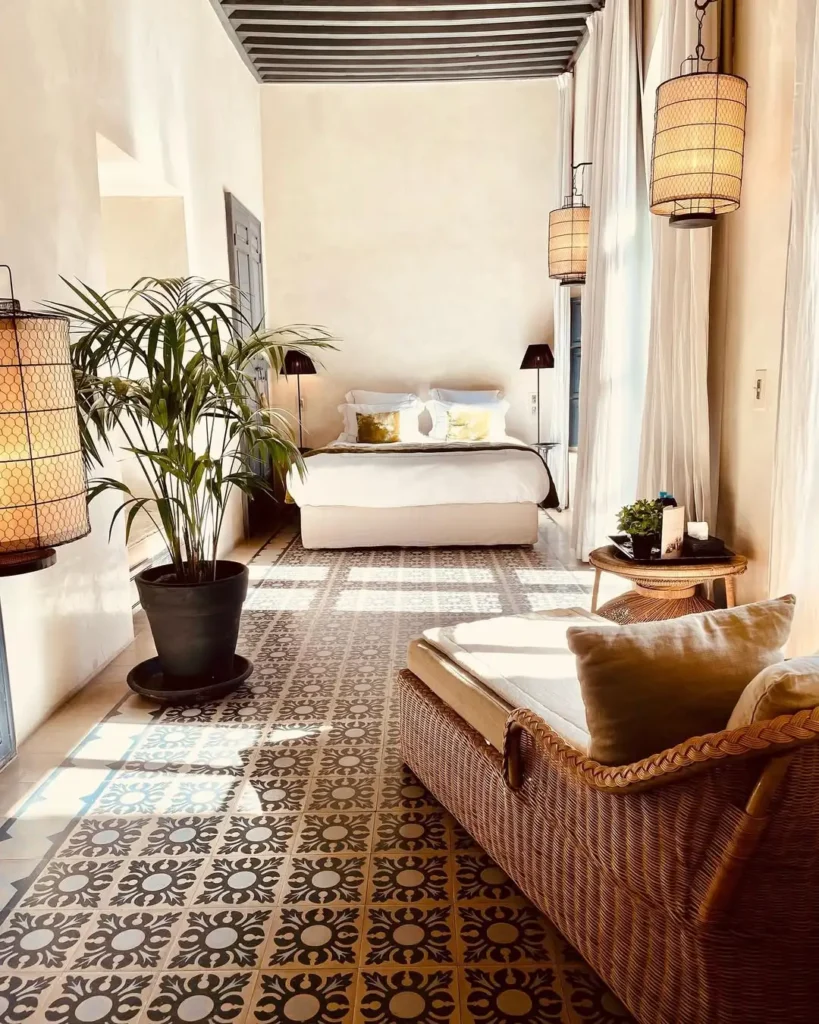
A decorative floor can save you from needing lots of wall decoration. In this Mediterranean-style bedroom, patterned tiles bring plenty of character while the walls and furniture remain relatively calm.
The long shape of the room is used well too. Instead of filling the entire space with bedroom furniture, the bed occupies one end and a small seating area takes advantage of the remaining length.
Wicker, warm plaster tones, woven pendant lights, and plants keep the room relaxed. None of these pieces needs to be especially large.
For a narrow apartment bedroom, this is a useful lesson: when the floor already provides visual interest, keep the furniture simple and let the architecture do some of the decorating.
5. Blush Boho Layers Without the Clutter
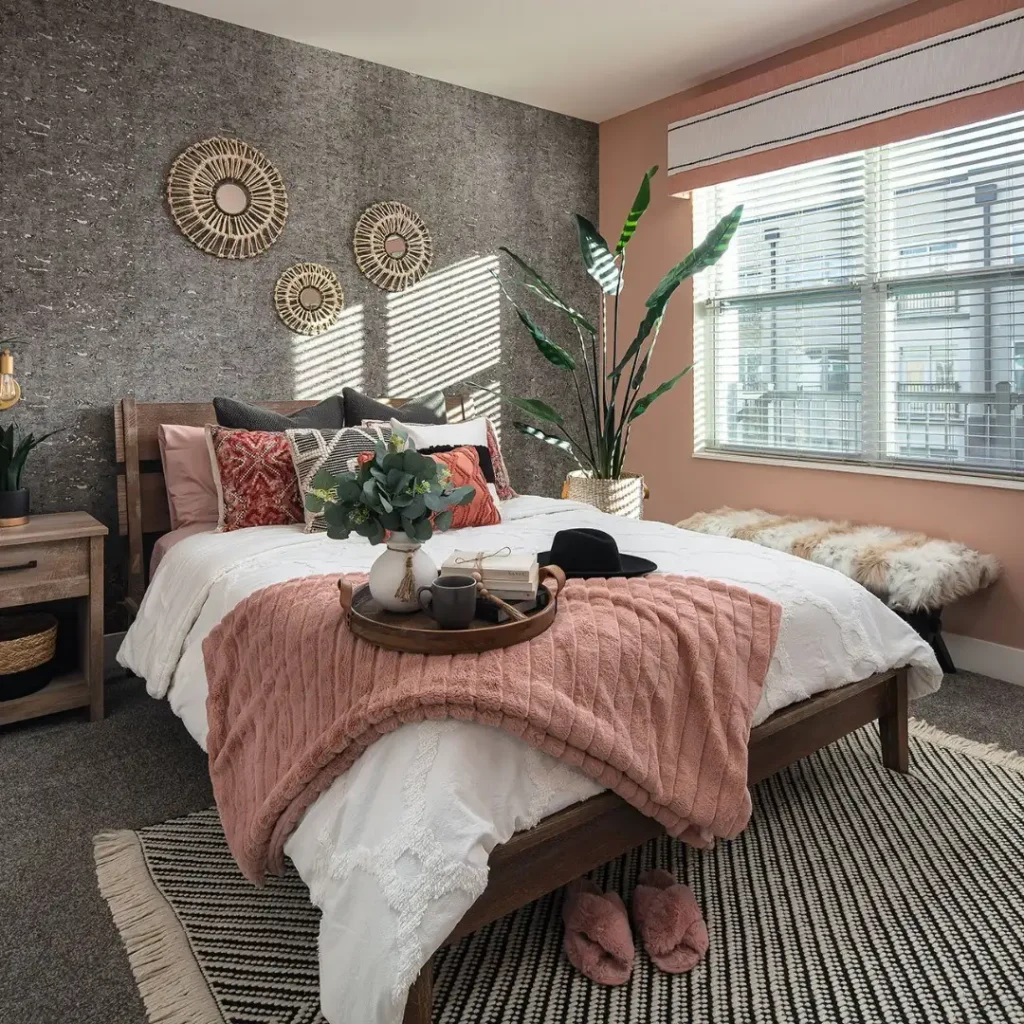
Boho bedrooms can quickly become overwhelming in a small apartment. This one works because the colors remain controlled. Blush, cream, charcoal, and warm brown appear repeatedly, while the variety comes mostly from texture.
The woven elements, natural wood, soft bedding, and striped rug give the room character without requiring a huge collection of accessories.
That balance is worth copying even if boho isn’t your style. In a small room, several textures in the same color family often look better than several unrelated patterns.
A single tall plant is also enough to bring some greenery into the space. You don’t need a collection of pots scattered across the floor.
6. Build a Workspace Into the Bedroom
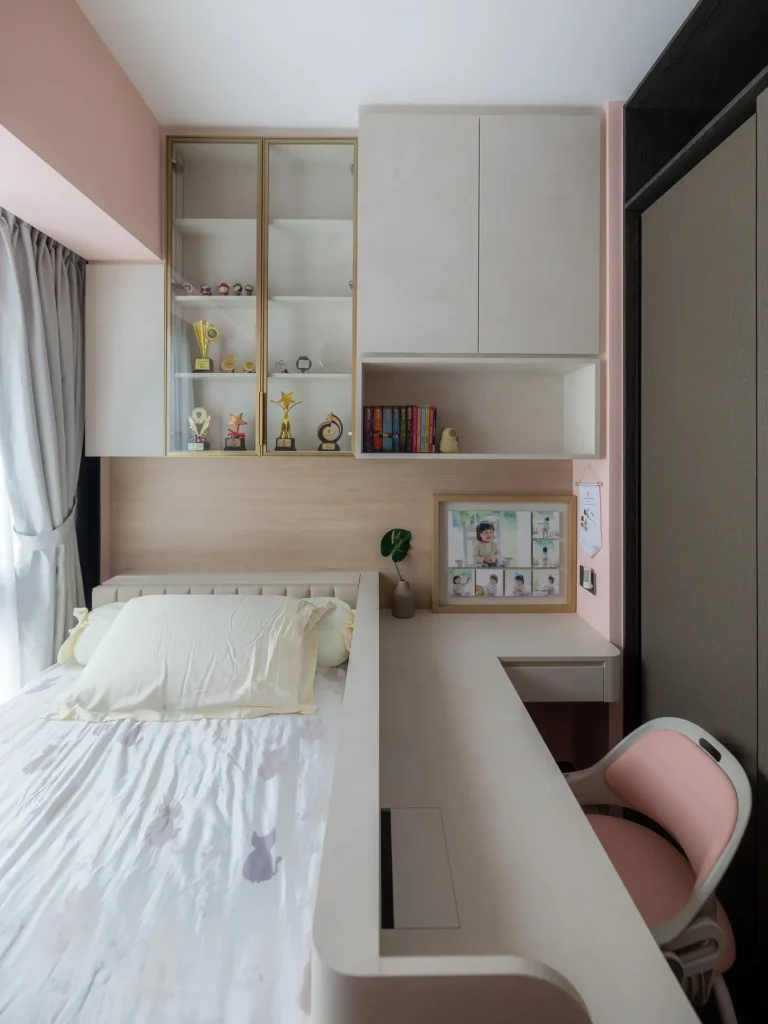
When a small apartment doesn’t have a separate office, the bedroom often has to take on that role. A fitted desk beside the bed can make use of a narrow section of wall that might otherwise go to waste.
The cabinetry above it is what makes the arrangement especially practical. Closed cupboards hide the everyday mess, while open shelving gives books and personal items somewhere to live.
Before choosing a desk, think about the chair rather than just the desktop. You’ll need enough room to pull the chair out, sit comfortably, and move past it when you’re finished working.
For a permanent built-in, include cable access during installation. It’s a small detail, but having charging cables disappear neatly through the desk makes the whole area feel much more considered.
7. Let the Bed Handle the Storage
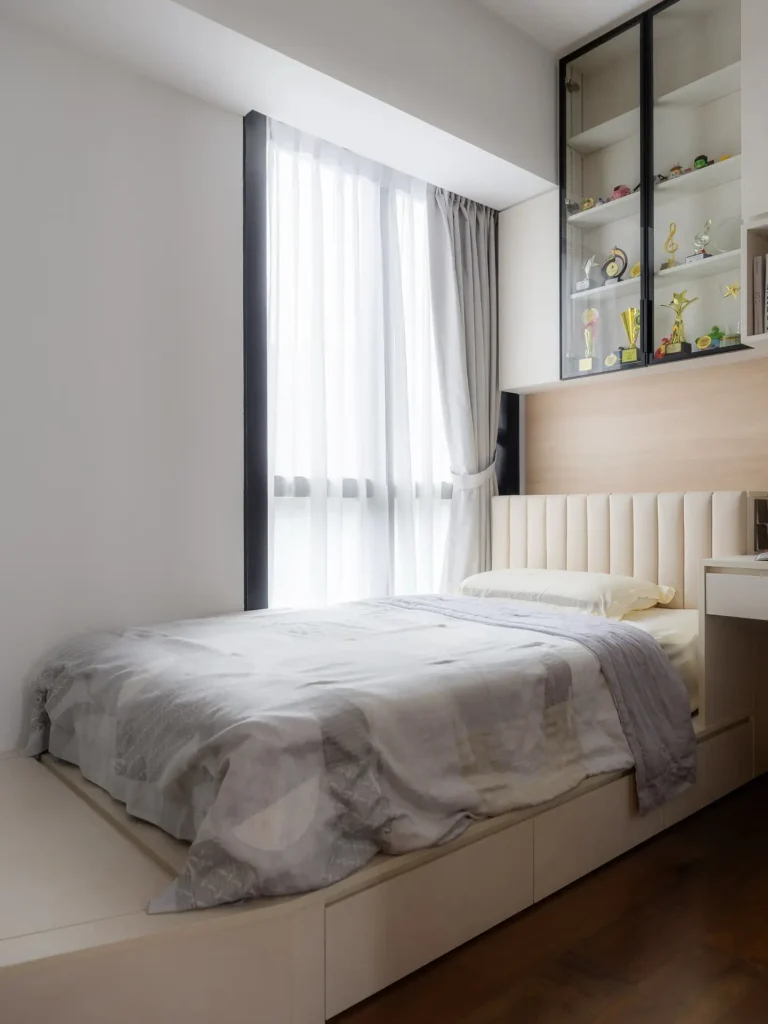
The space beneath a bed is often one of the largest unused storage areas in a bedroom.
A platform bed with deep drawers turns that hidden space into a place for spare bedding, shoes, seasonal clothing, or luggage. In this design, the pale finish also keeps the substantial bed frame from visually weighing down the room.
There’s an important practical point here: check how the drawers open before buying. A drawer needs enough clearance to slide out fully, and a bedside table or thick rug can easily get in the way.
Recessed handles are useful in especially tight rooms because they don’t stick out into the walkway.
8. Make One Wall Do Almost Everything
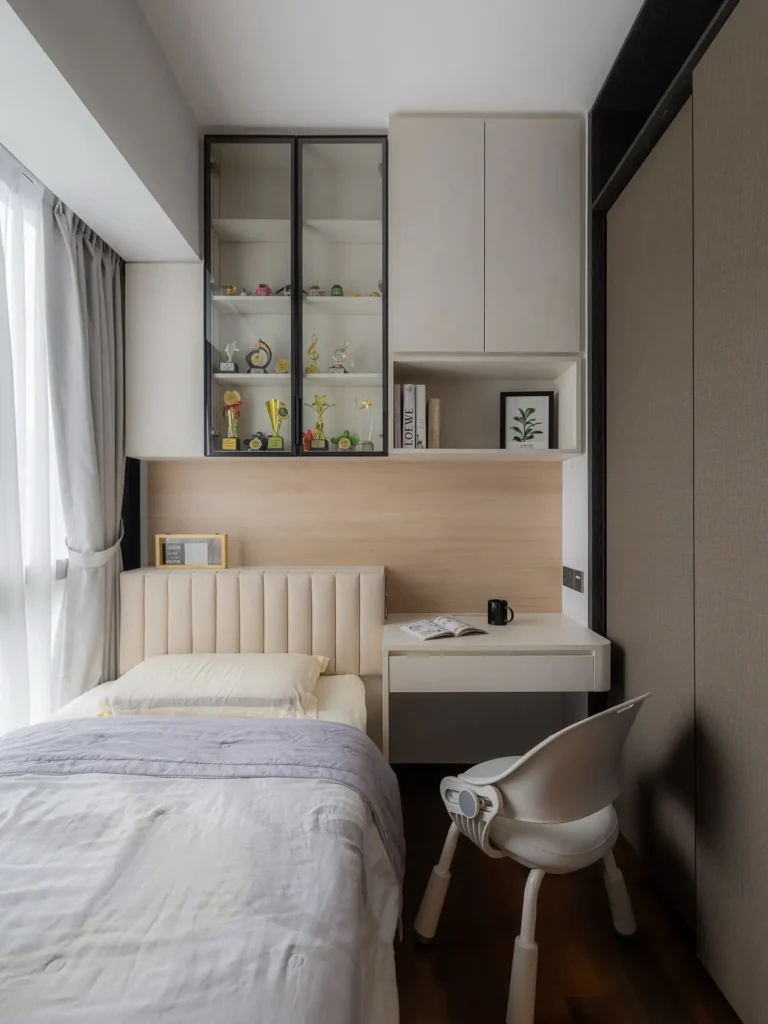
If your bedroom needs a wardrobe, desk, bookshelves, display space, and bedside storage, putting everything into one built-in wall can be much cleaner than scattering furniture throughout the room.
This design combines closed cabinetry with open shelves, a desk, overhead storage, and a built-in headboard. The result is a single visual zone rather than a collection of separate pieces.
The key is planning the storage around real belongings. Upper cabinets are ideal for luggage and seasonal items, while everyday clothes and books should stay within easy reach.
A built-in wall doesn’t have to be completely closed either. One or two open niches can break up a large expanse of cabinetry and give the room somewhere to display artwork or a favorite object.
9. Use an Arched Mirror in an Awkward Corner
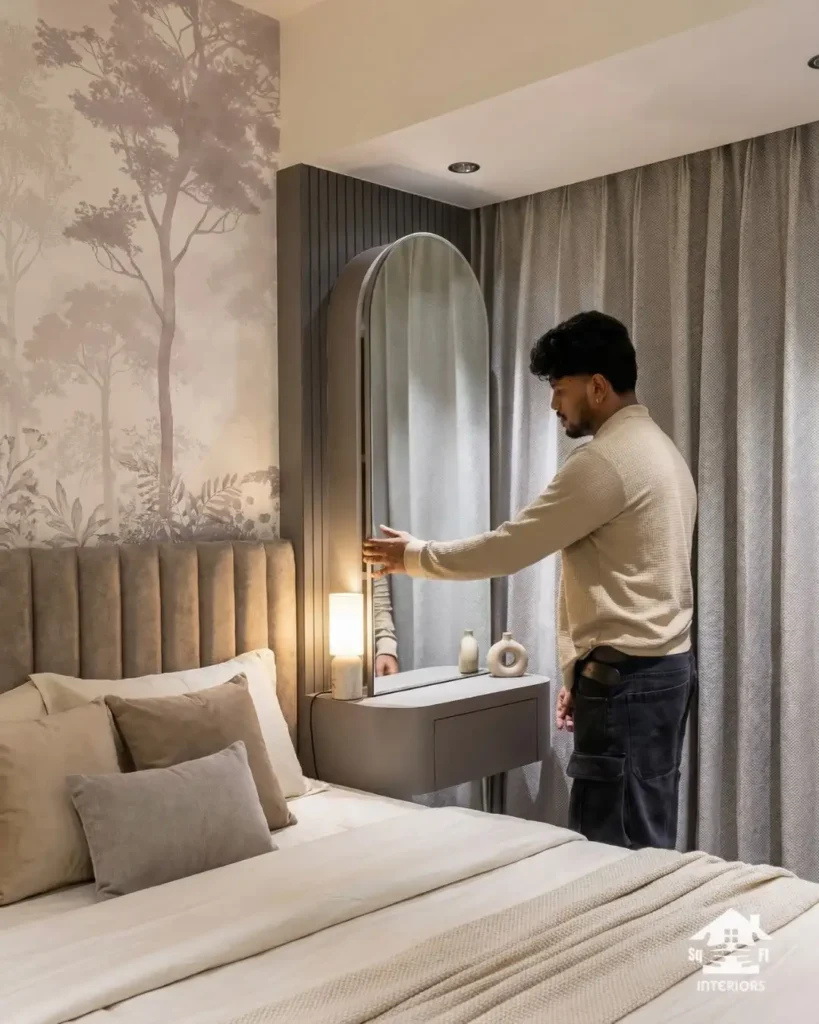
A small dressing area can fit into surprisingly little space when the furniture is kept narrow.
The arched mirror in this bedroom adds height and a softer shape against the vertical wall panels. Beneath it, a floating drawer provides storage without taking up floor space.
This is particularly useful beside a bed where a full vanity would be too deep. Mounting the drawer above the floor also makes cleaning easier and keeps the corner visually open.
Lighting deserves attention here. A mirror is much more useful when the light around it is even rather than coming from one harsh overhead source.
10. Put the Desk Under the Window
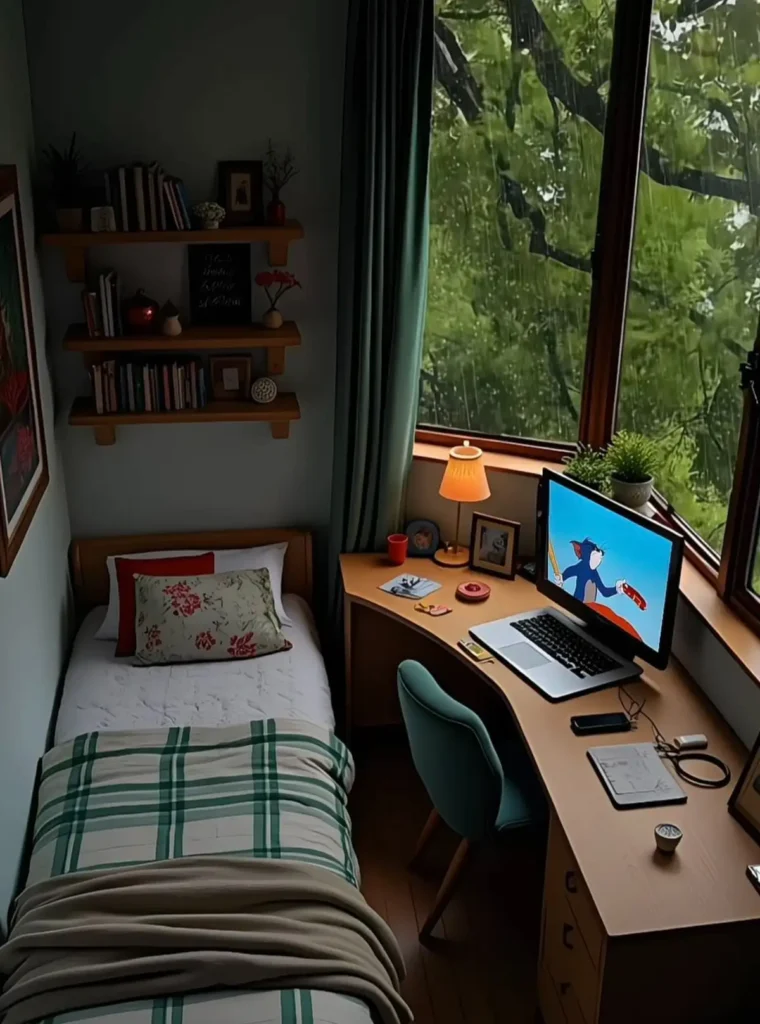
The space beneath a bedroom window is often overlooked. A shallow desk can turn it into a comfortable workspace while keeping the rest of the walls available for the bed and storage.
Natural daylight is a major advantage, particularly if you work from home. The only issue is glare. Position your monitor so the window isn’t directly reflected in the screen, and consider a curtain or blind that lets you soften the light when necessary.
Floating shelves above the bed provide another place for books and small objects without reducing floor space.
The green tones in this room also work nicely with the view outside, making the workspace feel connected to the window rather than squeezed into an unused corner.
11. Use Glass to Separate a Studio Bedroom
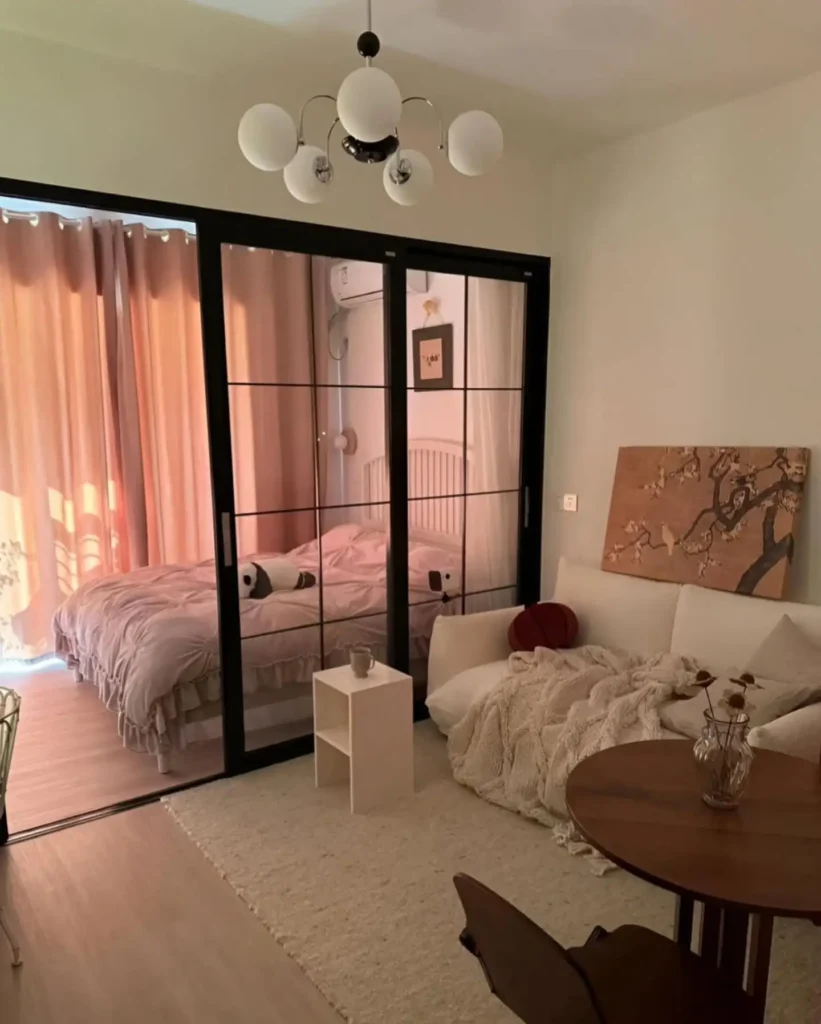
A studio apartment doesn’t always need a solid wall between the bed and living area.
A black-framed glass partition creates a distinct sleeping zone while allowing daylight to pass through the apartment. Curtains can be drawn when privacy is needed, then opened during the day to restore the sense of openness.
For an especially compact studio, sliding panels make more sense than a conventional hinged door because they don’t require additional swing space.
Clear glass isn’t your only option. Reeded or frosted glass provides more privacy while still allowing light into the bedroom.
12. Warm Wood Built-Ins for a Narrow Room
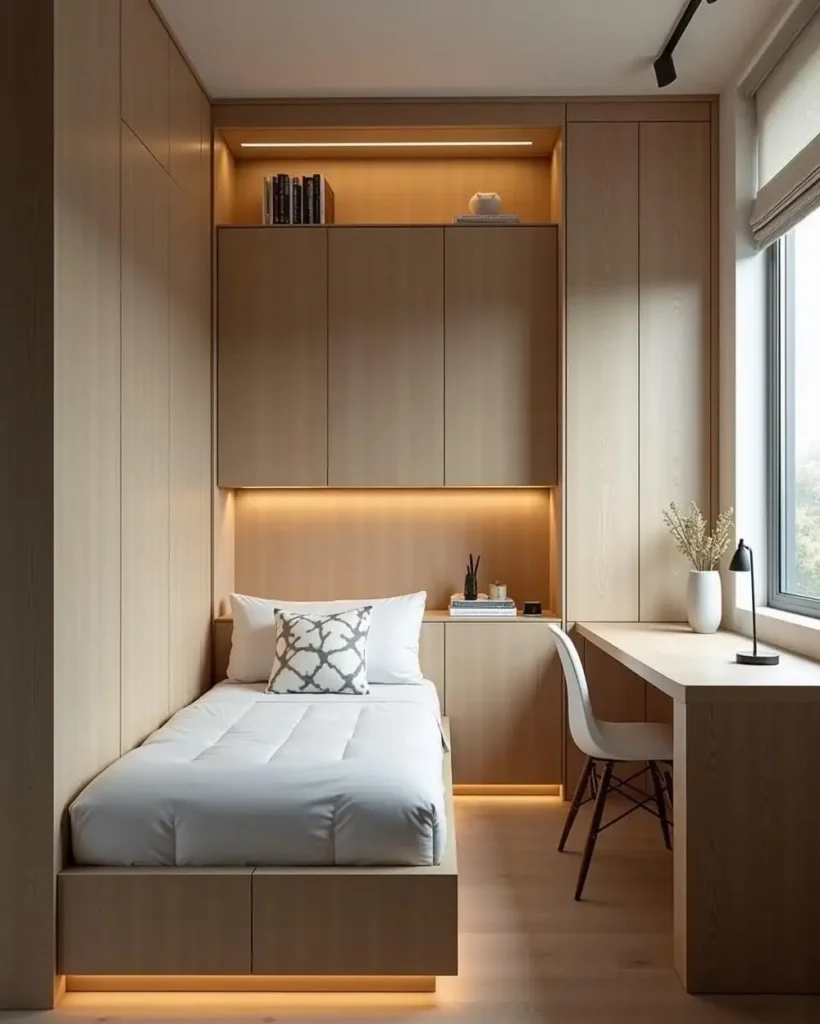
Full-height cabinetry can be a lifesaver in a very narrow bedroom, but the material matters. Warm wood gives these built-ins a more residential feel and prevents a wall of storage from looking too stark.
Here, the bed, desk, wardrobe, and overhead cabinets all share the same finish. Because the elements visually belong together, the room feels less fragmented.
Integrated lighting is another nice touch. Lighting beneath the bed or inside shelving adds a soft evening glow without requiring another lamp to occupy the already limited floor or tabletop space.
If the room is extremely narrow, avoid bulky handles. Recessed pulls or push-to-open doors keep the circulation area clear.
13. Use Symmetry to Make the Room Feel Orderly
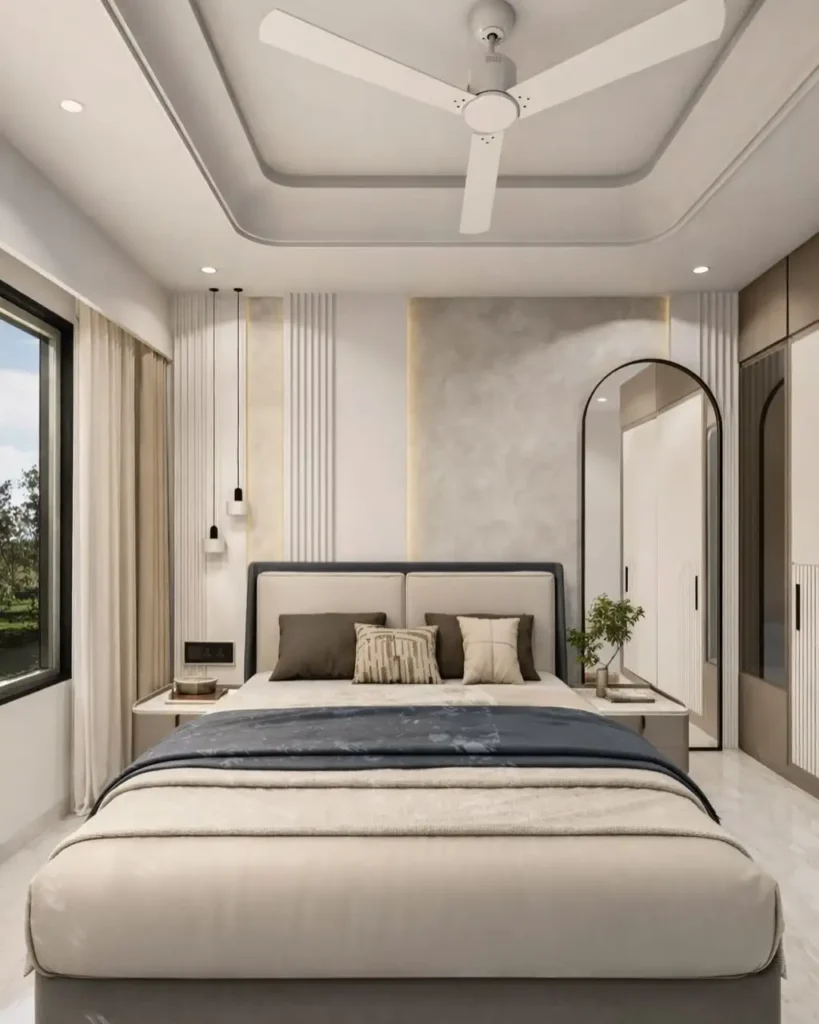
Symmetry can make a small bedroom feel calmer almost immediately. A centered bed, matching bedside surfaces, and balanced lighting give the eye a clear arrangement to follow.
The wall treatment adds another layer. Vertical paneling draws attention upward, while the arched mirror adds a contrasting curved shape.
Pendant lights work particularly well in this type of setup because both nightstands remain available for practical things. A book, alarm clock, phone, or small decorative object has somewhere to go without fighting for space with a table lamp.
You don’t have to match every item perfectly. Similar proportions and repeated shapes can create the same sense of balance.
14. Bring in Mint Without Losing the Light
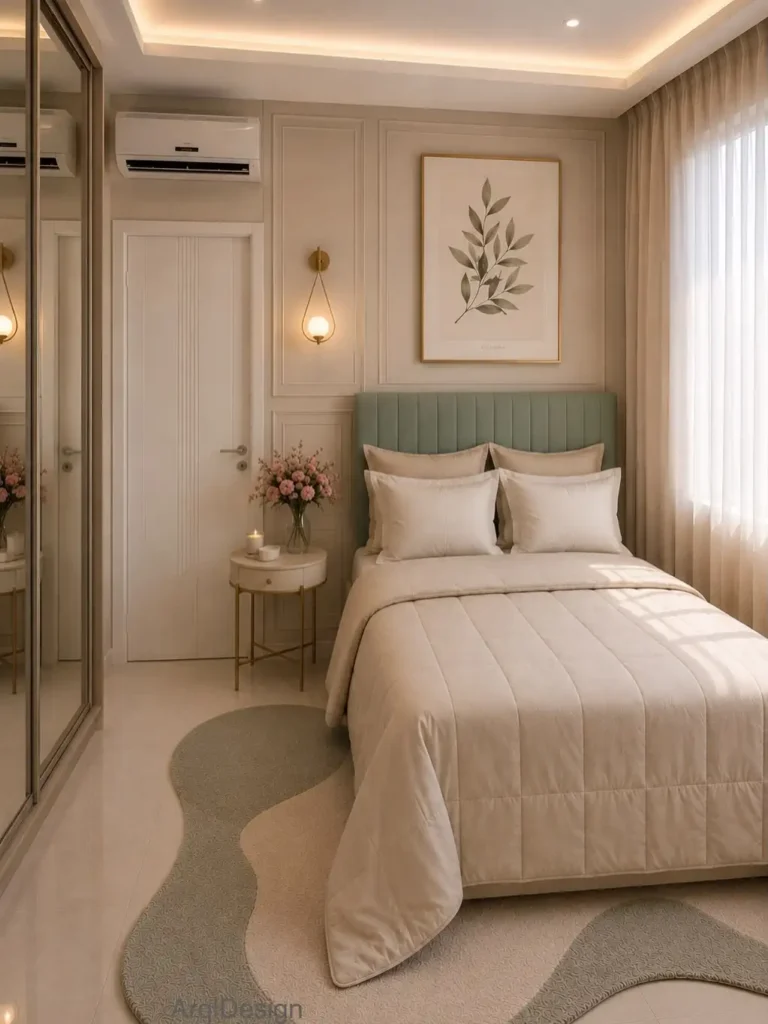
A narrow bedroom doesn’t have to be all white. A soft mint headboard can bring color into the room while keeping the overall mood light and fresh.
The mirrored wardrobe is doing some of the heavy lifting here. Its reflective surface helps bounce light around the room and makes the open floor feel larger.
The decorative details stay small: a botanical print, wall molding, and a compact gold side table. That’s enough to give the bedroom personality without filling every available surface.
If you’re using color in a small bedroom, one muted shade is usually easier to live with than several strong accent colors competing for attention.
15. Create a Restful Sage Green Retreat
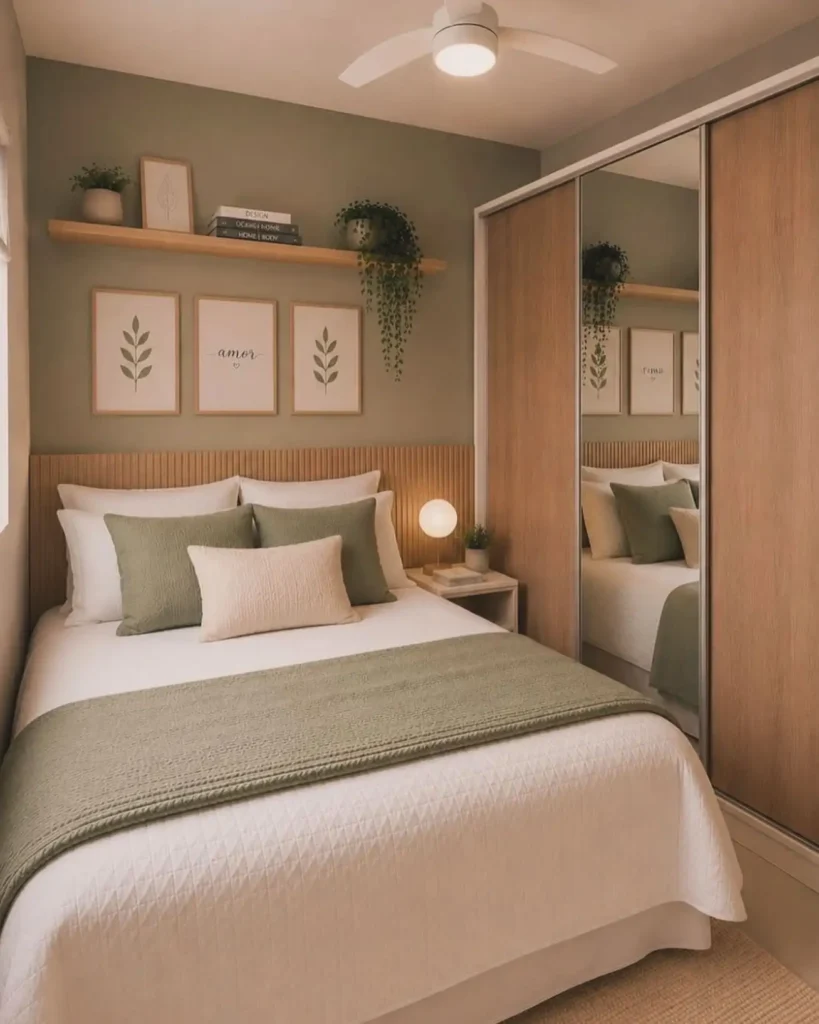
Sage green and warm wood are a natural pairing for a bedroom. The color feels soft and grounded, while the wood adds warmth without needing much additional decoration.
The slatted headboard gives the bed wall texture and makes the sleeping area feel more substantial without projecting far into the room. A floating shelf keeps small decorative items off the floor.
The mirrored wardrobe is another smart move. Large storage can easily dominate a small bedroom, but reflective panels make the unit feel less visually solid.
Keep the shelf styling fairly restrained. A few larger objects will usually look better than a long line of tiny decorations.
16. Keep a Narrow Bedroom Simple
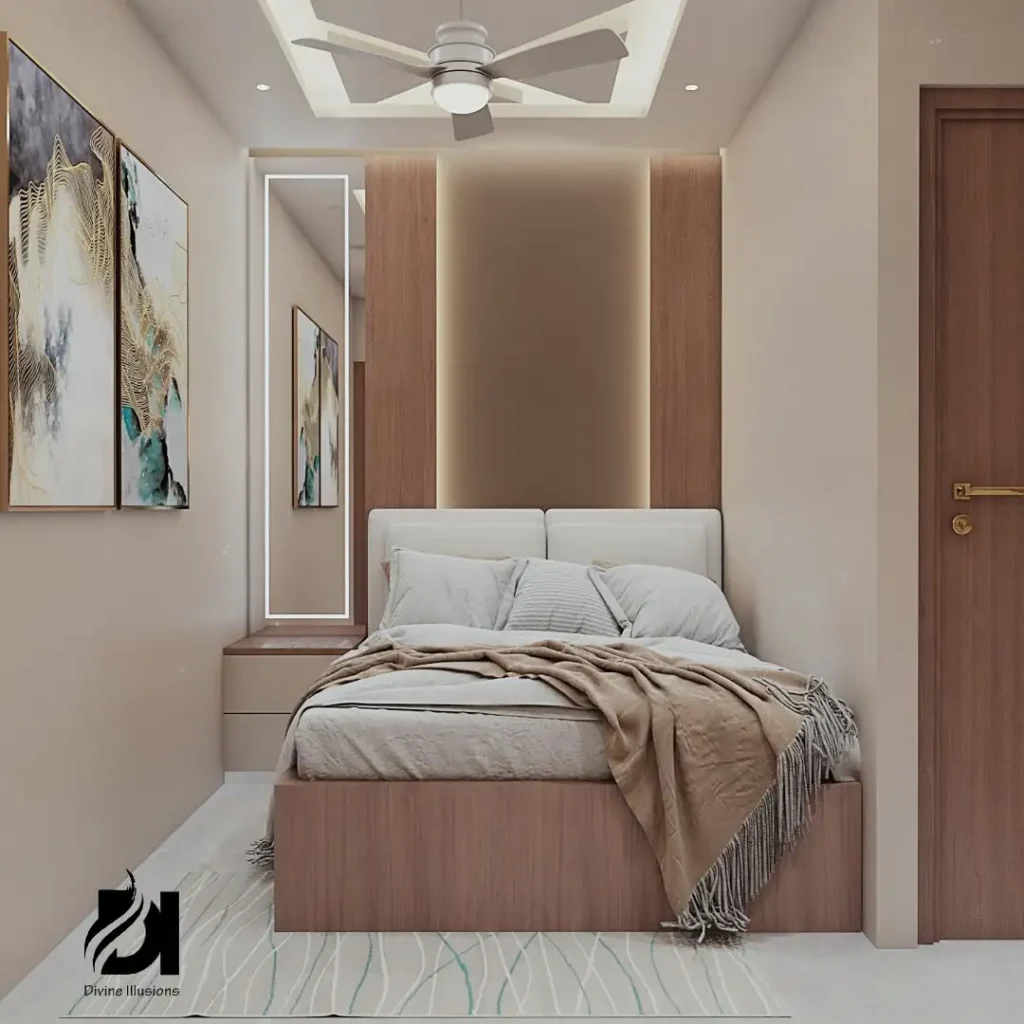
A very narrow bedroom needs discipline. Standard furniture can quickly leave you with a room that’s technically furnished but difficult to walk through.
This arrangement uses a tall mirror rather than a wide dresser and a floating bedside cabinet instead of a traditional nightstand. Backlit wall panels provide decoration without taking up any floor area.
Start with the walking route before deciding what furniture you want. Once the clear passage is established, measure the remaining width and choose pieces accordingly.
In a room like this, every extra inch matters. A shallow cabinet that fits comfortably is more useful than a larger one that forces you to squeeze past it every morning.
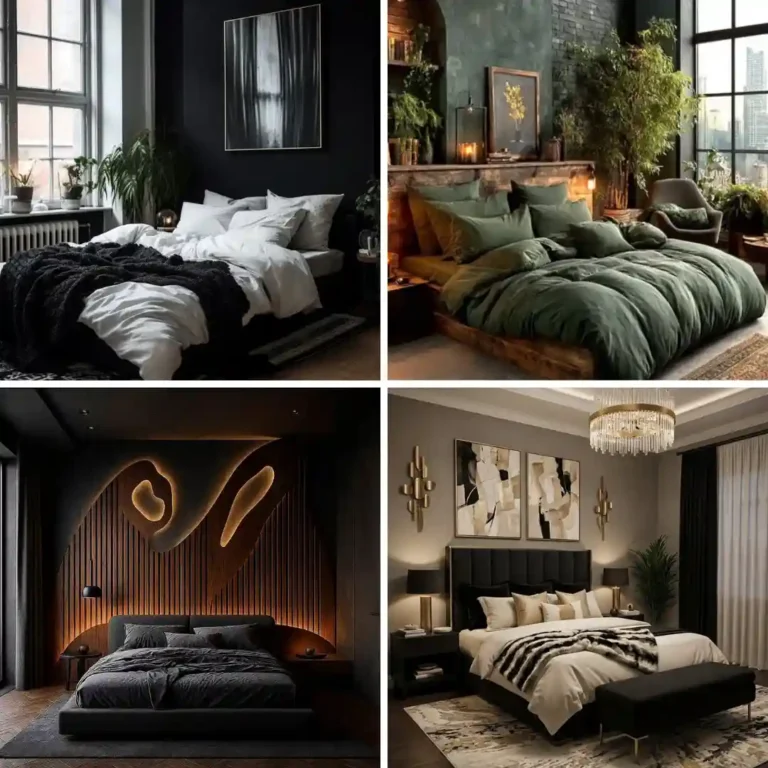
17. Give a Compact Bedroom a Monochrome Edge
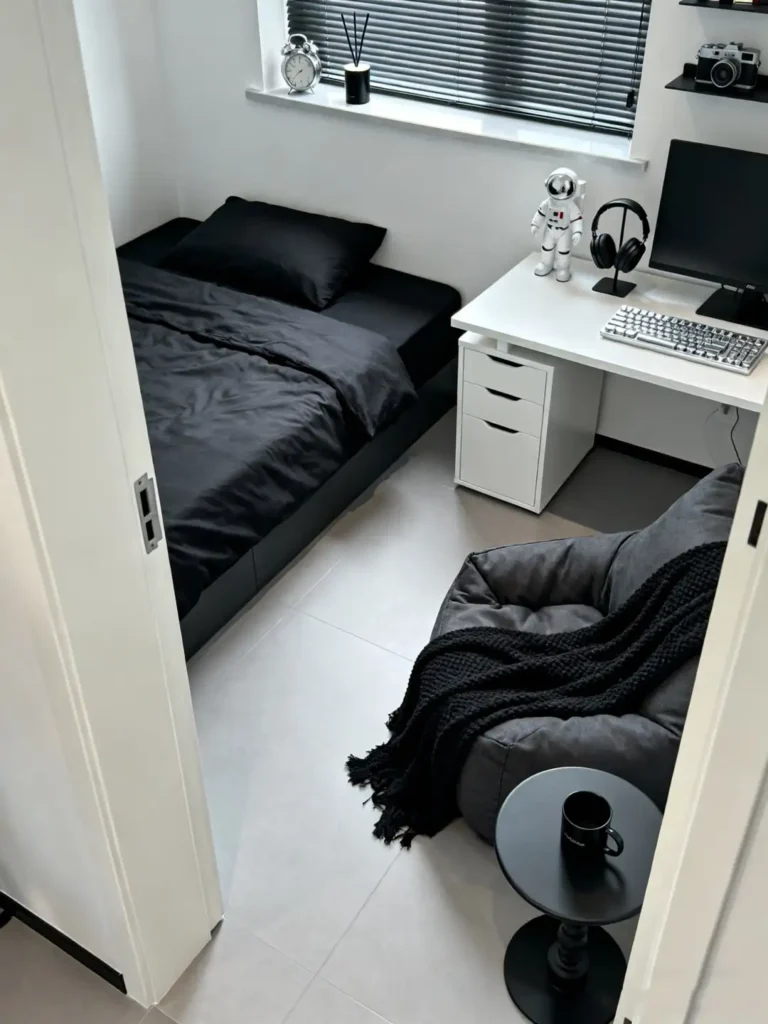
Black bedding can give a small bedroom plenty of personality, especially when the walls and flooring are kept pale.
The low bed in this room sits neatly below the window, leaving the adjacent corner free for a desk. A single lounge chair adds somewhere to sit without introducing another large piece of furniture.
The monochrome approach also makes clutter easier to spot. When the room is mainly black, white, and gray, a pile of colorful objects can quickly become distracting.
Keep the darker tones concentrated around the lower part of the room and let the walls remain light. That helps preserve the feeling of height and openness.
18. Create a Bedroom-Office That Still Feels Relaxed
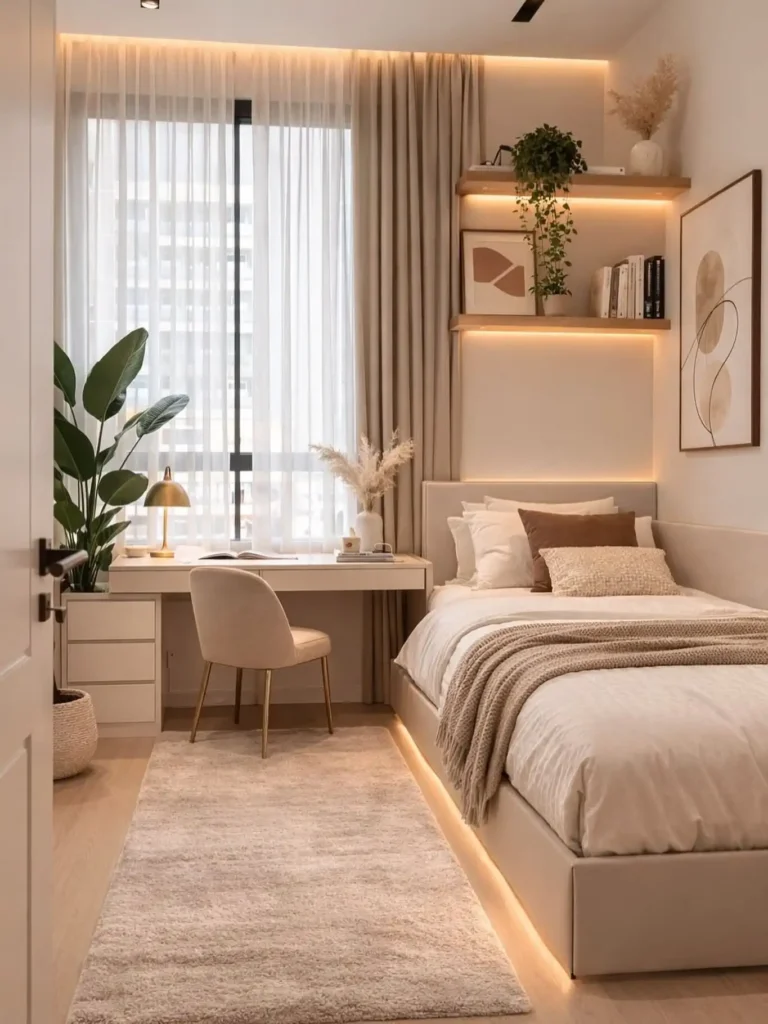
A small bedroom can serve as both sleeping space and home office without looking like an office was squeezed into it at the last minute.
This room keeps the palette warm and neutral, allowing the desk, shelves, plants, and bed to sit comfortably together. The desk benefits from being close to the window, while shelving above provides display and storage without using more floor area.
Lighting makes the room especially pleasant after dark. A soft glow beneath the bed and around the shelving adds depth without relying on bulky lamps.
Full-height curtains finish the space nicely. They frame the window during the day and give you privacy at night while reinforcing the room’s vertical proportions.
Making Every Inch Count in a Small Bedroom
The smartest small apartment bedrooms don’t try to squeeze furniture into every available corner. They decide what the room actually needs and then give each function a sensible place.
Storage usually works best when it goes upward or disappears beneath the bed. A desk can share a wall with a wardrobe. A pendant can replace a bedside lamp. A mirror can take the place of a bulky dresser.
Color matters too, but you don’t need to keep everything white. A navy wall, sage cabinetry, soft mint upholstery, or patterned floor can all work in a compact room when the rest of the scheme gives the eye enough breathing space.
And leave some floor empty.
That open area isn’t wasted space. It’s what lets you move around the bed comfortably, open a wardrobe without bumping into furniture, and make the bedroom feel like somewhere you can actually relax.
A small apartment bedroom doesn’t need to do everything at once. It just needs to do the important things well.