15 Small Apartment Bathroom Designs That Make Every Inch Count
Small apartment bathrooms can be surprisingly difficult to decorate. You have the same basic needs as a large bathroom—shower, toilet, sink, storage, lighting—but far less floor space to work with.
That doesn’t mean the room has to feel cramped.
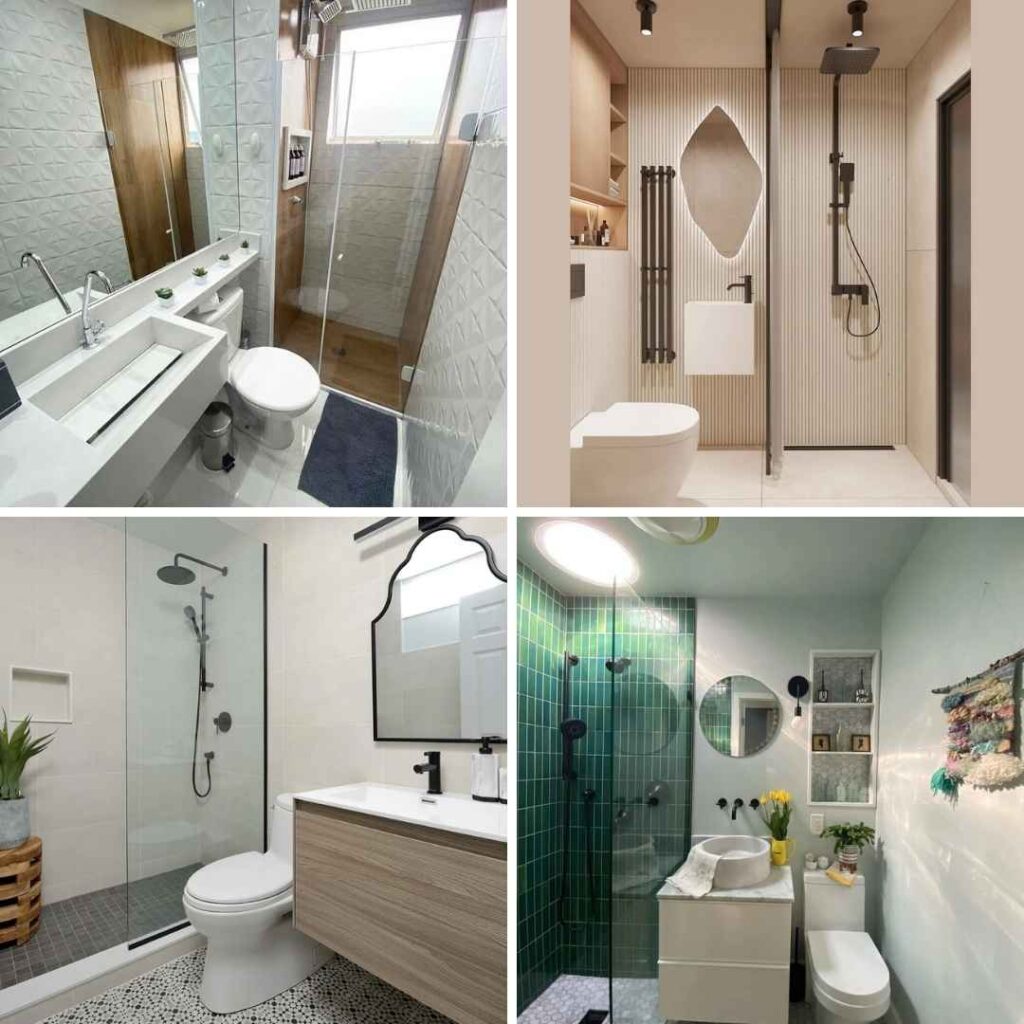
The best small bathrooms tend to be very intentional. A wall-mounted vanity frees up visual space. A glass shower screen keeps the room open. The right tile can make a narrow bathroom feel wider, while a few warm wood details can stop an all-white space from feeling cold.
Here are the details I’d pay attention to.
1. White Subway Tile With Black Fixtures
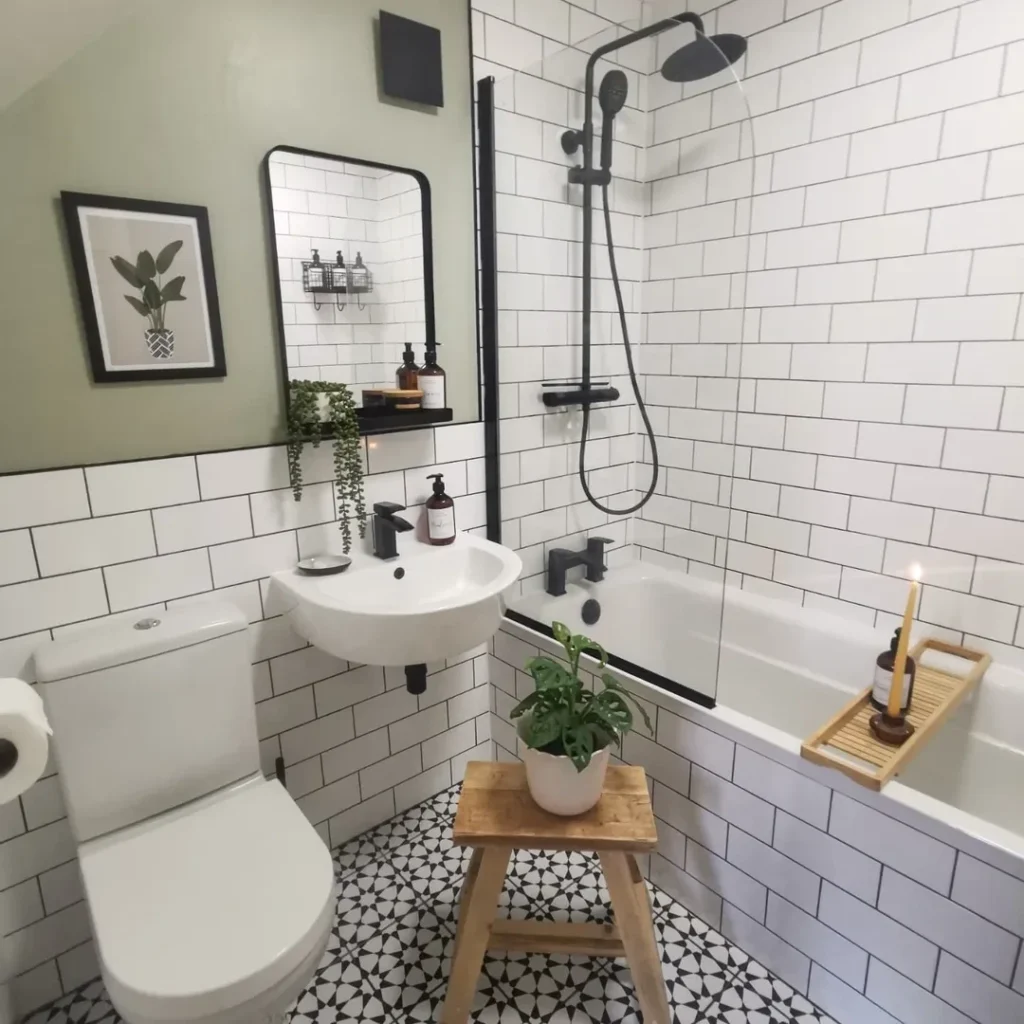
The first bathroom uses one of the most reliable combinations for a small space: white subway tile with black fixtures.
The white walls keep the room feeling bright, while the dark grout gives the tile a crisp graphic look. Black shower hardware, a black-framed mirror, and small black accessories tie everything together without needing lots of decoration.
What makes this room interesting is the contrast between the hard tile and the softer details. There’s a small wood stool, greenery, framed artwork, and a wood-toned bath tray. Those pieces make the bathroom feel lived-in rather than sterile.
Design tip: If you’re using a strong black-and-white palette, add one or two natural materials. A wooden stool, bamboo tray, woven basket, or plant can soften the overall effect.
For a rental apartment, you can get a similar feeling without replacing the plumbing. Swapping cabinet hardware, adding a framed mirror, and introducing black accessories can make a surprisingly big difference.
2. Warm Neutral Bathroom With Fluted Walls
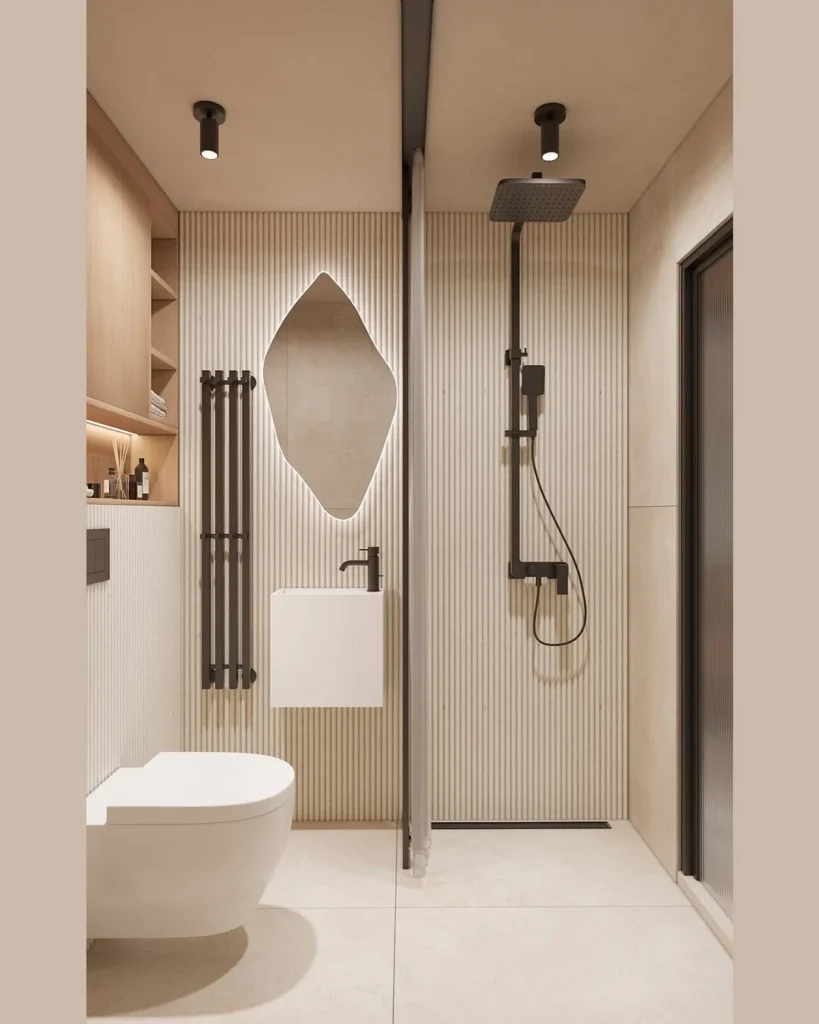
This bathroom takes a completely different approach. Instead of relying on tile patterns, it uses warm beige tones and vertical fluted wall detailing.
The vertical texture is especially clever for a small bathroom because it draws the eye upward. That can make a low or narrow room feel taller.
The floating white vanity also leaves some visible floor underneath, which helps the room feel less crowded. A sculptural mirror becomes the focal point without taking up much physical space.
The black shower fixtures add just enough contrast to keep the neutral palette from becoming flat.
If your apartment bathroom is already small, this is a good reminder that you don’t need lots of color to make it interesting. Texture can do much of the work.
Try this: Pair warm beige walls with light oak, matte black hardware, and soft white fixtures. Keep the number of finishes limited so the small room doesn’t become visually busy.
3. Classic White Tile With a Patterned Floor
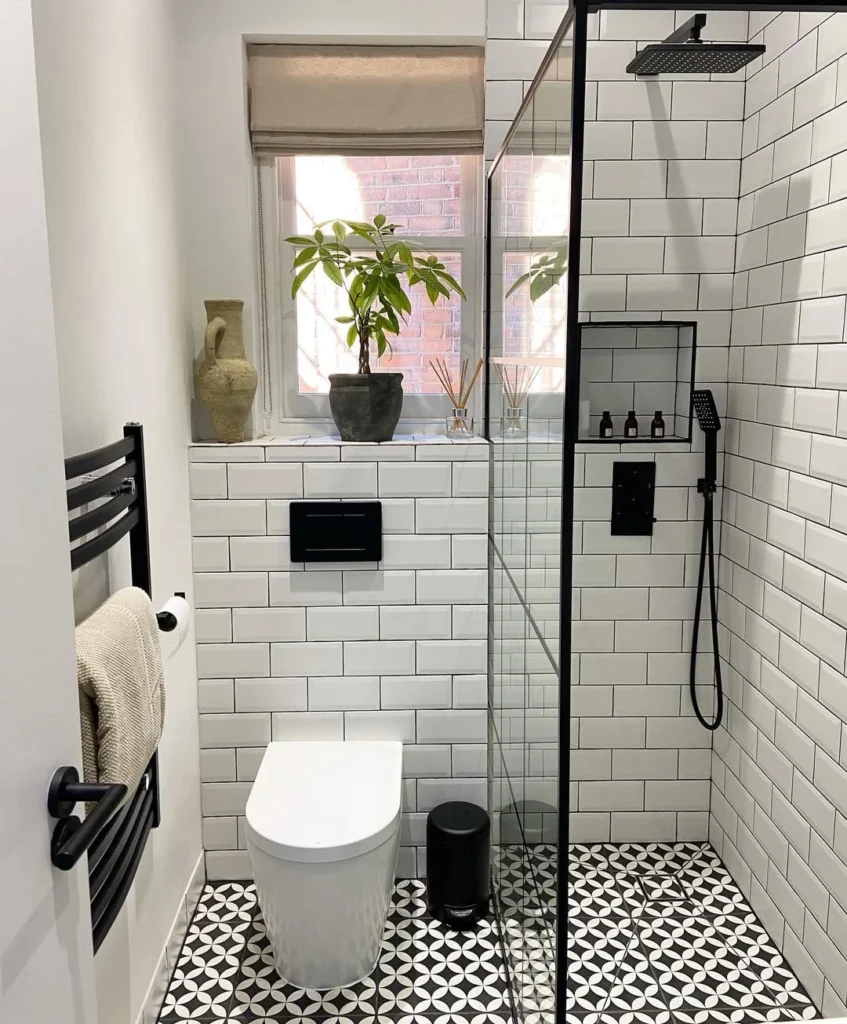
Here’s a classic small-bathroom combination that still works extremely well: simple white wall tile paired with a decorative floor.
The walls stay quiet, while the floor brings personality into the room. That division is useful because a patterned wall in a tiny bathroom can sometimes make the space feel even smaller.
The glass shower enclosure is another smart choice. Because there’s no heavy curtain or solid partition blocking the view, your eye can travel all the way across the room.
There’s also a practical detail worth copying: the window ledge becomes a place for plants and decorative pieces. When you’re short on storage, every existing surface deserves a second look.
Design tip: Put your visual drama on the floor and keep the walls calmer. It’s an easy way to get personality without overwhelming the room.
4. Simple White Bathroom With a Light Wood Vanity
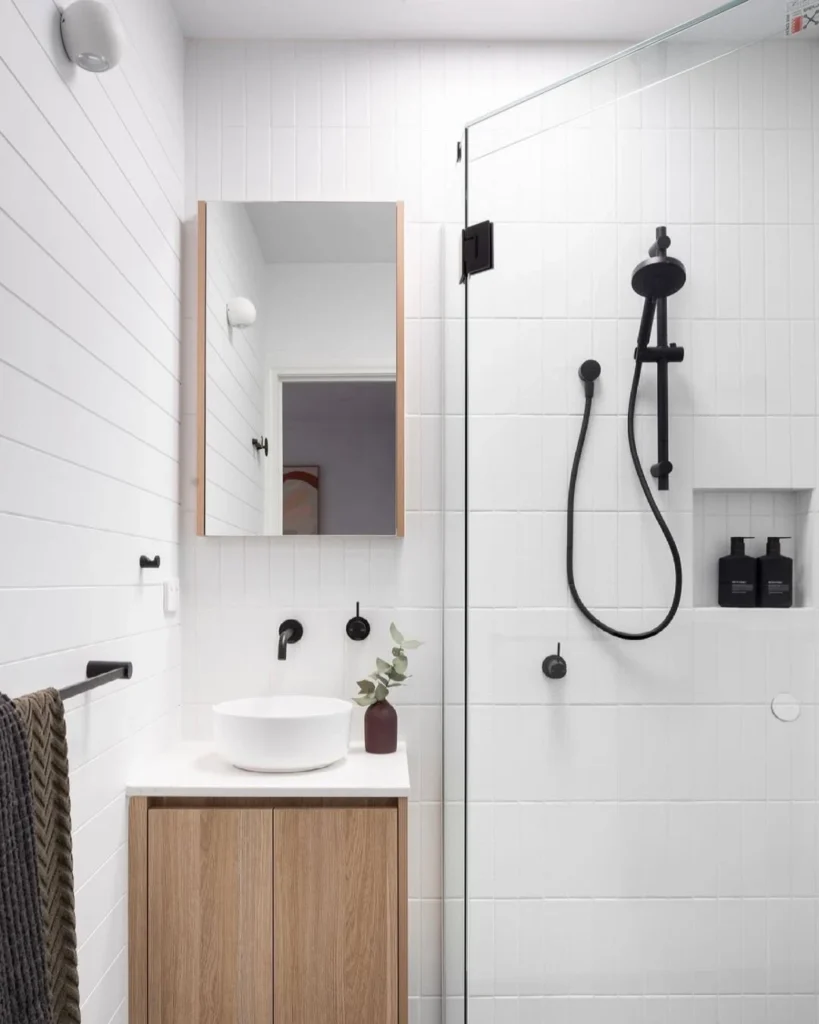
This design proves that a small bathroom doesn’t need a complicated layout to look finished.
White rectangular tiles create a clean backdrop, while the light wood vanity adds warmth. The black shower fittings bring definition to an otherwise pale space.
Notice how little decoration is actually needed. A small plant, a simple vase, and a few dark accessories are enough.
That’s important in an apartment bathroom. Countertop clutter can make a small vanity look even smaller. Instead of keeping every bottle on display, use drawers or a cabinet for everyday items and leave only a few things out.
A light wood vanity is particularly useful if your bathroom feels too white. You get warmth without making the room visually heavy.
Small-space trick: Choose furniture with clean, simple fronts. The fewer visual breaks you have, the calmer the room will feel.
5. Green Tile With Ribbed Glass
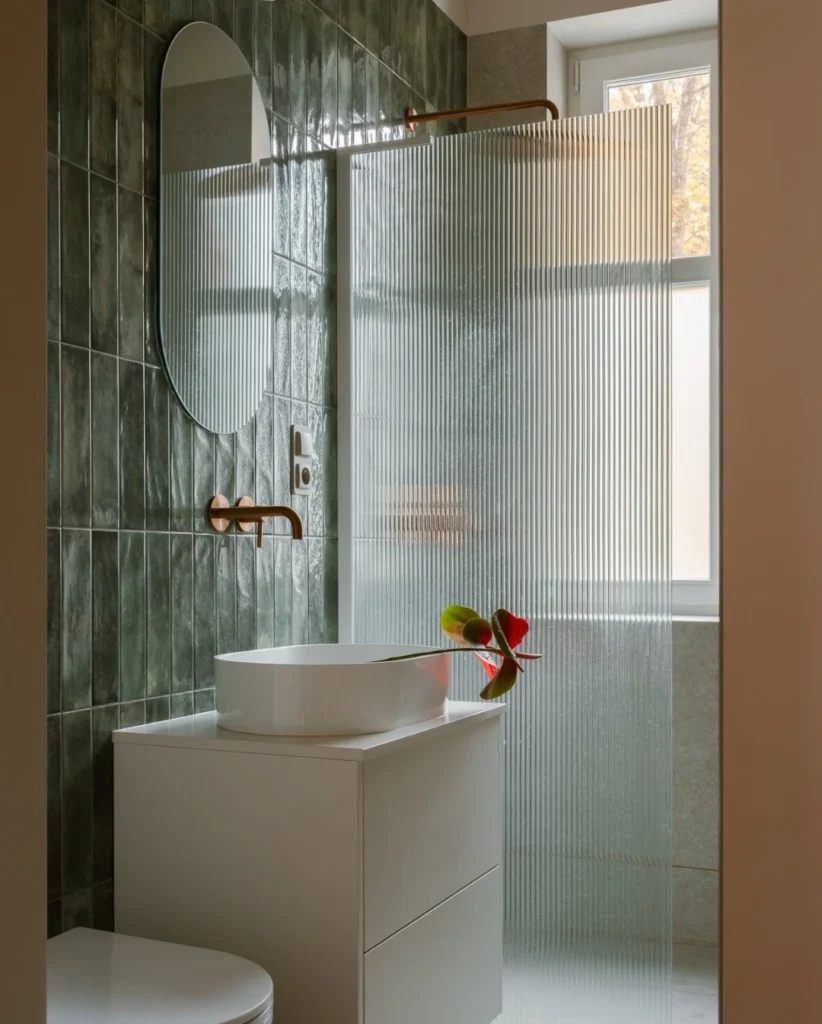
If you want something more distinctive, this bathroom offers a great example of using one bold material well.
Deep green tile covers the wall behind the vanity and shower, giving the room a rich, slightly moody character. A ribbed glass shower screen adds another layer of texture while still allowing light through.
The warm brass fixtures are an especially nice touch. Brass works beautifully against deep green because it brings warmth into the darker palette.
The lesson here isn’t necessarily “use green tile.” It’s about choosing one strong design decision and letting the rest of the bathroom support it.
In a small room, too many competing finishes can quickly become messy. One feature wall, one metal finish, and simple white fixtures can be enough.
6. Navy Blue and White for a Small Bathroom
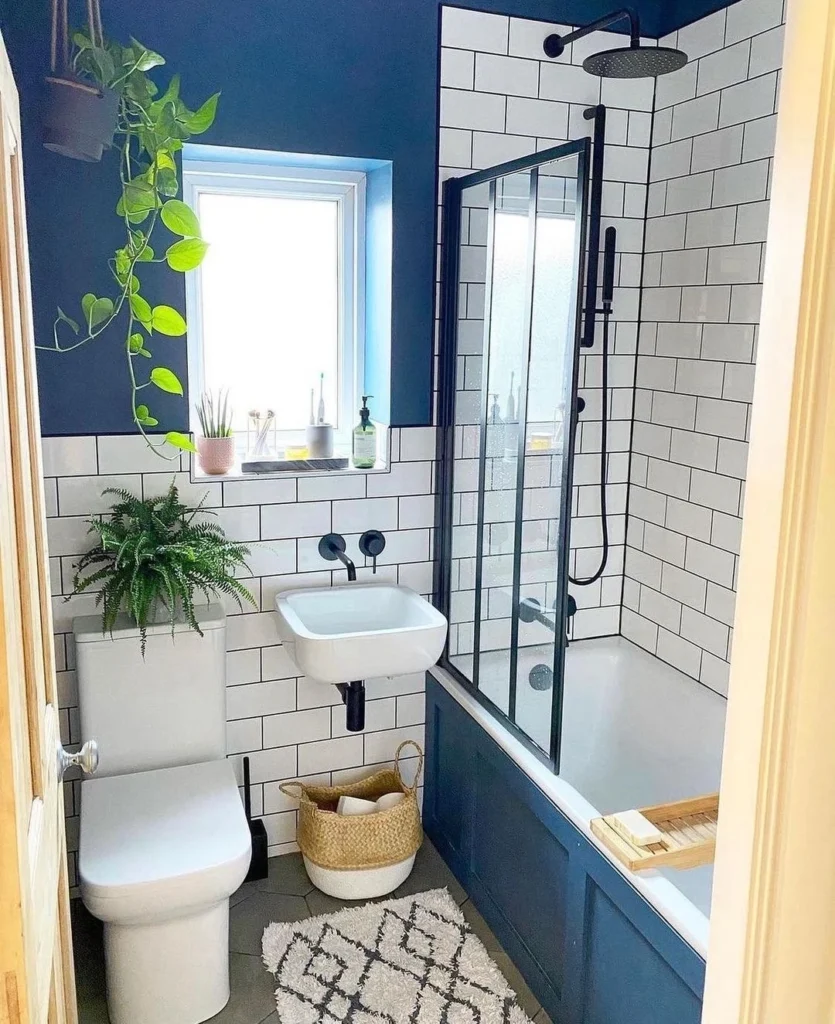
This bathroom uses navy blue in a way that feels confident without making the space gloomy.
The lower section of the bathtub is painted blue, while the upper walls use white subway tile. The ceiling is also blue, which gives the room a cozy, slightly unexpected feel.
Plants work particularly well here. Against navy and white, the green leaves add a fresh natural element.
The bathtub-shower combination is another practical idea for apartments where you don’t have enough room for a separate walk-in shower and tub. A framed shower screen can make the setup feel more modern while keeping water contained.
If you’re considering a dark color: Don’t automatically rule it out because the bathroom is small. Dark colors can work when they’re balanced with plenty of white, good lighting, and reflective surfaces.
7. Small Bathroom With Green Shower Tile
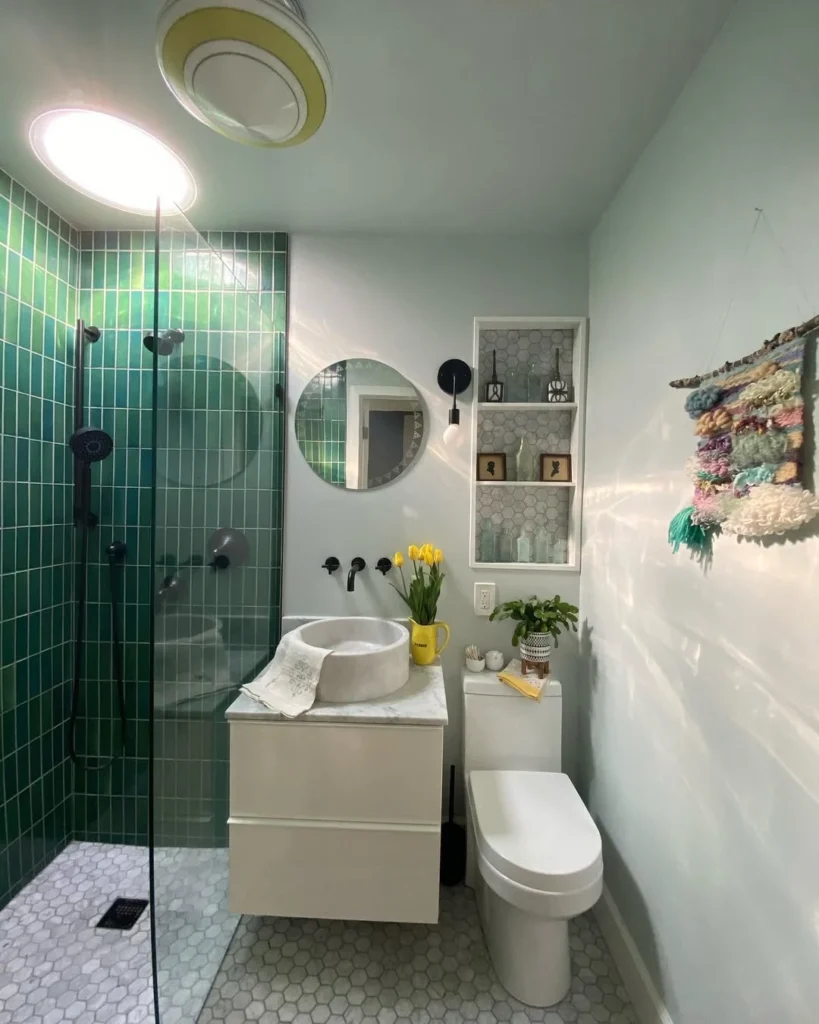
This bathroom takes the green idea in a lighter direction.
The vertical green tiles inside the shower give the wet zone a clear identity while the rest of the room stays relatively simple. A glass divider keeps the shower visually connected to the vanity area.
The rounded basin and decorative mirror soften the straight lines of the tile.
This is also a good example of using a small recessed shelf instead of adding bulky storage furniture. Built-in niches are worth planning during a renovation because they don’t steal walking space.
If you’re working with an existing bathroom, you can create a similar feeling with a narrow wall shelf, a small vanity cabinet, or recessed medicine cabinet.
A useful rule for tiny bathrooms: Store things vertically whenever possible. Wall-mounted storage is often much easier to fit than another floor-standing cabinet.
8. Warm Wood Shower Wall
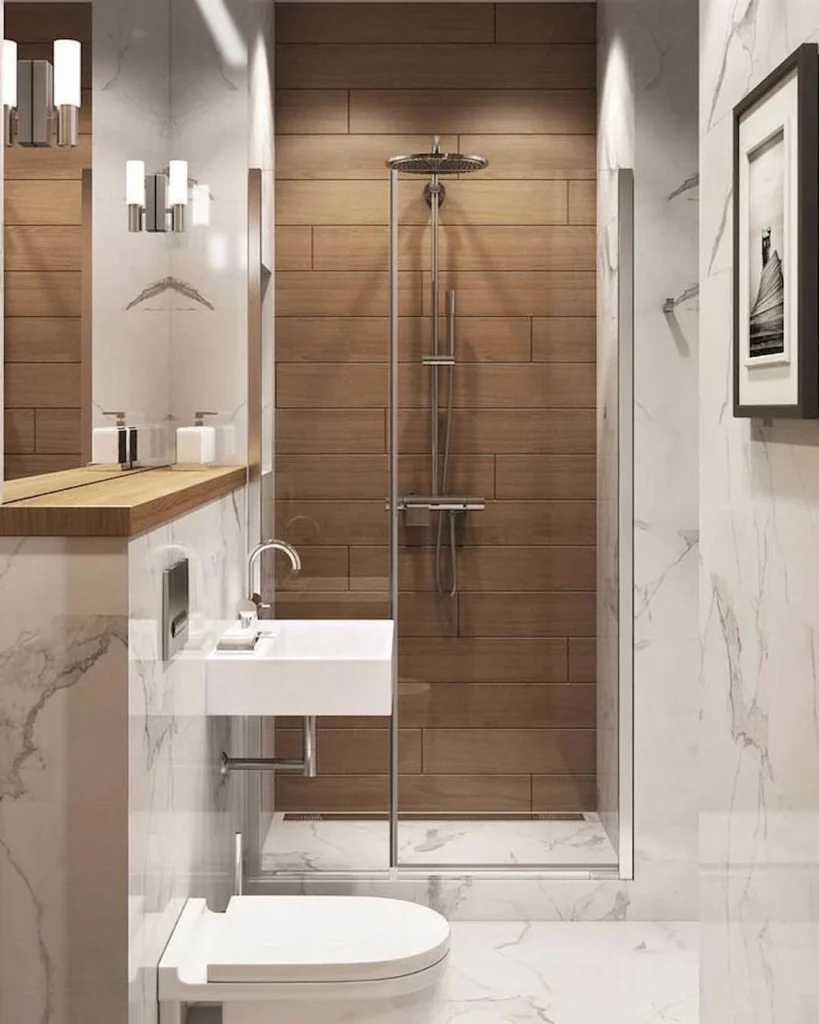
Wood-look finishes can completely change the mood of a small bathroom.
Here, horizontal wood-look tiles create warmth in the shower area while marble-look surfaces surround it. The result feels more like a boutique hotel than a cramped apartment bathroom.
The horizontal lines also help the shower wall feel wider. That’s worth considering if your bathroom has a particularly narrow footprint.
The floating sink keeps the floor underneath visible, which gives the room a lighter appearance.
Of course, real wood needs careful consideration in a wet area. Wood-look porcelain or ceramic tile is generally much easier to maintain and gives you the visual warmth without the same moisture concerns.
Decorating tip: Warm wood tones pair especially well with white, cream, marble-look surfaces, and brushed metal.
9. Soft Beige With a Rounded Wood Vanity
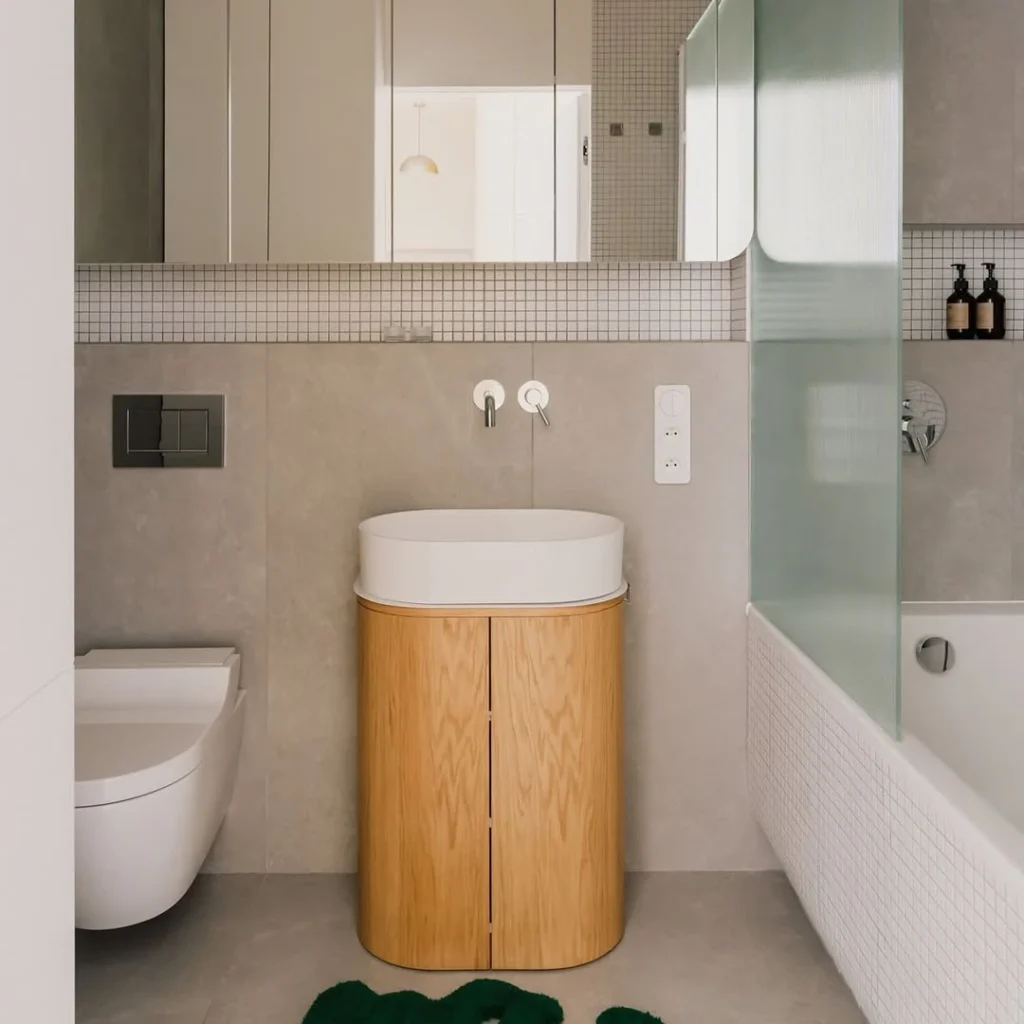
This bathroom shows how much character a small vanity can bring.
The rounded wood cabinet stands out against the pale beige walls, and its curved shape keeps the room from feeling overly boxy. Above it, a mirrored cabinet provides storage without taking up additional wall depth.
That’s a combination I’d recommend for many small apartments: closed storage below + mirrored storage above.
You get somewhere to hide toiletries while the mirror serves a necessary function.
The frosted glass beside the tub also helps separate the bathing area without completely closing it off. Light can still move through the room.
If your bathroom is narrow, rounded furniture can sometimes make the space feel easier to move through because there are fewer hard corners to navigate around.
10. Pale Tiles With a Long Floating Vanity
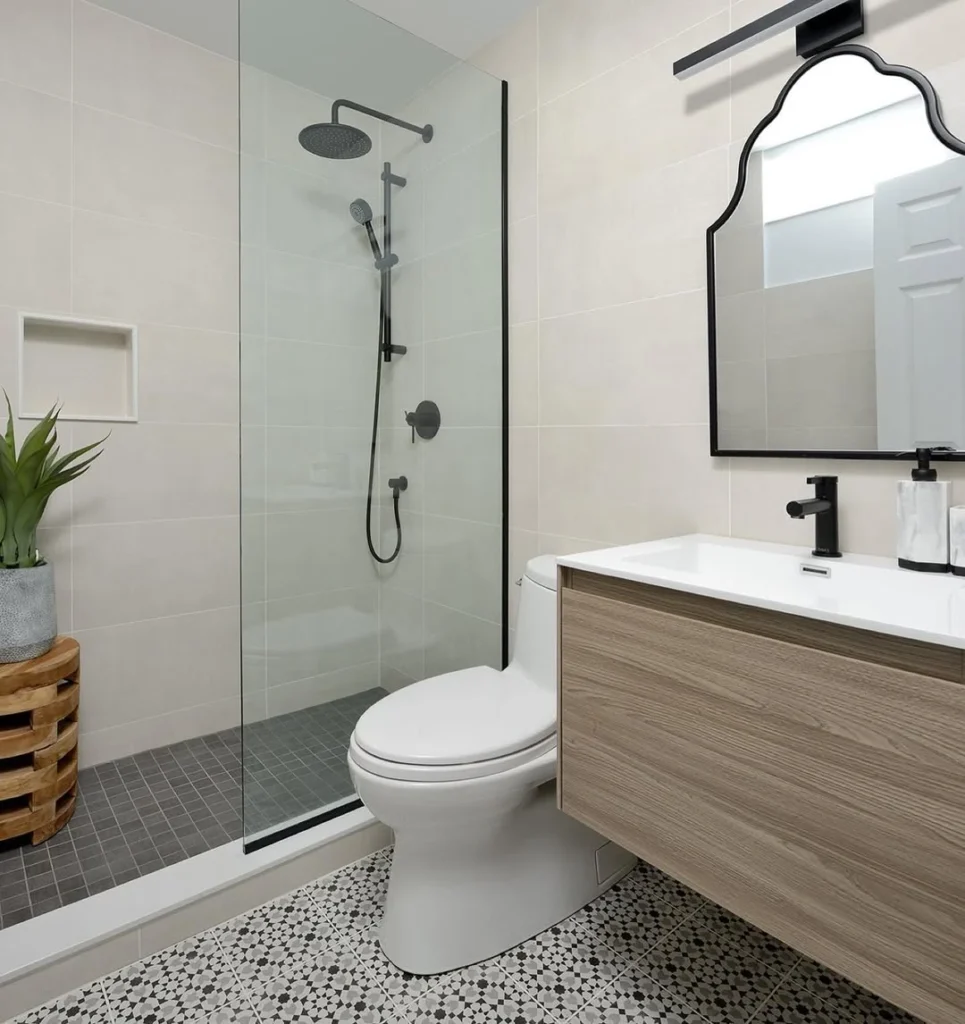
This design keeps everything light and simple, but the patterned floor prevents it from becoming boring.
The large vanity stretches across one side of the bathroom, providing plenty of countertop and cabinet space. Because it floats above the floor, the room still feels relatively open.
A black-framed mirror gives the vanity area some definition, while the dark shower floor adds contrast.
The important point here is proportion. A vanity doesn’t have to be tiny just because the bathroom is tiny. A long, shallow vanity can sometimes work better than a bulky square cabinet.
Measure the depth, not just the width. In a narrow bathroom, reducing vanity depth by even a few inches can make the walkway much more comfortable.
11. Textured White Tile and Warm Wood
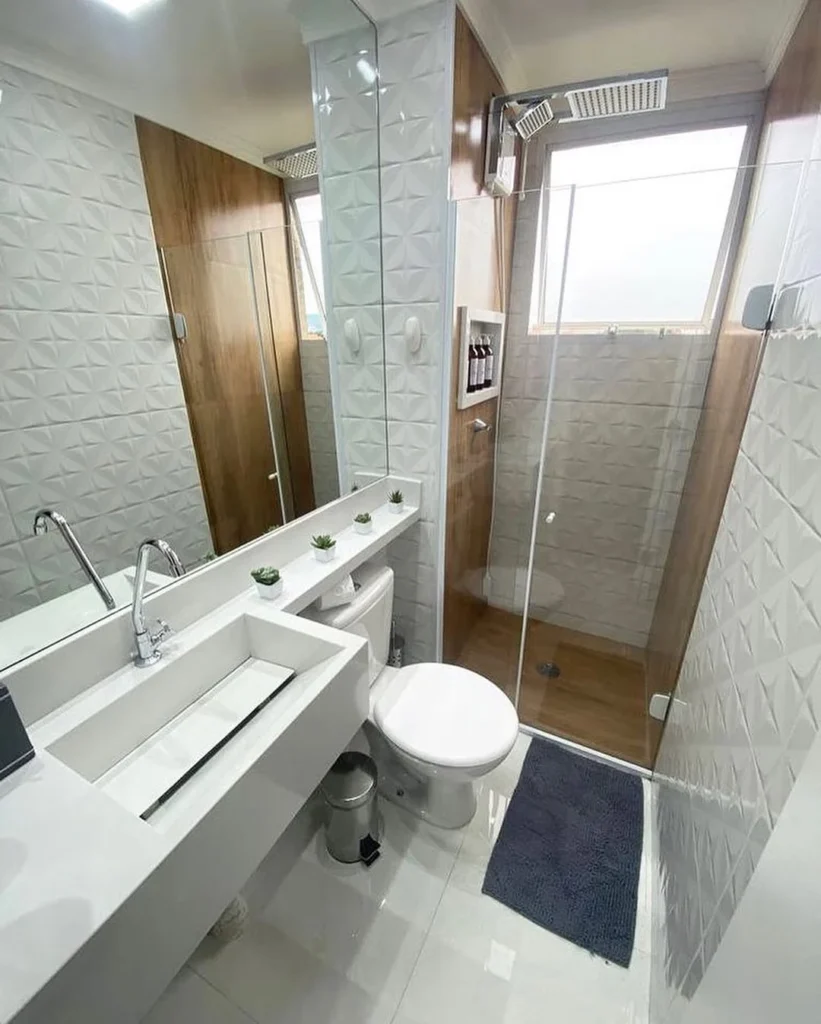
This bathroom uses textured white tile to add interest without adding strong color.
The wood vanity and wood shower wall bring warmth into the space, while the white tile keeps it bright. It’s a good combination if you like Scandinavian, modern, or relaxed contemporary interiors.
The large mirror is doing some quiet heavy lifting here too. Mirrors reflect light and can visually double the amount of space you see.
One mistake people often make in small bathrooms is choosing a mirror that’s too small. If your vanity allows it, a generously sized mirror can make the whole wall feel more open.
Keep the countertop relatively clear and let the materials provide most of the decoration.
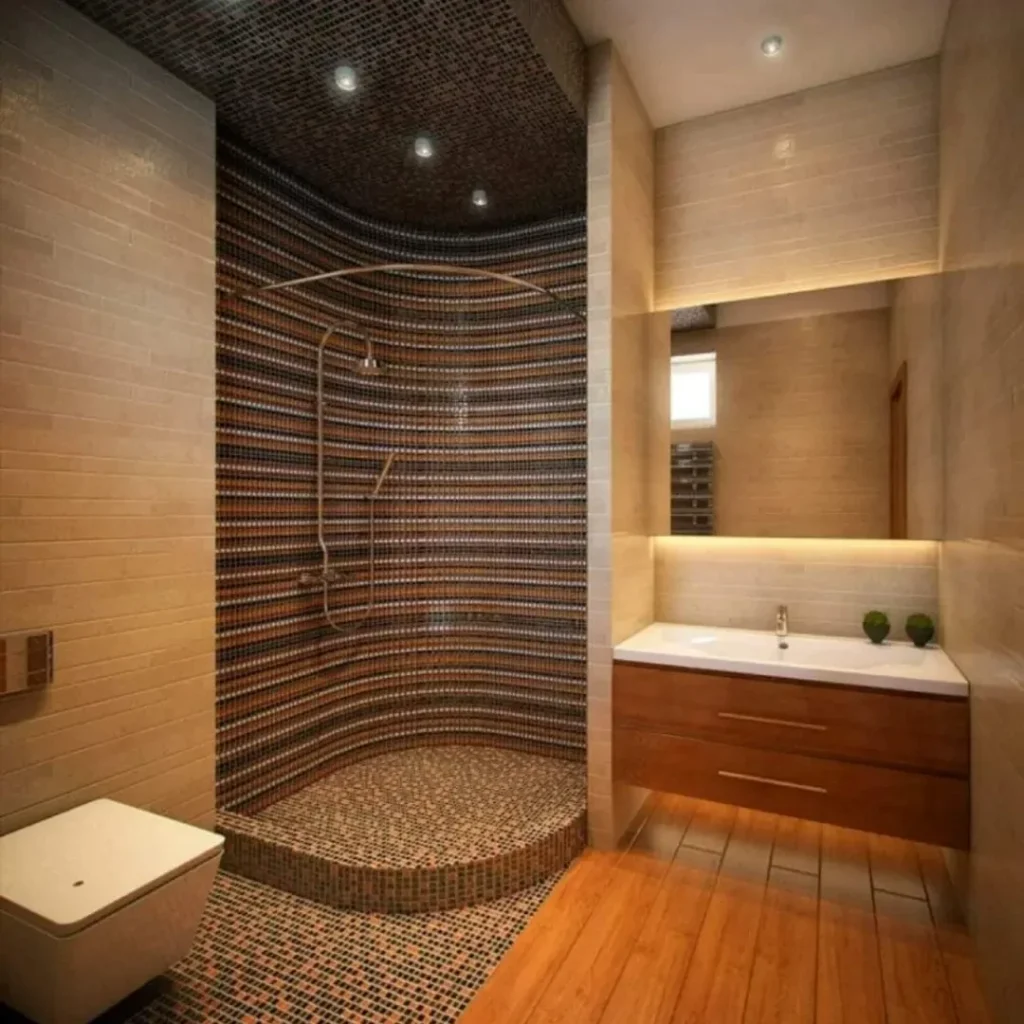
12. Earthy Mosaic Shower
This bathroom takes a much more dramatic approach.
The shower is wrapped in small mosaic tiles with warm brown and earthy tones, creating a cocoon-like effect. The vanity area remains simpler, with warm wood cabinetry and soft lighting.
This type of bathroom proves that “small” doesn’t have to mean “plain.”
The curved shower shape is also interesting. A rounded enclosure can work well where a conventional rectangular shower would feel awkward or take up too much room.
If you’re using small mosaic tile, pay attention to grout color. A high-contrast grout can make every little tile stand out, while a similar grout color creates a softer, more continuous surface.
Lighting matters even more with darker finishes. A small bathroom with dark tile needs enough layered lighting to keep it comfortable rather than cave-like.
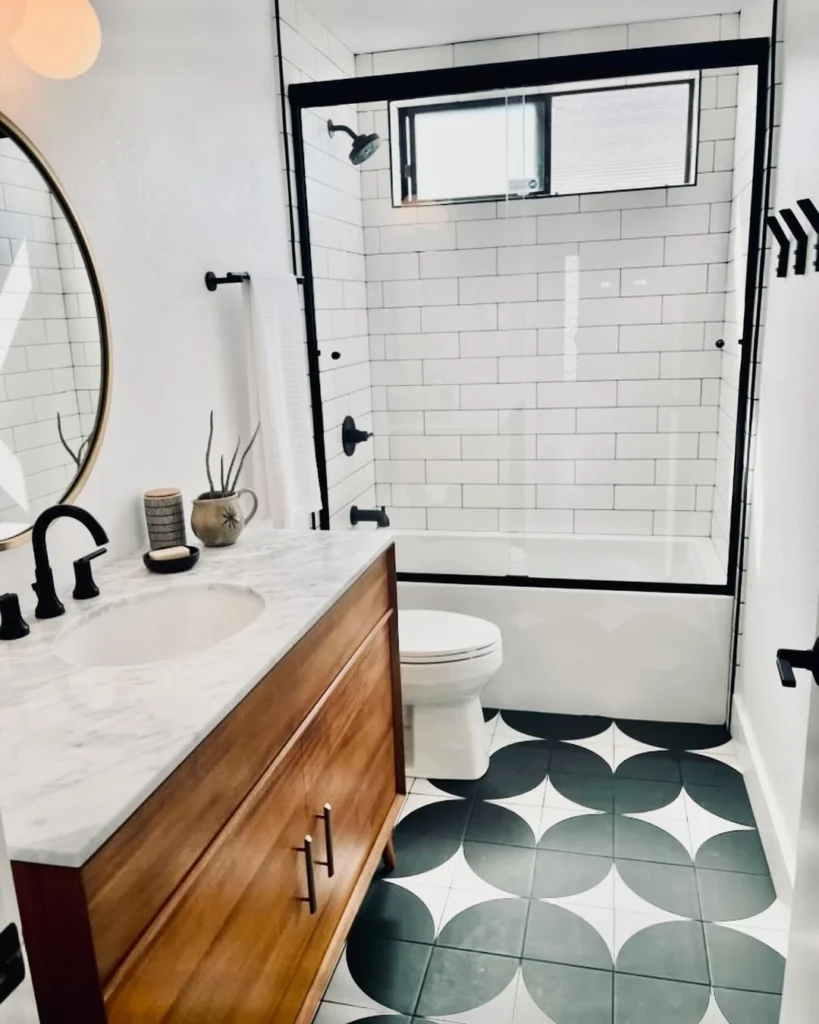
13. Classic Subway Tile With a Bold Floor
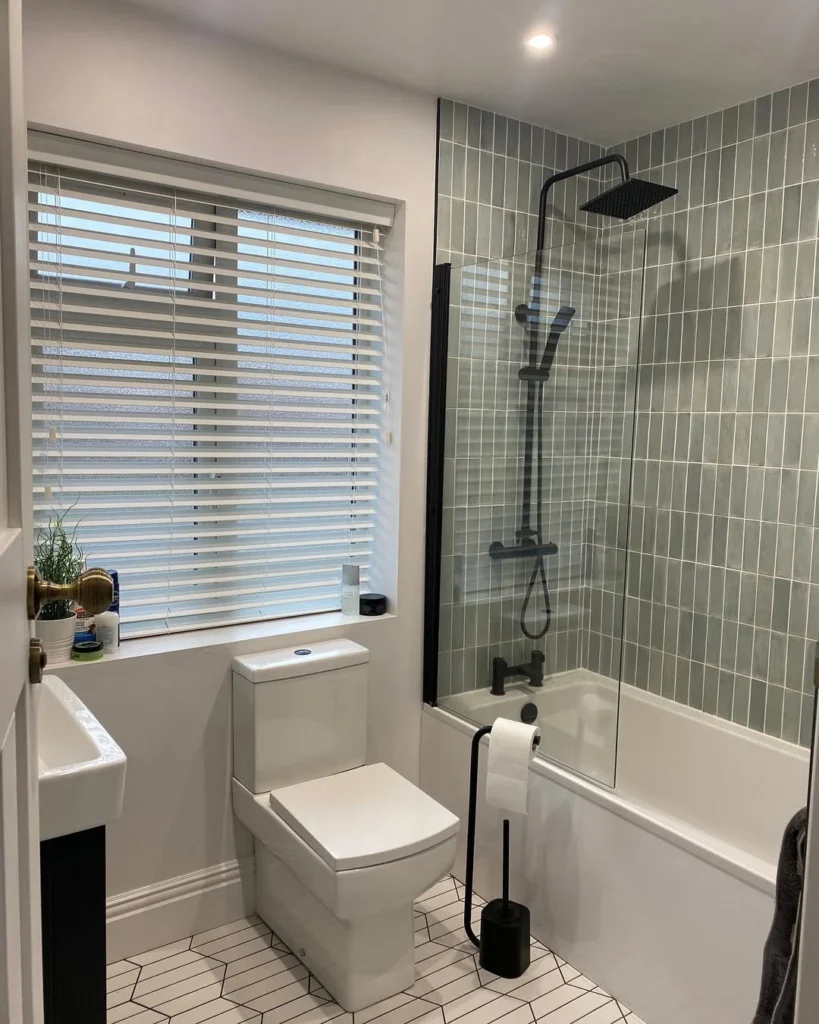
This bathroom is a great example of letting the floor become the personality piece.
The white subway tile keeps the walls clean and bright, while the large geometric floor tiles introduce a playful pattern.
The warm wood vanity adds another layer, but because its finish is relatively simple, it doesn’t fight with the floor.
This is a smart formula if you love patterned tiles but worry they’ll overwhelm a small bathroom.
Use the pattern once.
You don’t need a patterned backsplash, patterned shower wall, patterned accessories, and patterned towels all competing for attention. Give the floor its moment and keep the other surfaces relatively calm.
14. Compact Bathroom With Soft Gray Tile
Gray is sometimes treated as a boring bathroom color, but this design shows how useful it can be.
The soft gray wall tile creates a calm background while the dark shower floor adds a little depth. The wood vanity brings warmth and keeps the gray from feeling too cold.
The glass shower panel is nearly invisible, which is exactly what you want in a compact space.
There’s also a practical reason to use gray on floors: it tends to be more forgiving of everyday marks than bright white flooring.
For an apartment bathroom that gets a lot of daily use, choosing finishes that are easy to live with can matter just as much as choosing ones that look good in photographs.
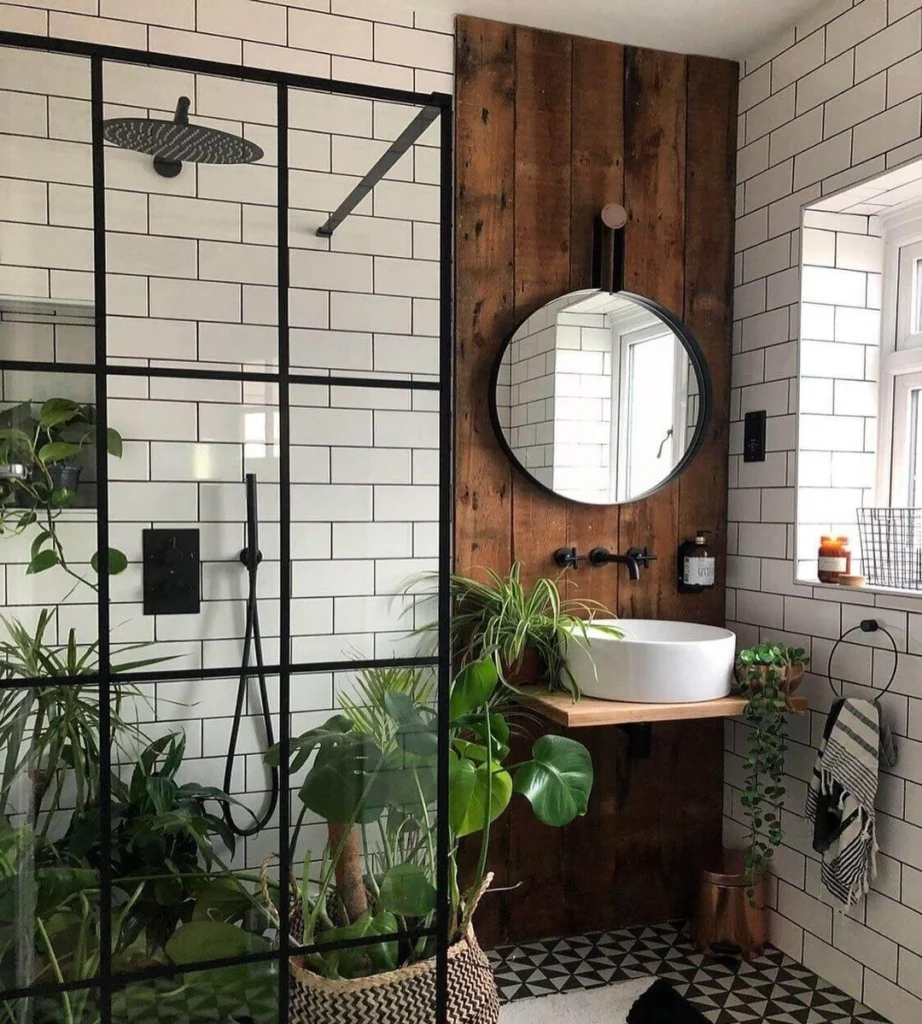
15. Black-and-White Tile With Lots of Plants
The final design takes the classic subway tile idea and adds plenty of greenery and natural wood.
The black-framed shower enclosure creates a strong architectural element, while the patterned floor gives the room even more personality.
But what really changes the atmosphere is the greenery. Large plants soften the hard surfaces and make the bathroom feel more relaxed.
If your bathroom gets natural light, even a small windowsill can become a mini plant area. Just choose varieties that suit the humidity and available light.
The reclaimed-looking wood vanity wall adds another warm element, keeping all the black and white from feeling too stark.
It’s a good reminder that accessories don’t have to be expensive to change the mood of a room. A plant, woven basket, wood stool, or simple ceramic piece can do plenty.
Smart Ways to Make a Small Apartment Bathroom Feel Bigger
The individual designs are useful, but there are a few ideas that keep appearing for good reason.
Use glass instead of visual barriers
A clear glass shower screen is one of the easiest ways to make a bathroom feel more open. Your eye can see through the shower instead of stopping at a curtain or solid wall.
If privacy isn’t a concern, clear glass usually gives the most spacious effect.
Keep the floor visible
Wall-mounted toilets and floating vanities can make a small room feel less crowded because more of the floor remains visible.
You don’t necessarily need both. Even one floating element can make a difference.
Don’t underestimate mirrors
A large mirror can make a narrow bathroom feel noticeably wider. A mirrored medicine cabinet is even more useful because it combines reflection with hidden storage.
For a small vanity, I’d rather have one properly sized mirror than several tiny decorative ones.
Pick one place for pattern
Patterned tile is great, but small rooms have limits.
If the floor has a strong geometric pattern, let the walls stay relatively quiet. If you’re using dramatic wall tile, a simple floor may work better.
This keeps the room interesting without making it feel chaotic.
Use vertical space
When floor space is scarce, look upward.
Tall cabinets, recessed shelves, wall-mounted hooks, medicine cabinets, and vertical towel rails can all add storage without making the walkway narrower.
Even the space above a toilet can become useful storage if it’s designed carefully.
Mix warm and cool materials
Bathrooms contain a lot of hard, cool surfaces: tile, glass, porcelain, metal.
Adding wood, woven materials, plants, or warm-toned accessories makes the room feel much more comfortable.
You don’t need a major renovation to do this. A wooden stool next to the tub or a woven laundry basket can be enough.
Be careful with too many finishes
This is one of the easiest mistakes to make in a small bathroom.
You might love brass, black fixtures, green tile, marble, wood, terrazzo, and patterned flooring individually. Together, they can become too much.
Pick a main material and let two or three supporting finishes do the rest.
What I’d Prioritize in an Apartment Bathroom
If you’re decorating from scratch, I’d spend the most attention on layout first.
Before choosing tile colors or mirrors, make sure the toilet, vanity, shower, and door don’t fight for the same small amount of space. A beautiful bathroom that’s awkward to move around in gets frustrating very quickly.
After that, choose your largest surface—the floor or main wall tile. Everything else can follow.
Then think about storage. Don’t wait until the end and try to squeeze a cabinet into whatever space is left. A shallow vanity, mirrored cabinet, or recessed niche should be part of the plan from the beginning.
Finally, add personality. That’s where the plants, artwork, wood, towels, mirrors, and small accessories come in.
A small apartment bathroom doesn’t need to look like a miniature version of a luxury bathroom. It can have its own personality. Sometimes the best result is a simple white bathroom with one great floor. Sometimes it’s a dark green shower wall or a warm wood vanity.