20 Small Living Room Sofa Ideas That Make Your Space Feel Bigger & Better
A small living room can be surprisingly tricky to furnish. The sofa usually takes up more visual and physical space than anything else, so the wrong shape or placement can make the whole room feel cramped.
The good news is that you don’t need a huge sectional or an expensive makeover to make a compact room feel comfortable. The right sofa, rug, lighting, and a little breathing room can completely change the way the space works.
1. Keep It Classic With a Compact Wood-Frame Sofa
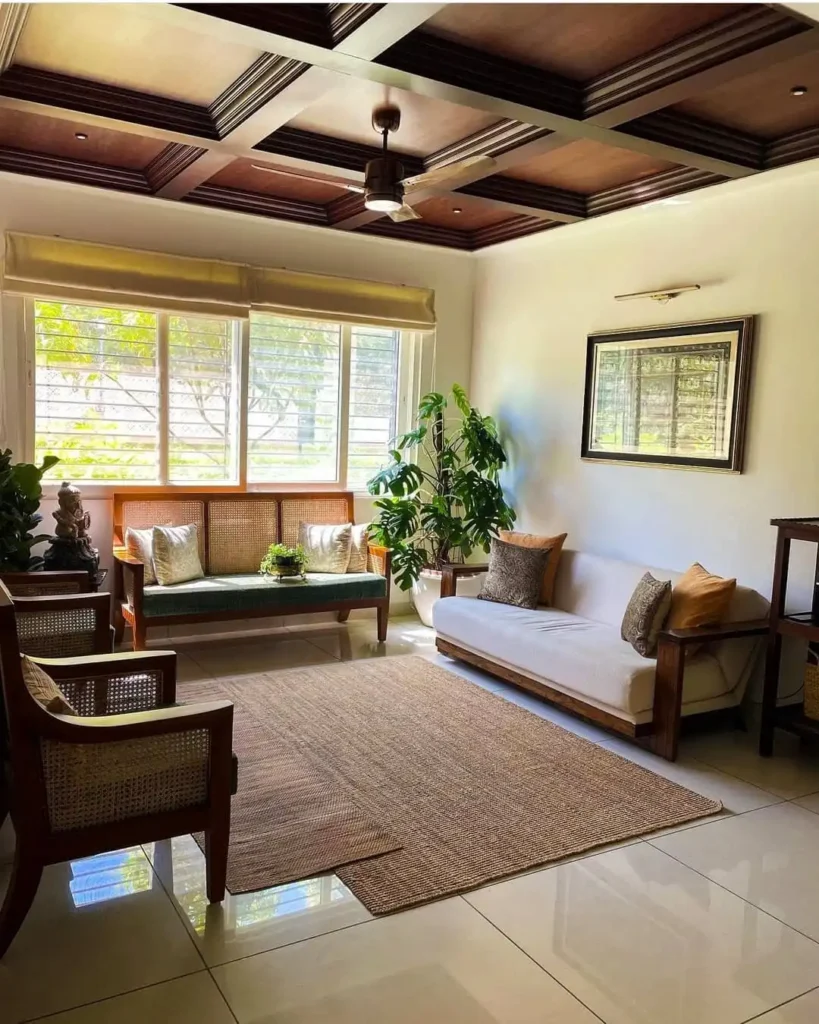
The first room takes a warmer, more traditional approach. A compact sofa with a visible wood frame sits opposite another light sofa, while cane chairs and a large natural rug give the room a relaxed, collected feel.
For a small living room, exposed legs or a visible frame can be a smart choice because they let you see more of the floor underneath the furniture.
That little bit of visual openness can make the room feel less heavy.
Read Also: Small Apartment Sofas Idea
Try this:
- Choose a sofa with raised legs.
- Use warm wood to add character to a neutral room.
- Keep the upholstery light if the room already has dark furniture.
- A large rug can visually connect several small seating pieces.
The detailed coffered ceiling in this room adds a lot of personality, too. When the architecture is already interesting, the sofa doesn’t need to compete with it.
2. Choose a Soft Gray Sectional for Everyday Comfort
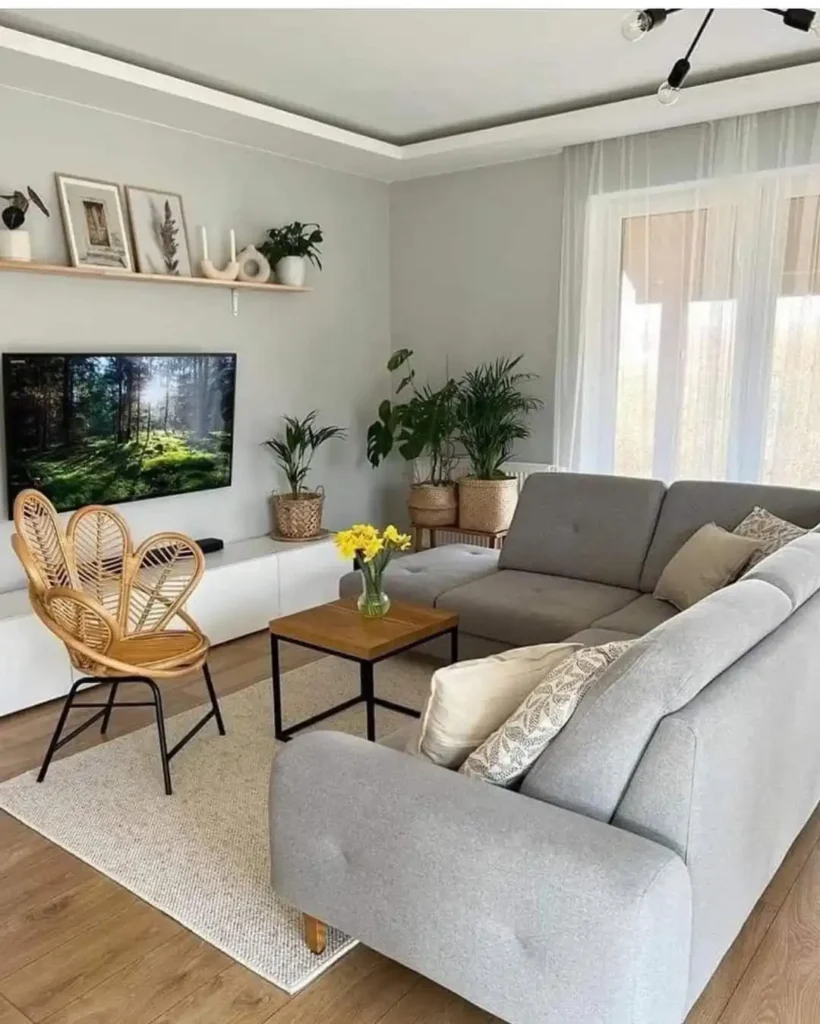
This gray sectional is a great example of using one large seating piece instead of filling a small room with several individual chairs.
The L-shape follows the corner and creates plenty of seating without spreading furniture across the room. The pale gray fabric also keeps the bulky shape from feeling too dominant.
A small wooden coffee table in front adds warmth and keeps the center of the room practical.
Small-space tip: If you’re buying a sectional, measure the chaise depth carefully. A sofa can technically fit along a wall while still blocking walking space.
Leave enough room for people to comfortably move between the sofa, coffee table, TV, and doorway.
3. Make a Cozy Neutral Room With a Low-Profile Sofa
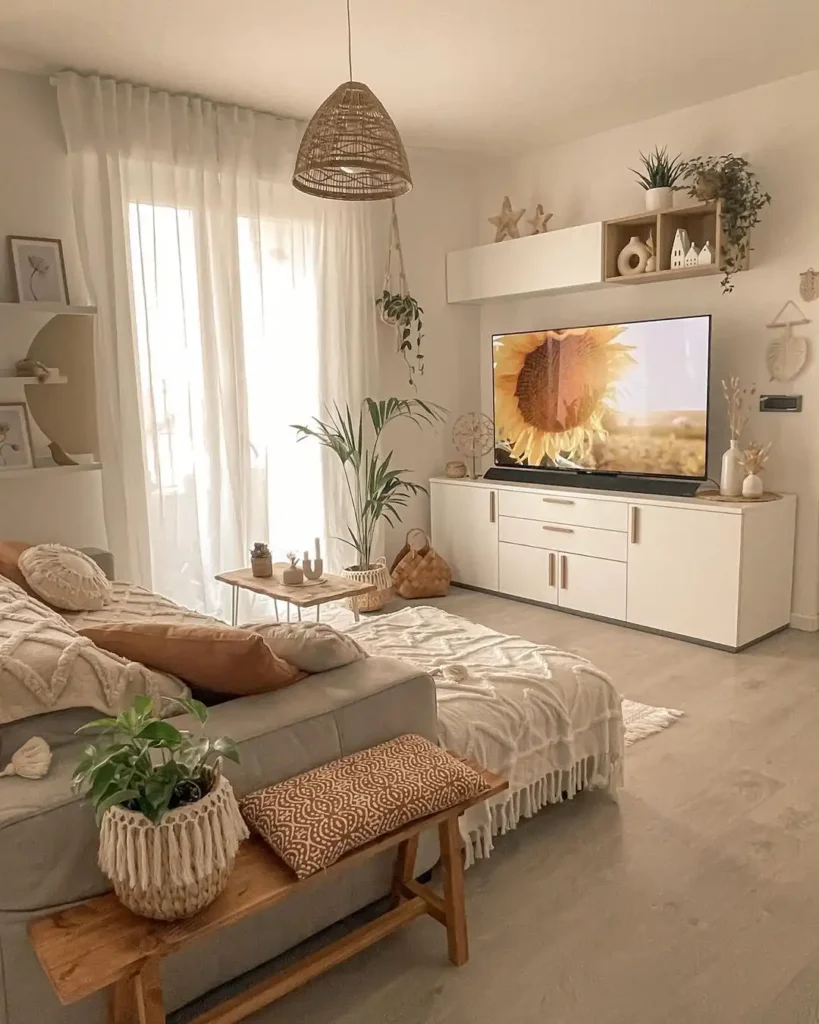
This warm cream-colored room proves that a small living space doesn’t need a complicated furniture arrangement.
The sofa sits low and comfortably into the room, while a wooden bench behind it provides another surface for a plant and decorative pillow. The woven pendant light and soft curtains add texture without making the room busy.
It’s a nice formula if you like that calm, cozy look.
For a similar feel:
- Use cream, beige, oatmeal, and soft brown.
- Add one or two woven accessories.
- Keep the coffee table relatively slim.
- Use plants to bring some natural green into the neutral palette.
The trick is repetition. Similar warm tones throughout the room make the space feel connected.
4. Use a White Sectional to Brighten a Small Room
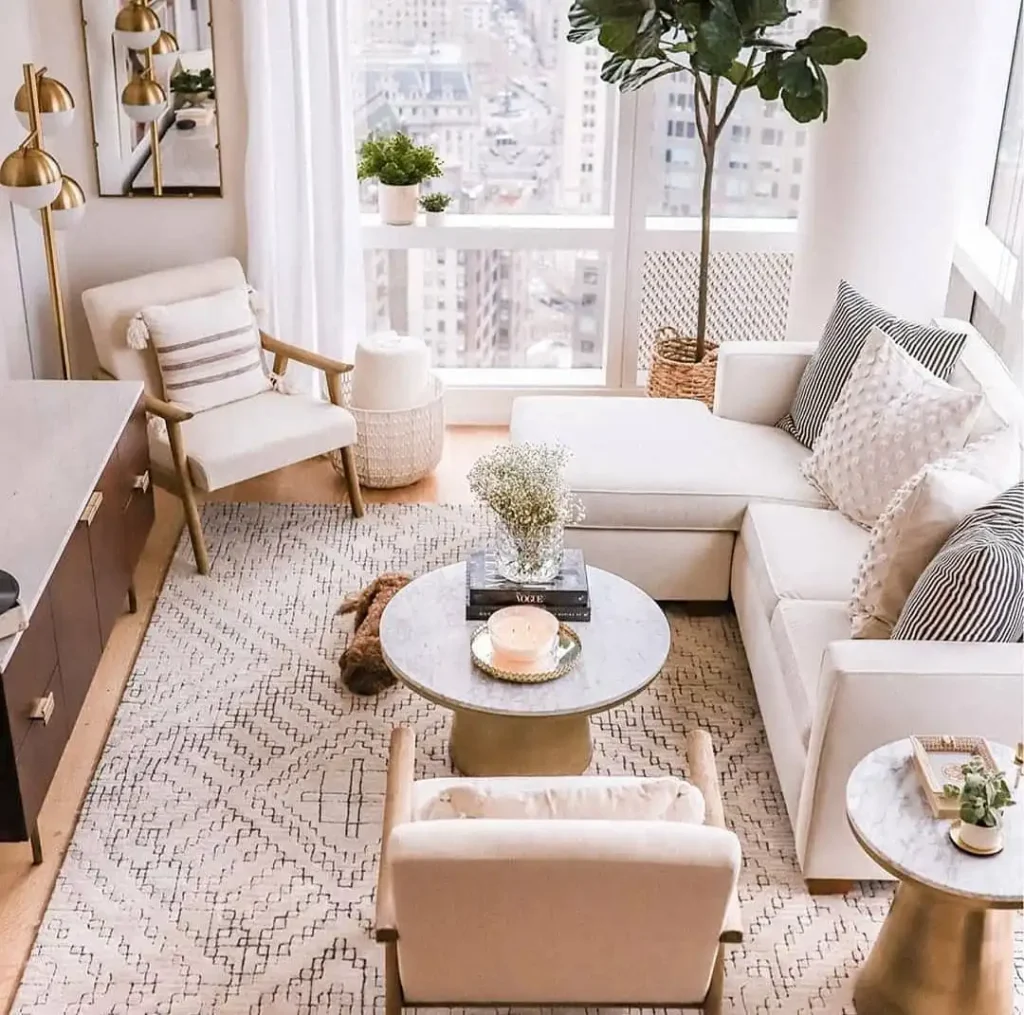
A white sectional can be a surprisingly good choice for a small living room, especially when the room receives plenty of natural light.
In this space, the white sofa blends into the walls and curtains rather than creating a strong visual block. A patterned rug gives the room definition without taking away that airy feeling.
The round coffee table is another smart move because there are no sharp corners interrupting the walking path.
If you worry about white upholstery, look for removable or washable covers and performance fabrics designed for everyday use.
5. Go Monochrome With a Gray Sofa
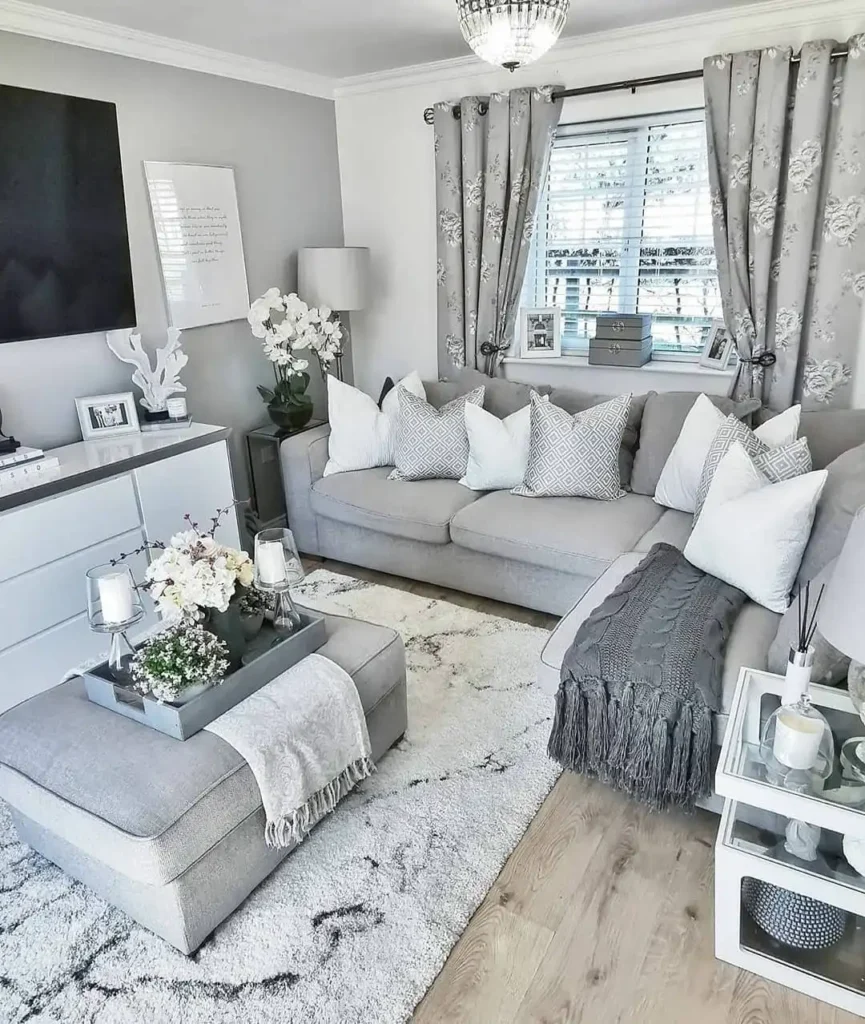
Gray sofas work especially well in compact rooms because they can sit comfortably between warm and cool color schemes.
Here, the gray sectional, patterned curtains, ottoman, rug, and cushions create a mostly monochromatic room. The different textures stop the space from looking flat.
This is a useful lesson if you’re decorating on a budget: you don’t need lots of colors to make a room interesting.
Instead, mix:
- Smooth upholstery
- Knitted throws
- Patterned cushions
- Soft rugs
- Shiny or glass accessories
The result feels layered without feeling crowded.
6. Add Character With a Cane-Inspired Sofa and Natural Materials
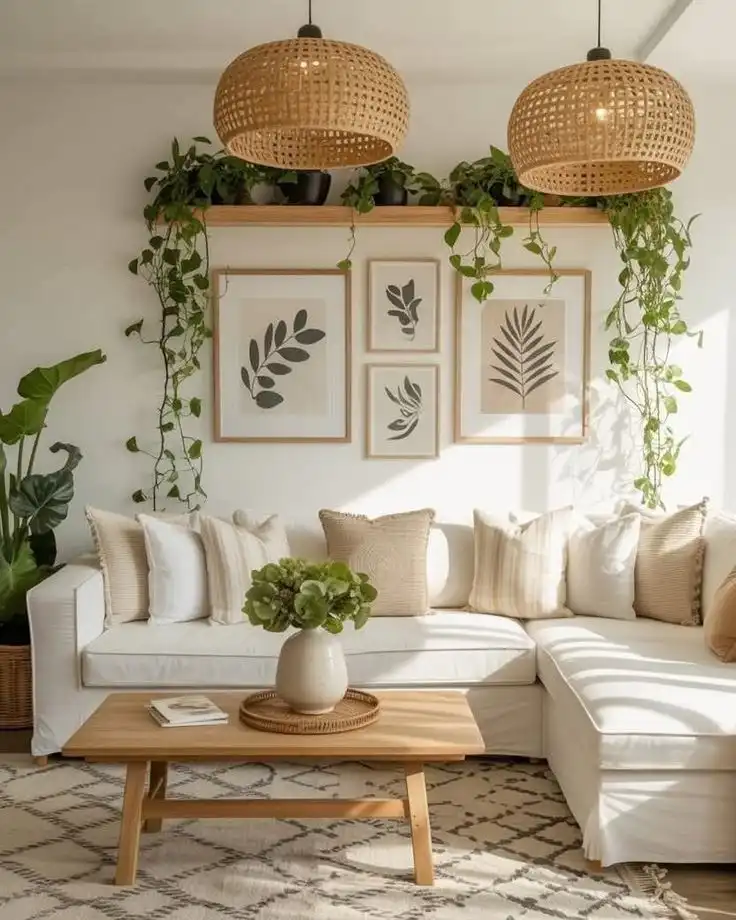
The sixth room leans heavily into natural materials. A light sofa is paired with woven pendant lights, trailing plants, wooden furniture, and botanical artwork.
This kind of combination is especially useful in small spaces because natural textures add warmth without requiring lots of decorative objects.
The floating shelf above the sofa also gives the wall a purpose while leaving the floor completely clear.
Designer trick: When floor space is limited, look upward. Wall shelves, hanging plants, artwork, and wall-mounted lighting can give you plenty of personality without stealing valuable floor area.
7. Create a Cozy Evening Setup With Warm Lighting
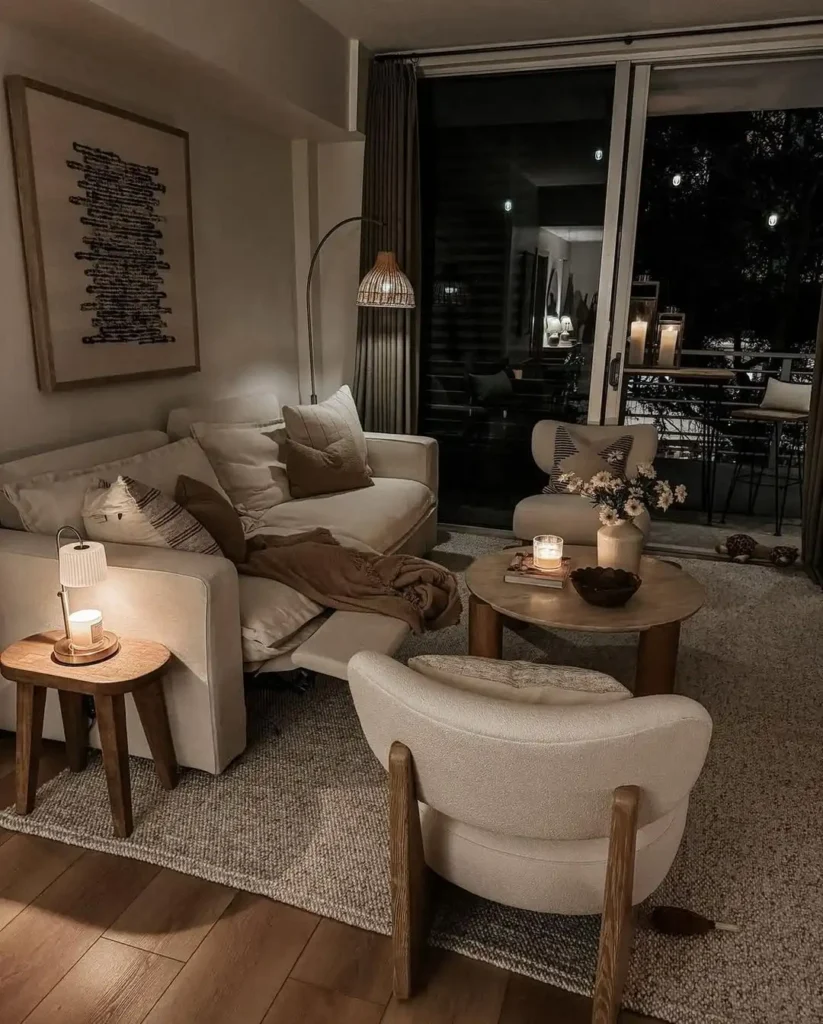
A small sofa doesn’t have to feel like a daytime-only piece of furniture.
This room uses a compact cream seating arrangement with a round wooden coffee table, floor lamp, side table, and several soft cushions. At night, the warm lamps and candles make the same small room feel intimate.
Think about lighting when choosing your sofa.
A pale sofa can reflect warm evening light beautifully, while textured cushions and throws give it a more relaxed appearance.
For cozy evenings:
- Use a floor lamp beside the sofa.
- Add a small table lamp.
- Choose warm-toned bulbs.
- Keep one soft throw within reach.
You want several smaller sources of light rather than one bright ceiling light doing everything.
8. Keep a Small Living Room Light and Scandinavian-Inspired
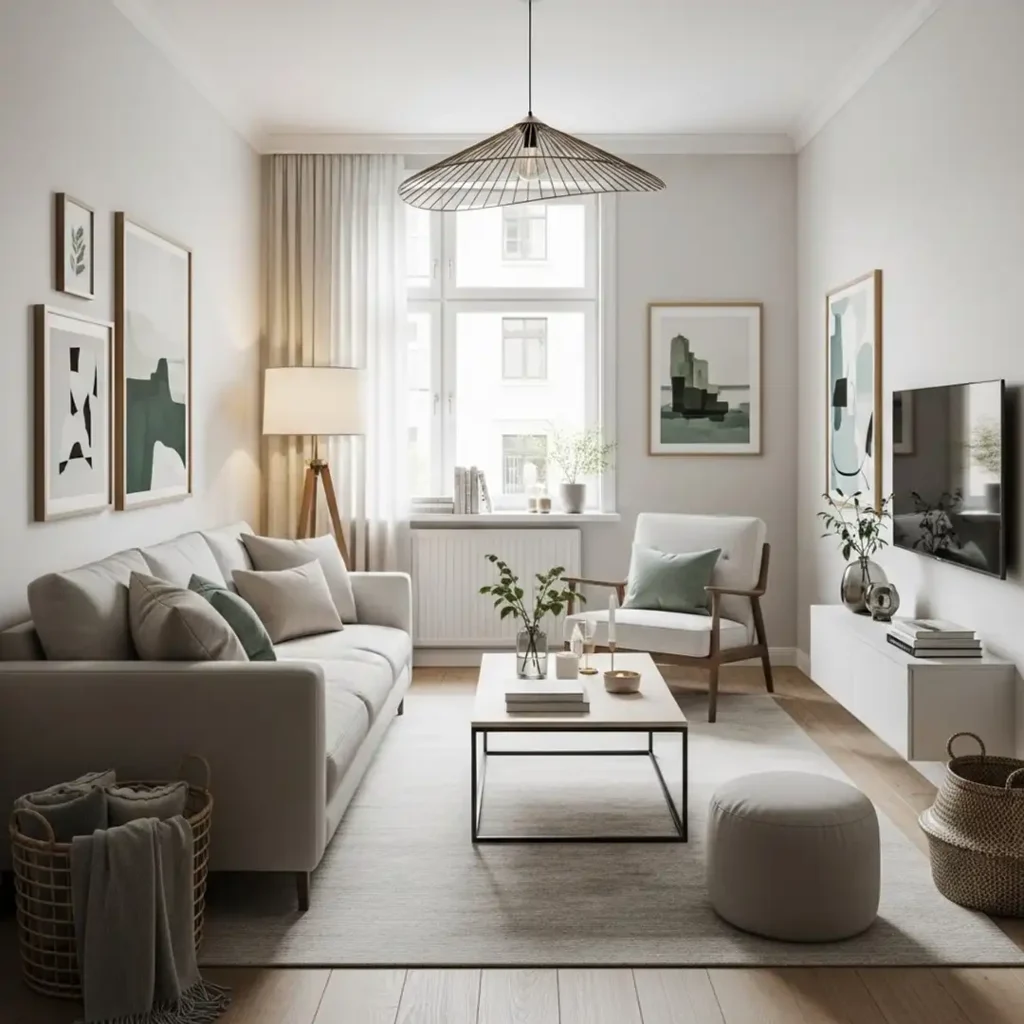
This room is a good example of Scandinavian-style restraint. The sofa is light, the walls are white, the furniture has simple lines, and the floor remains visible around the rug.
That floor space matters.
When you’re working with a small room, try not to push every possible piece of furniture into it. A sofa, one coffee table, one accent chair, and a small ottoman can be enough.
The large window also does much of the decorating work. Sheer curtains allow daylight to enter while keeping the room soft and private.
9. Try a Deep Green Sectional for a More Relaxed Look
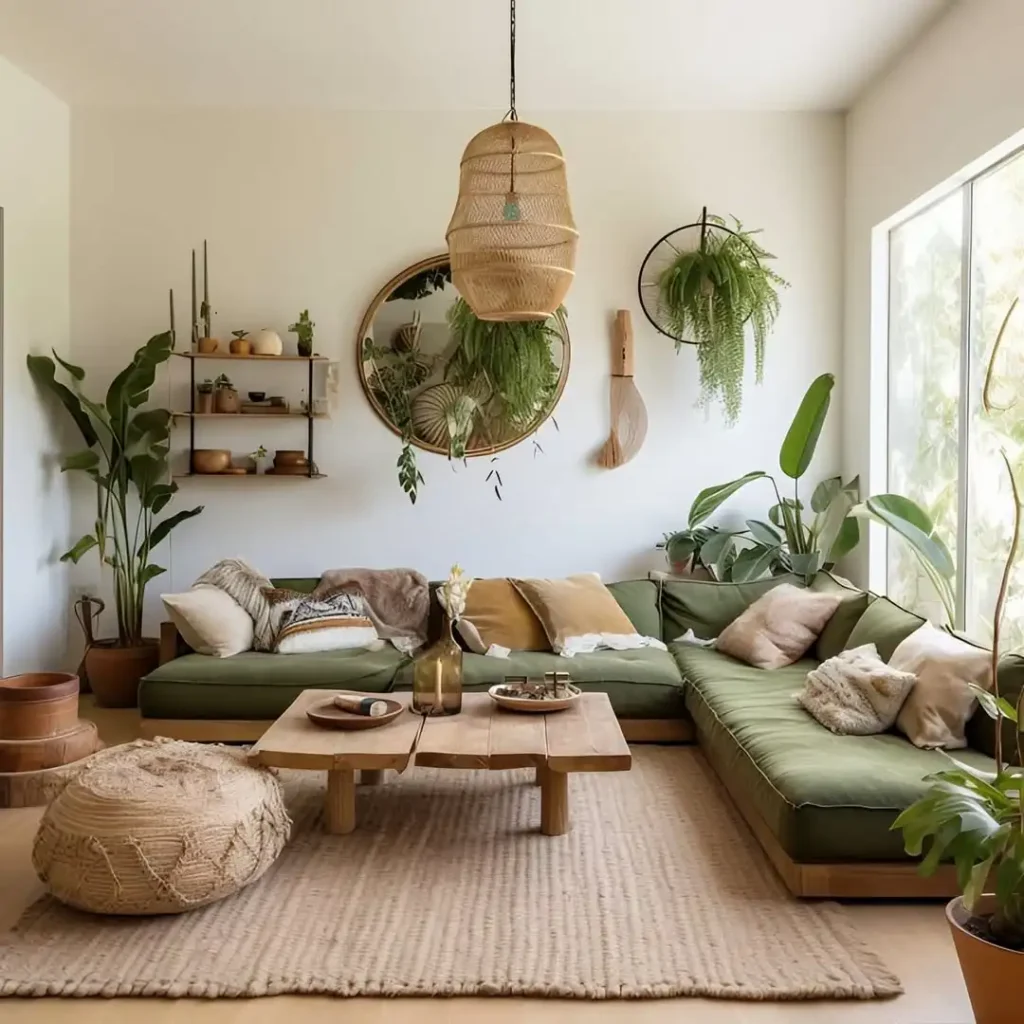
If neutral sofas aren’t your thing, take inspiration from this green sectional.
The deep olive upholstery gives the room a cozy, earthy mood, while the pale walls and natural wood keep it from becoming too dark. Lots of plants make the green sofa feel like part of the overall color story.
This is a great option for someone who wants a small living room to feel warm rather than minimalist.
Color idea: Pair olive green with:
- Warm beige
- Natural wood
- Cream
- Terracotta
- Muted brass
A bold sofa works best when the rest of the room gives it some visual breathing room.
10. Add Personality With a Green Sofa and Blush Accents
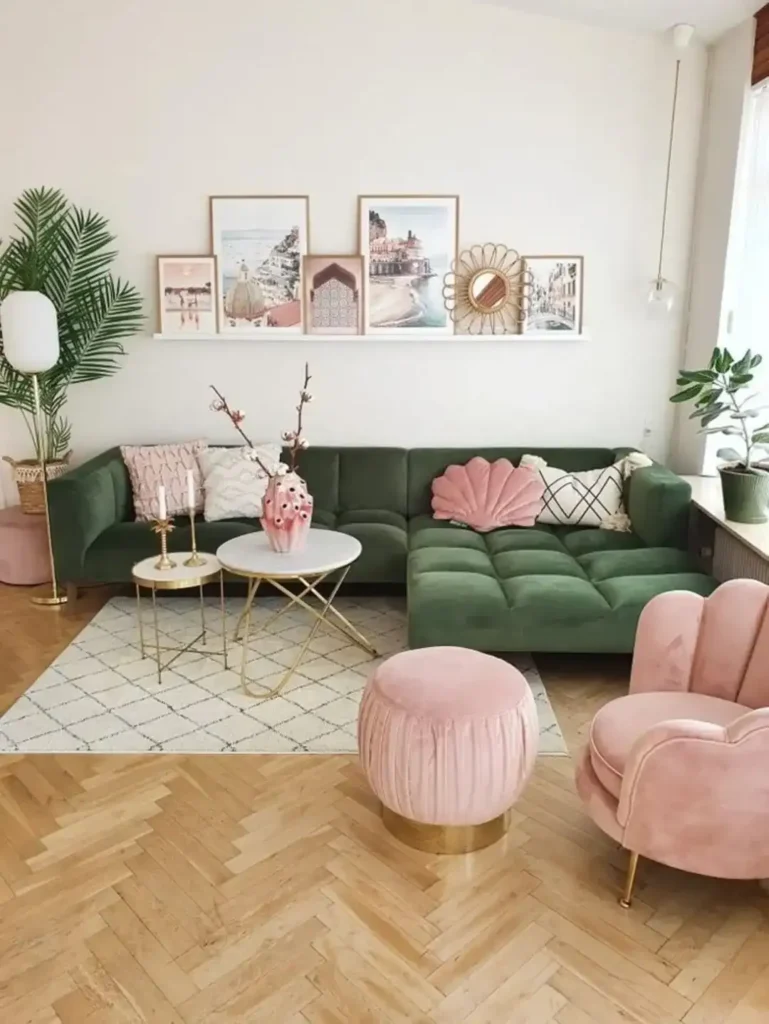
This room takes the green-sofa idea in a much more playful direction.
The dark green sectional is paired with pink cushions, a pink accent chair, a round ottoman, gold-toned tables, and colorful artwork. The result feels cheerful without needing a large room.
Notice how the strongest colors are repeated. Pink appears in several places, while green anchors the sofa and plants.
That’s an easy decorating technique: repeat a color at least a couple of times so it feels intentional rather than random.
11. Use a Dark Sofa to Ground a Neutral Room
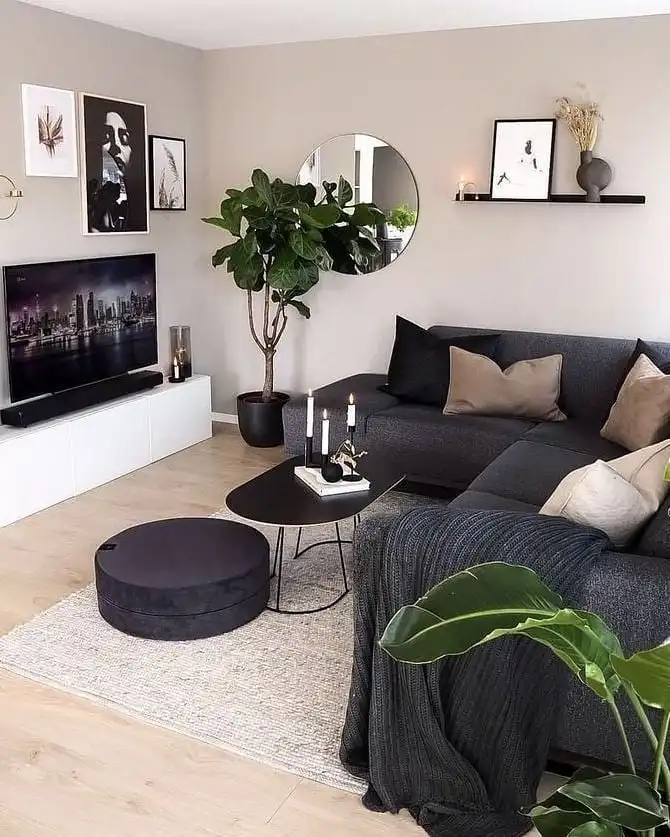
A charcoal or black sectional can actually make a small room look sophisticated, provided you balance it with lighter surroundings.
This room does exactly that. The dark sofa is surrounded by pale walls, light flooring, a cream rug, and plenty of greenery.
The round black coffee table repeats the sofa’s dark tone and helps create a visual connection between the two pieces.
If your room has a dark sofa, don’t automatically add more dark furniture. Let a few darker accents do the work while keeping larger surrounding surfaces lighter.
12. Create a Glamorous Small Living Room With Gray and Black
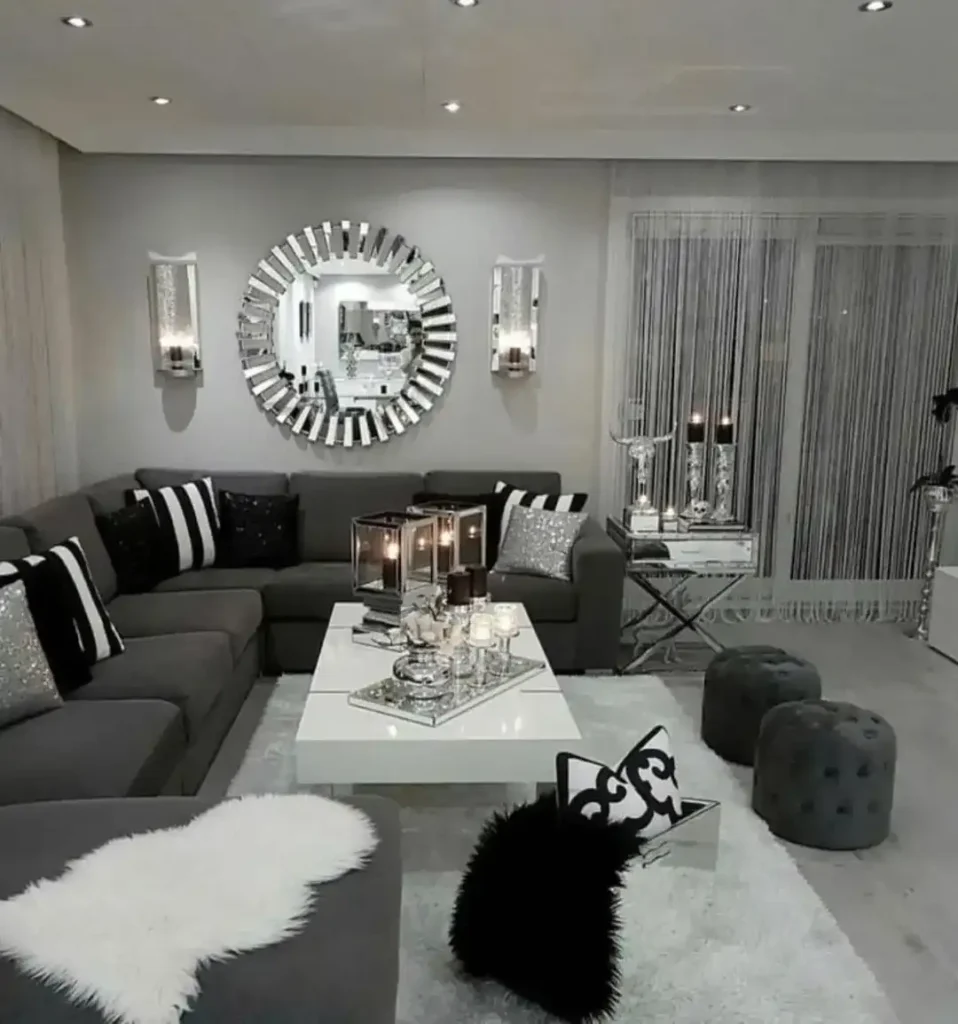
This gray-and-black room shows how a compact living area can feel dramatic without using bright colors.
The sectional is large enough for lounging, while black-and-white cushions, a mirrored wall piece, candles, and metallic-looking accessories bring a touch of glamour.
The key here is texture. The fluffy throws, patterned cushions, reflective surfaces, and soft rug all catch the eye.
For a similar room, choose one statement decorative feature—such as a large mirror—and let smaller accessories support it.
13. Use a Compact Sofa in a Narrow Apartment Layout
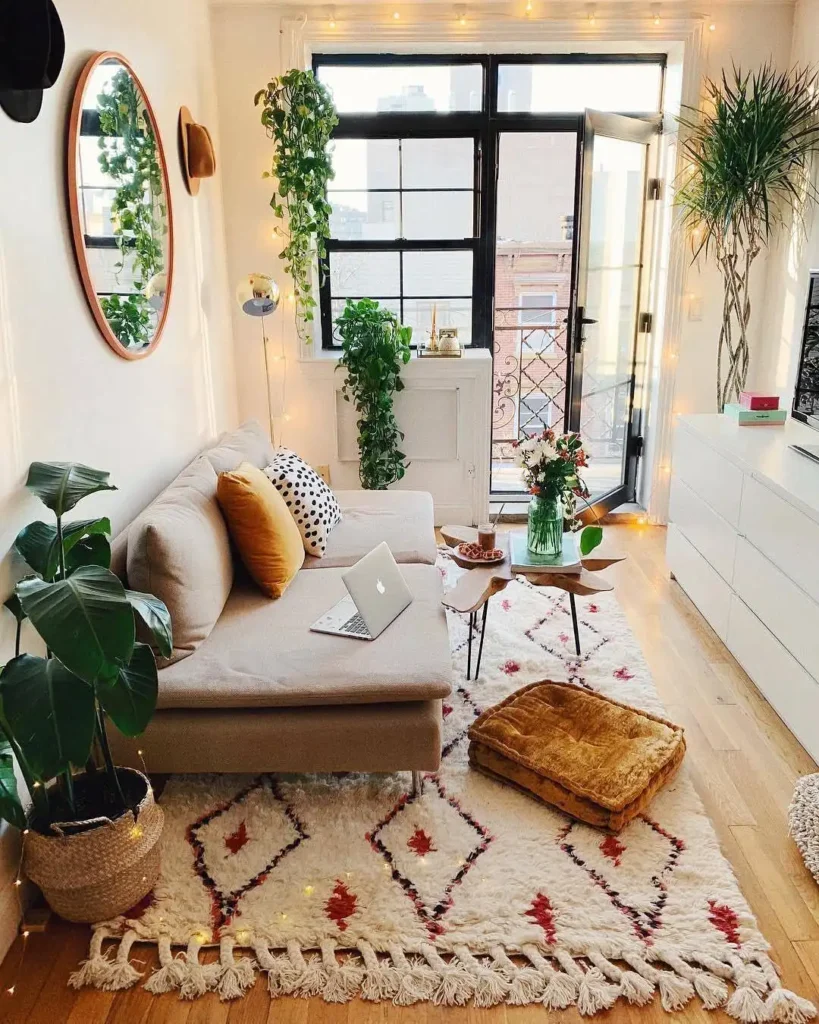
This image is especially useful if your living room is narrow.
The sofa sits along the wall, leaving a clear route toward the balcony or doorway. A slim coffee table and wall mirror make use of the available space without creating obstacles.
The plants are positioned around the edges rather than directly in the walkway.
That’s something worth copying.
In a narrow living room:
- Keep major furniture against the perimeter.
- Avoid oversized coffee tables.
- Leave pathways visibly open.
- Use mirrors where they can reflect daylight.
- Pick furniture with a smaller visual footprint.
Good furniture placement can matter more than the actual size of the sofa.
14. Bring in Bohemian Texture With Floor-Level Seating
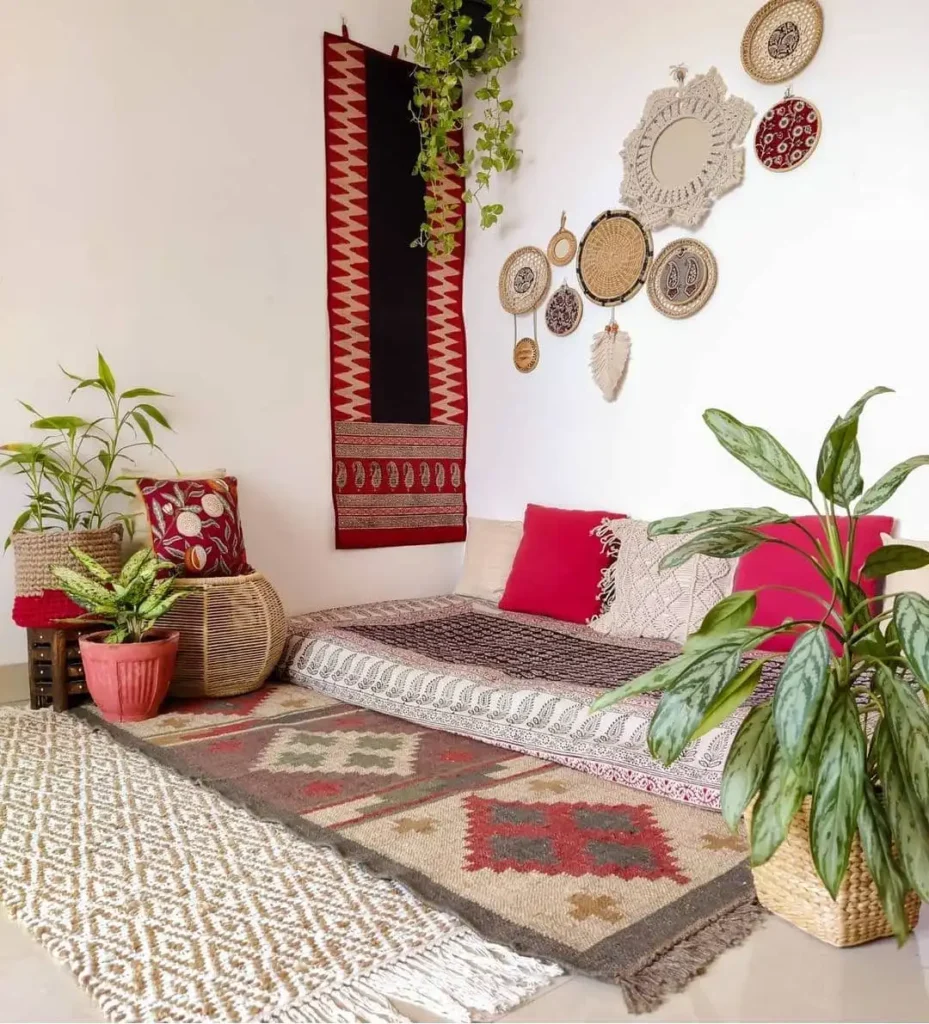
This setup takes a completely different approach. Instead of a conventional high-backed sofa, the room uses a low seating arrangement covered with patterned textiles.
Layered rugs, colorful cushions, woven wall decorations, and plants give the room a relaxed bohemian personality.
This style works particularly well if you like casual spaces where people can sit comfortably on cushions and floor-level furniture.
The important thing is to control the pattern. If the rug is busy, let some cushions be solid. If the wall has lots of decoration, keep the furniture relatively simple.
15. Make a Small Room Feel Soft With Cream and Natural Textures
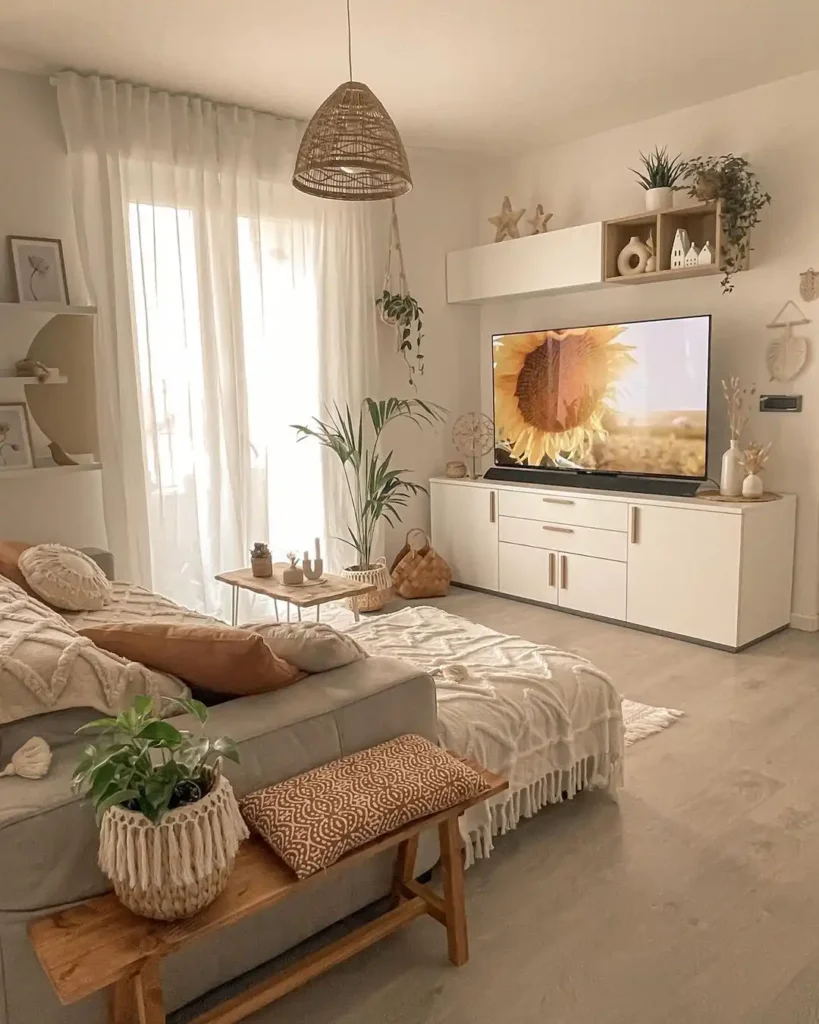
This room uses a cream sofa, warm wood, woven accessories, soft curtains, and neutral textiles.
The furniture arrangement isn’t complicated. That’s exactly why it works.
Instead of trying to make every corner interesting, the room repeats the same family of colors and materials. The result feels calm and comfortable.
For renters especially, this is an easy approach because you can create a completely different atmosphere with cushions, rugs, throws, baskets, and lighting without changing the sofa itself.
16. Add Contrast With a Charcoal Sectional and Light Rug
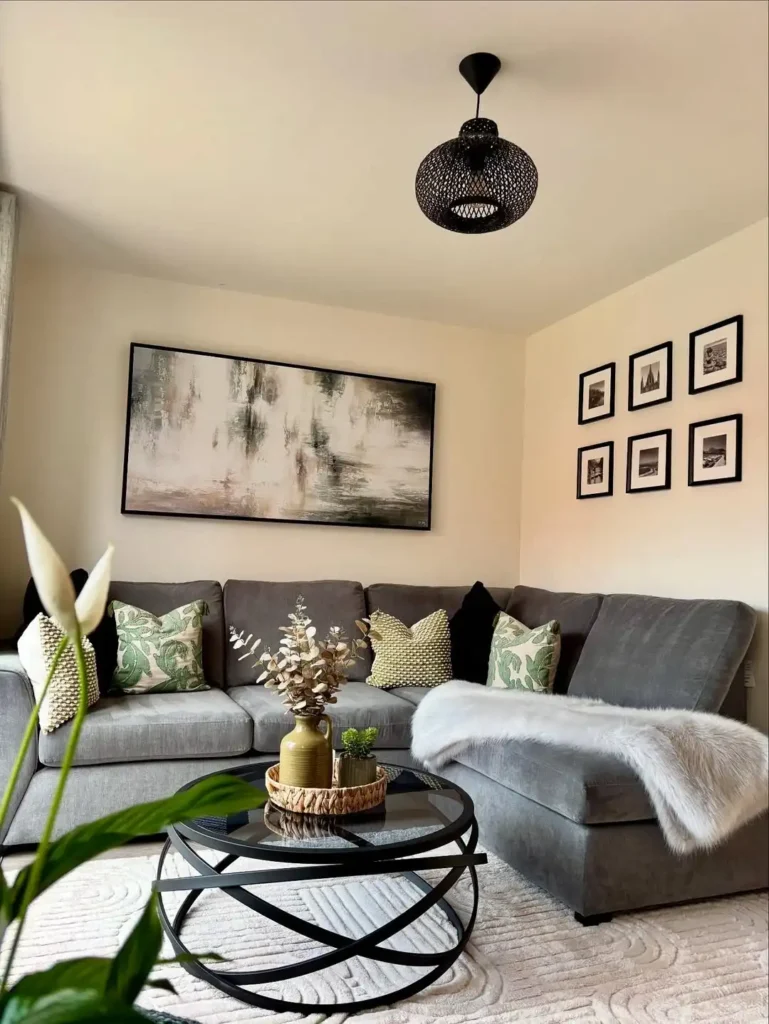
The charcoal sectional in this image gives the room a strong visual anchor.
Because the walls and rug are light, the sofa doesn’t make the room feel gloomy. A large round coffee table also softens all the straight lines created by the sectional and wall-mounted artwork.
This is a useful layout trick.
If your sofa is angular and your TV cabinet is rectangular, add at least one rounded element—a circular coffee table, round mirror, curved chair, or rounded lamp.
It makes the room feel less boxy.
17. Use an Ottoman as Flexible Extra Seating
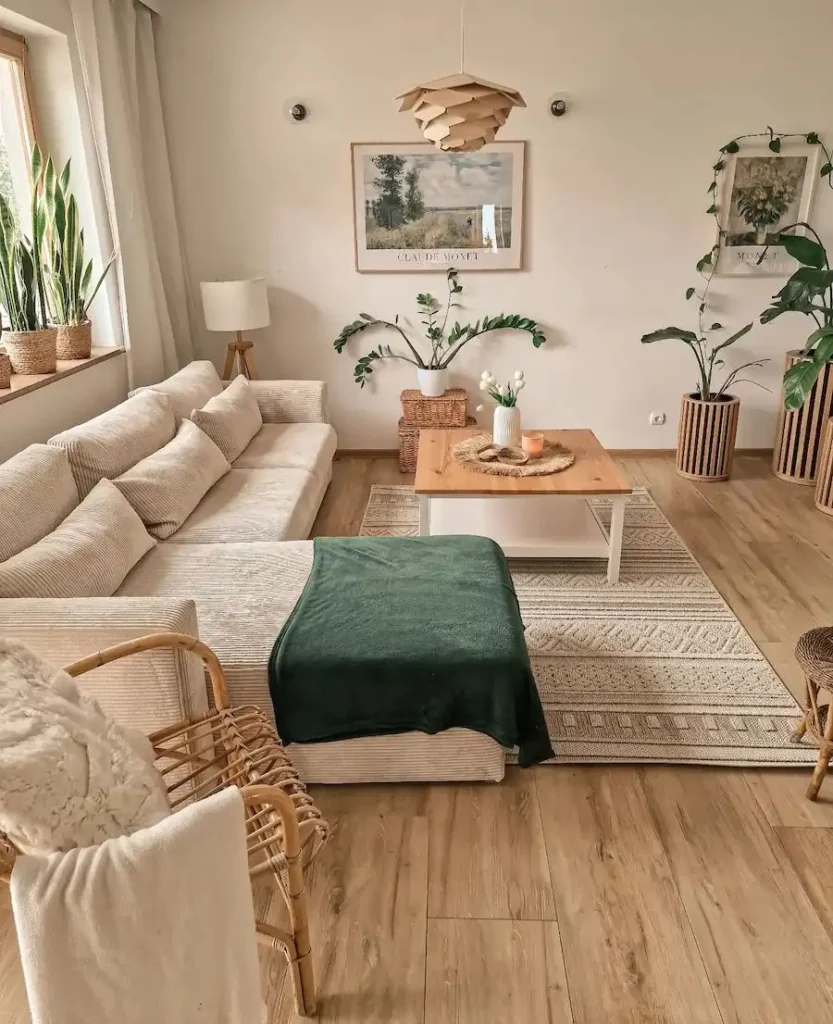
The cream sofa in this room is paired with an ottoman at the front. That ottoman can act as a footrest, extra seating, or even a temporary coffee-table surface when a tray is placed on top.
That’s extremely useful in a small living room.
Instead of buying several chairs that sit unused most of the day, choose one flexible piece that can serve more than one purpose.
Look for:
- Lightweight ottomans
- Storage ottomans
- Round poufs
- Small upholstered benches
You can move them when guests arrive or when you need more floor space.
18. Choose a Modular Sofa for a Clean Modern Room
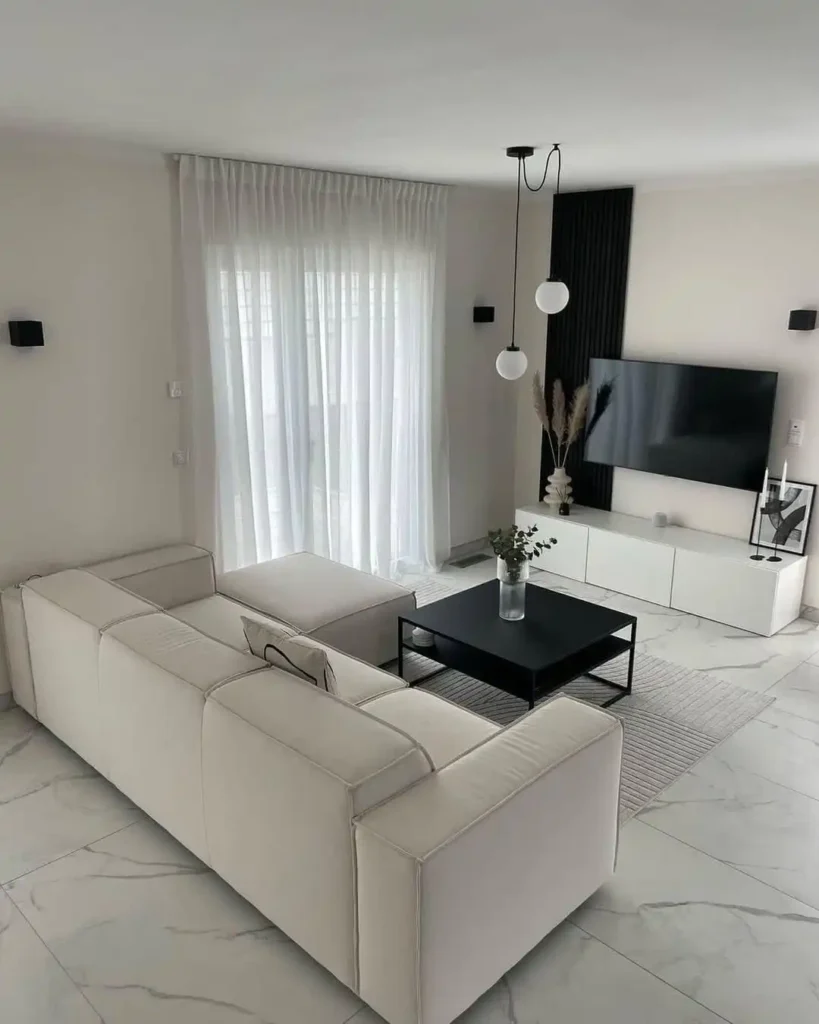
This white modular sofa arrangement is made for someone who prefers clean lines.
The sectional creates a comfortable seating zone without lots of separate furniture pieces. The black coffee table adds contrast, while the black vertical wall panel behind the TV gives the room a defined focal point.
The white floor and walls make the space feel open.
If you’re considering a white modular sofa, pay close attention to the fabric. In a busy household, stain resistance and easy cleaning should be part of the buying decision—not an afterthought.
19. Make a Small Room Interesting With a Rust-Colored Sofa
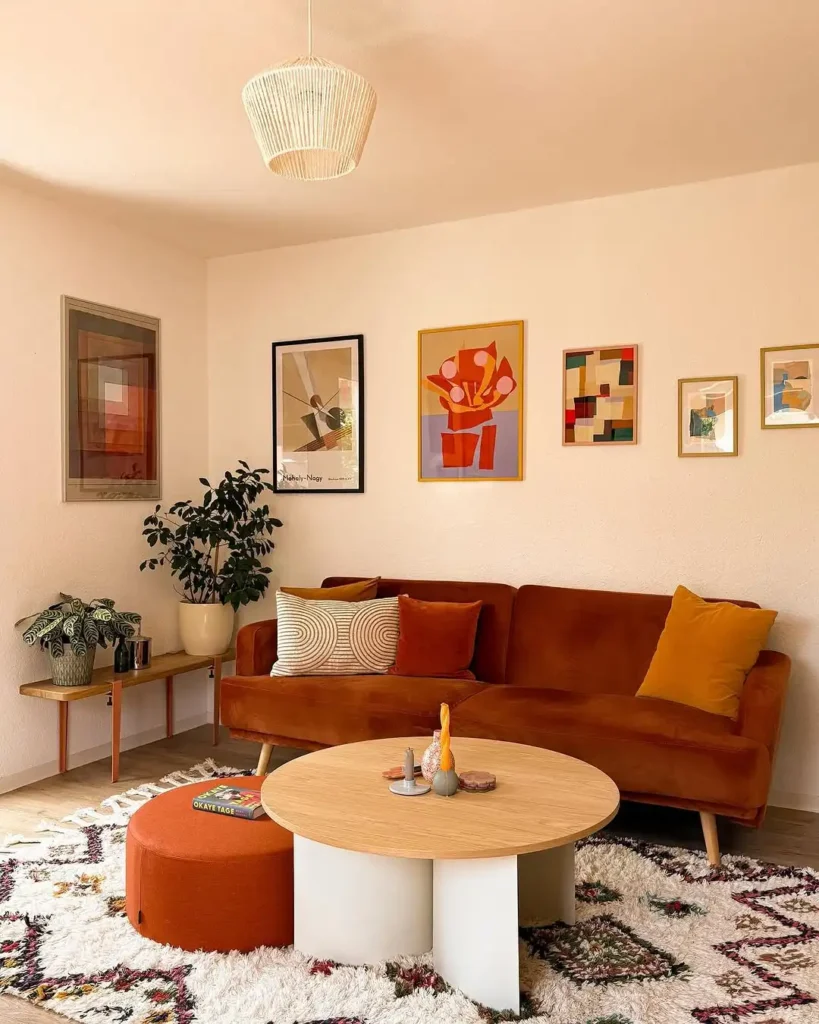
A rust or burnt-orange sofa can completely change a small living room.
In this room, the warm sofa is paired with colorful artwork, an orange ottoman, a patterned rug, and a round wood-and-white coffee table.
The color is strong, but the furniture remains relatively simple, which keeps the room from feeling overloaded.
If you want a colorful sofa but you’re nervous about committing, keep the walls neutral and repeat small touches of the sofa color in artwork, cushions, or accessories.
That way, the sofa feels like part of the room rather than something dropped into it.
20. Mix a Soft Sofa With Vintage and Natural Details
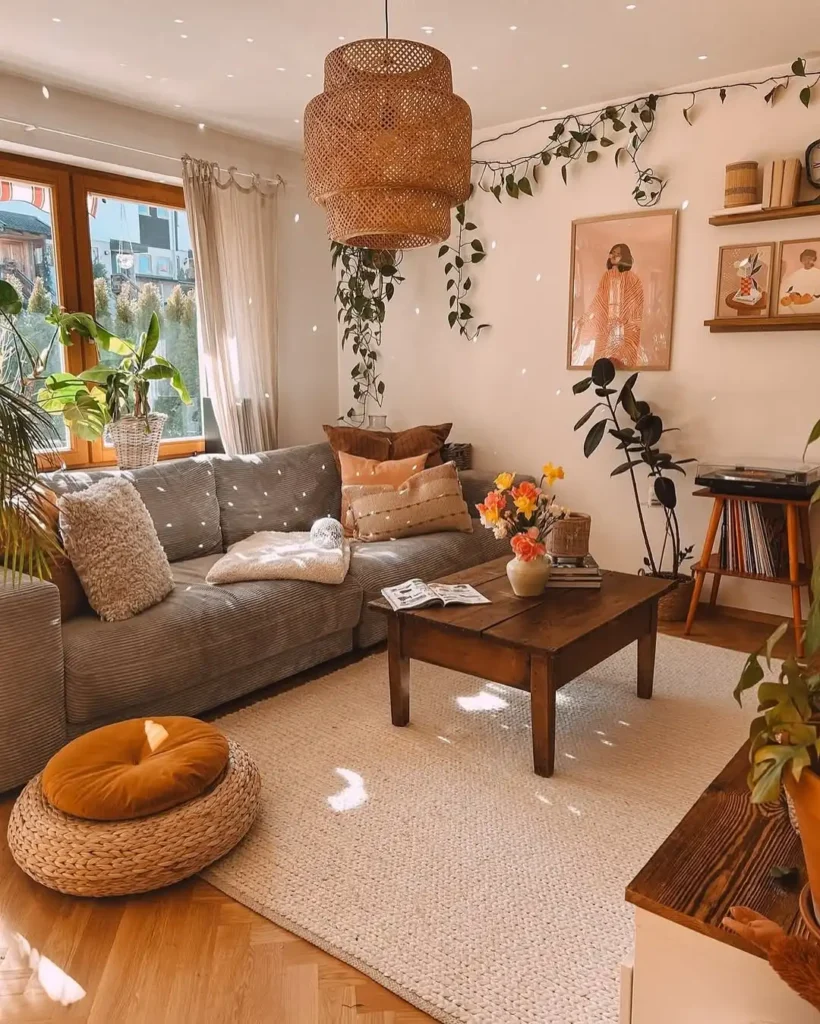
The final room has a wonderfully lived-in feel. A soft gray sectional sits beside a wooden coffee table, woven pendant light, plants, books, textured cushions, and a round woven floor cushion.
It feels comfortable rather than overly decorated.
That’s an important quality in a small living room. You want the space to look like somewhere people actually spend time.
Add things you genuinely use: a basket for blankets, a small table for coffee, a comfortable cushion, a plant you enjoy looking after. Those practical details often make a room feel more personal than a shelf full of decorative objects.
How to Choose the Right Sofa for a Small Living Room
Before you fall in love with a sofa online, measure the room.
Measure the wall where the sofa will sit, but also measure doorways, hallways, elevators, staircases, and tight corners. A sofa that fits the living room can still be impossible to get through the front door.
Pay attention to depth, too. A sofa that’s only a few inches deeper can take away a surprising amount of usable floor space.
For most compact rooms, look for a sofa with a sensible depth, slim arms, and legs that lift the frame slightly off the floor.
Think About Your Actual Lifestyle
A beautiful small sofa isn’t useful if nobody wants to sit on it.
If you love movie nights, a compact sectional may be worth sacrificing a little floor space for. If you mostly sit upright and entertain friends, a standard sofa with one or two lightweight chairs may work better.
If you have pets or young children, upholstery should be chosen with real life in mind.
A beautiful cream sofa can work—but washable covers or a durable performance fabric can make the decision much less stressful.
Small Living Room Sofa Tricks That Make a Big Difference
1. Don’t automatically push every sofa against the wall
Sometimes leaving a small gap behind the sofa creates a better sense of space and gives you room for a narrow console or plant.
2. Size the rug correctly
A tiny rug floating in the middle of the room can make the furniture arrangement look disconnected.
Whenever possible, let at least the front legs of the sofa sit on the rug.
3. Use round coffee tables
Round tables are especially useful when space is tight. They’re easier to walk around and don’t create sharp corners in busy pathways.
4. Keep the visual weight balanced
A large dark sofa can feel heavy if everything else in the room is also dark.
Balance it with lighter curtains, a pale rug, light walls, or a few reflective surfaces.
5. Use plants strategically
Plants don’t have to be scattered everywhere. One tall plant beside the sofa or one medium plant near a window can be enough to soften an otherwise plain corner.
6. Don’t forget the wall above the sofa
A blank wall can make a small sofa look lost.
Try one large artwork, a slim picture ledge, a round mirror, or a small gallery arrangement—but avoid filling every inch.
What Sofa Shape Works Best in a Small Living Room?
A compact L-shaped sectional is ideal when you want maximum lounging space and have a usable corner.
A standard two- or three-seat sofa is more flexible if you frequently rearrange furniture or need a clear walkway.
A low-profile sofa works well when you want the room to feel visually open.
A sofa with exposed legs lets more floor remain visible, which can make a compact space feel lighter.
And if you really need flexibility, consider a modular sofa or small sofa plus ottoman. You can change the arrangement as your needs change.
The Best Small Living Room Sofa Is the One That Fits Your Life
The images here prove that there isn’t one perfect sofa style for a small living room.
A pale sectional can make a room feel airy. A charcoal sofa can add depth. A green sectional can bring personality, while a rust-colored sofa can become the main feature of the room.
What matters most is the relationship between the sofa and everything around it.
Give the furniture enough breathing room, keep the walking paths clear, choose a rug that connects the seating area, and use lighting and texture to make the room feel finished.
A small living room doesn’t need to feel like you’re constantly squeezing past the furniture. With the right sofa and a thoughtful layout, it can become the coziest room in the home.