15 Small Apartment Sofas That Make a Big Difference in a Small Space
When you live in a small apartment, choosing a sofa can feel surprisingly difficult. You need somewhere comfortable to sit, but every extra inch matters. A sofa that’s too deep can eat up the room. One that’s too bulky can make the whole apartment feel crowded.
The good news is that small sofas don’t have to look plain or feel uncomfortable. The right shape, fabric, leg style, and placement can make a compact living room feel much more open.
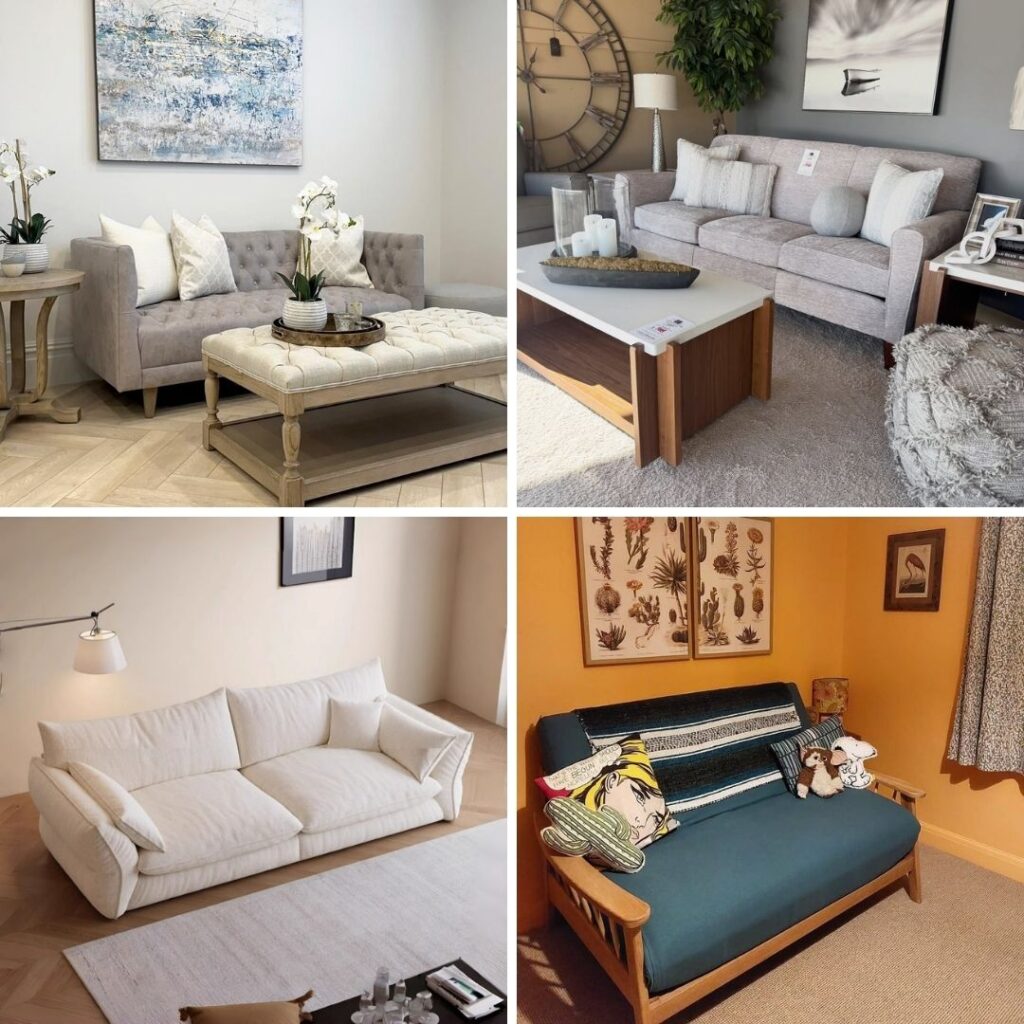
I pulled these 15 ideas from the sofa and living-room examples you provided, focusing on what actually makes each one work in a smaller home.
1. Teal Futon-Style Sofa With a Wood Frame
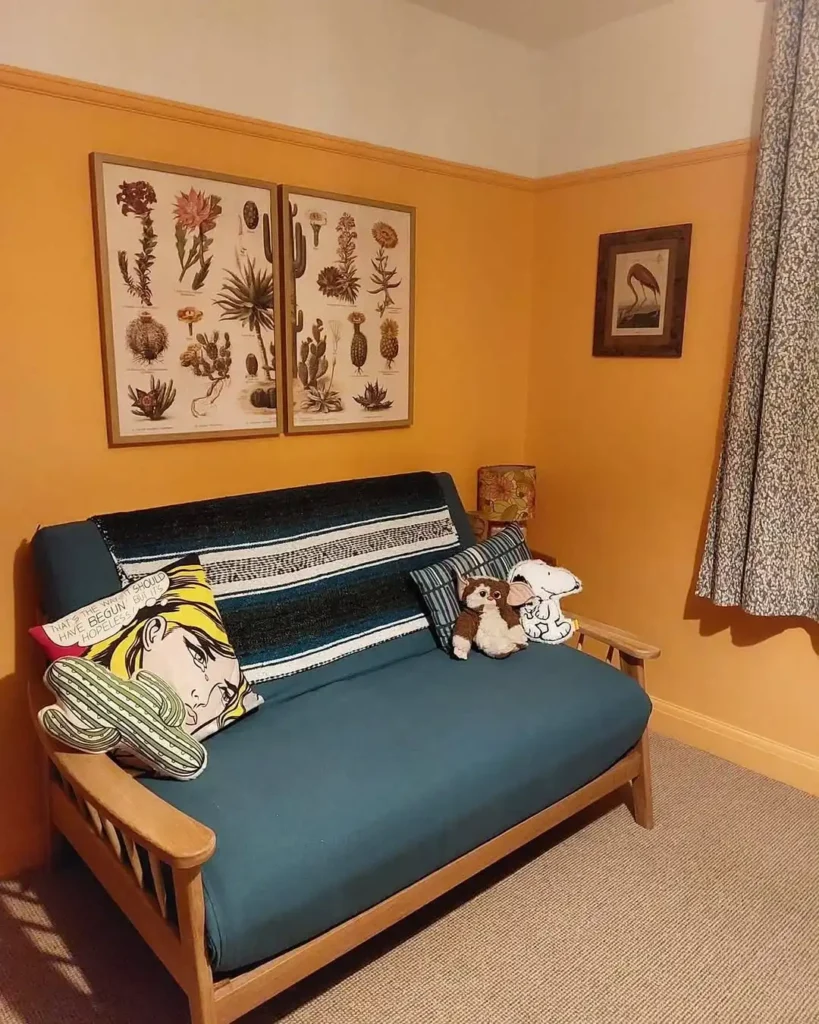
A compact futon-style sofa is a smart choice when you need your furniture to do more than one job. The teal cushion paired with a warm wood frame gives this piece a relaxed, slightly vintage feel without making the room look heavy.
The open wood underneath also helps. You can see more of the floor, which makes the sofa feel lighter than a fully upholstered piece sitting directly on the ground.
Why it works in a small apartment:
- The visible legs create a more open look.
- A futon-style design can work for sitting and occasional sleeping.
- The colorful upholstery gives personality without requiring lots of decoration.
- The wooden frame adds warmth to a simple room.
If your apartment doubles as a guest room, this type of sofa is worth considering. Just make sure the sleeping surface is actually comfortable before buying one.
2. Moss Green Tufted Sofa
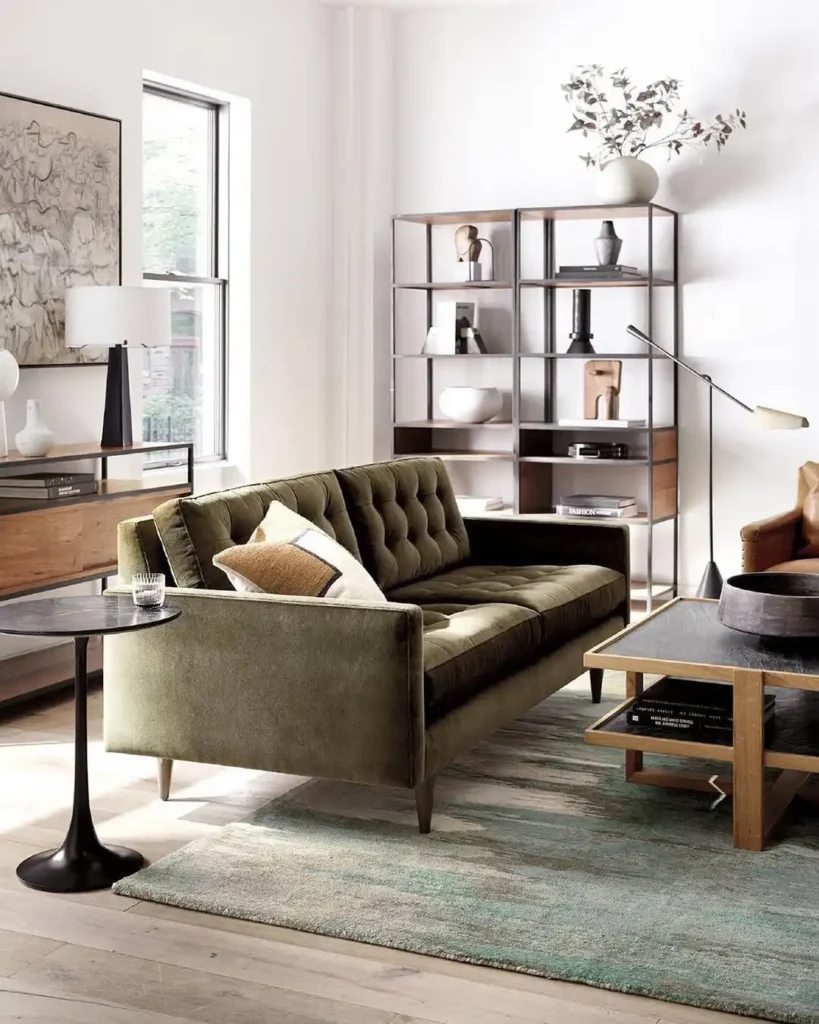
There’s something very inviting about a deep green sofa. This one has a mid-century feel, with tufted upholstery and tapered legs that keep the design from looking oversized.
The trick here is the contrast between the substantial-looking seat and the raised base. The sofa feels cozy, but the floor remains visible underneath.
In a small living room, that little bit of visual space matters.
Try pairing a sofa like this with a simple coffee table rather than several small tables scattered around the room. One well-sized piece can actually make the room feel less cluttered.
A good styling approach:
- Keep the surrounding furniture fairly simple.
- Use one or two textured cushions.
- Add a floor lamp rather than another bulky side cabinet.
- Let the sofa be the main color in the room.
Green also works nicely with natural wood, cream, beige, and black accents, so you’re not locked into one decorating style.
3. Dusty Pink Antique-Style Settee
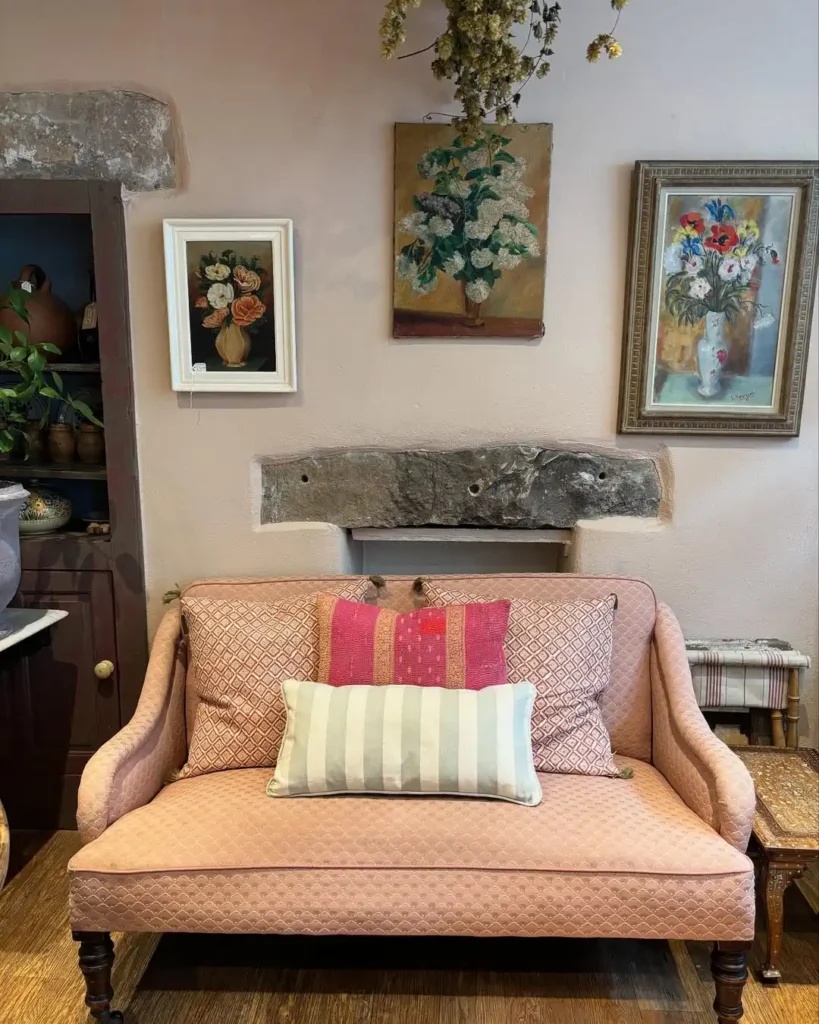
Small apartments can be a great place to use furniture with personality because you don’t need many pieces to make an impression.
This dusty pink settee is a good example. Its traditional shape, patterned upholstery, and dark wooden feet give it an old-fashioned charm. It looks more like a special piece of furniture than a standard apartment sofa.
A compact settee can be especially useful in a narrow living room, bedroom sitting area, or small reading corner.
If you’re considering a vintage-style sofa, check:
- Seat depth before buying.
- Whether the cushions can be removed for cleaning.
- The condition of the frame.
- Whether the upholstery feels comfortable for everyday use.
Pretty furniture still needs to be practical. A sofa that looks lovely but leaves you sitting stiffly after ten minutes isn’t going to feel like a good purchase for long.
4. Striped Settee With a Dark Wood Frame
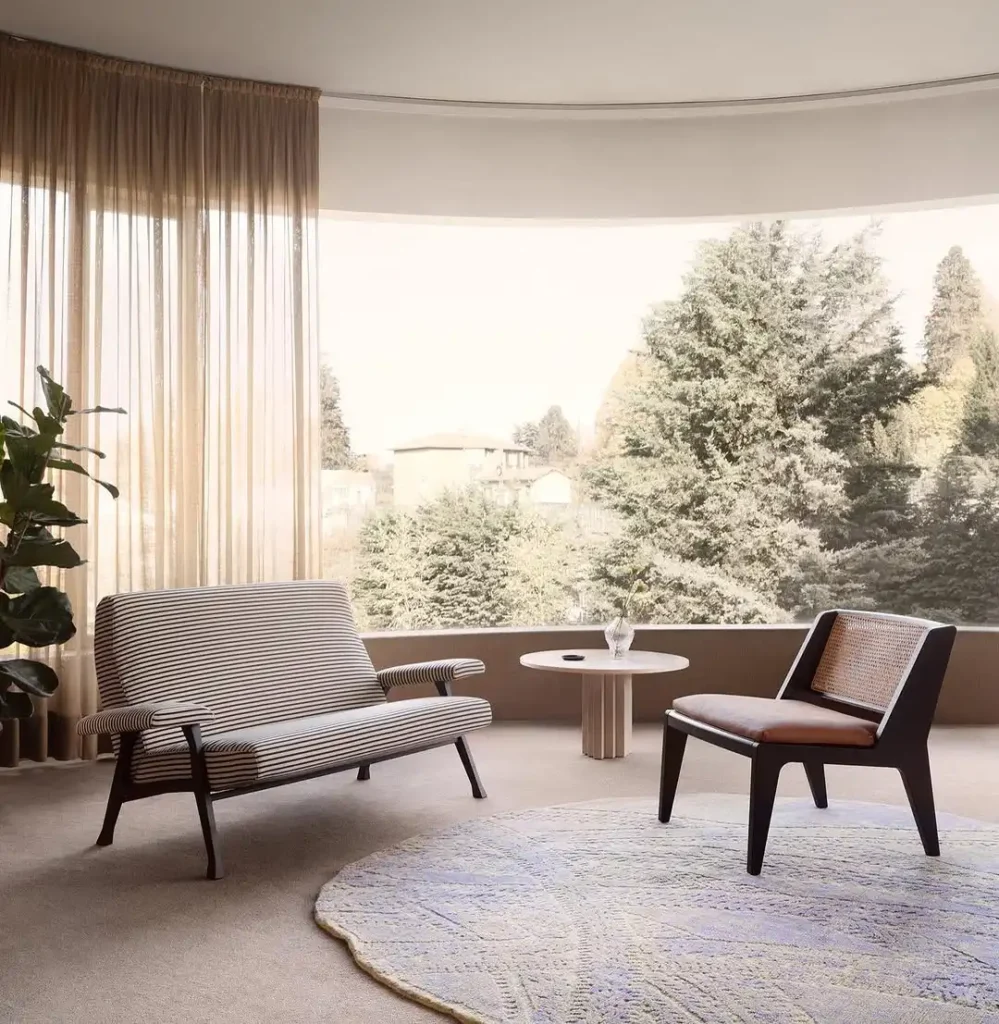
Stripes are one of those patterns that can completely change how a small sofa feels.
Here, the narrow striped upholstery gives the settee a lighter, more tailored appearance. The dark frame adds contrast and makes the furniture feel deliberately designed rather than oversized.
This is a nice option if your apartment has traditional architectural details, exposed wood, or vintage furniture.
You also don’t need much else around it. A small side table and a framed print can be enough.
Small-space tip: If your sofa already has a noticeable pattern, keep the rug and larger furniture relatively quiet. Too many competing patterns can make a compact room feel visually busy.
5. Deep Cream Sofa With Loose Cushions
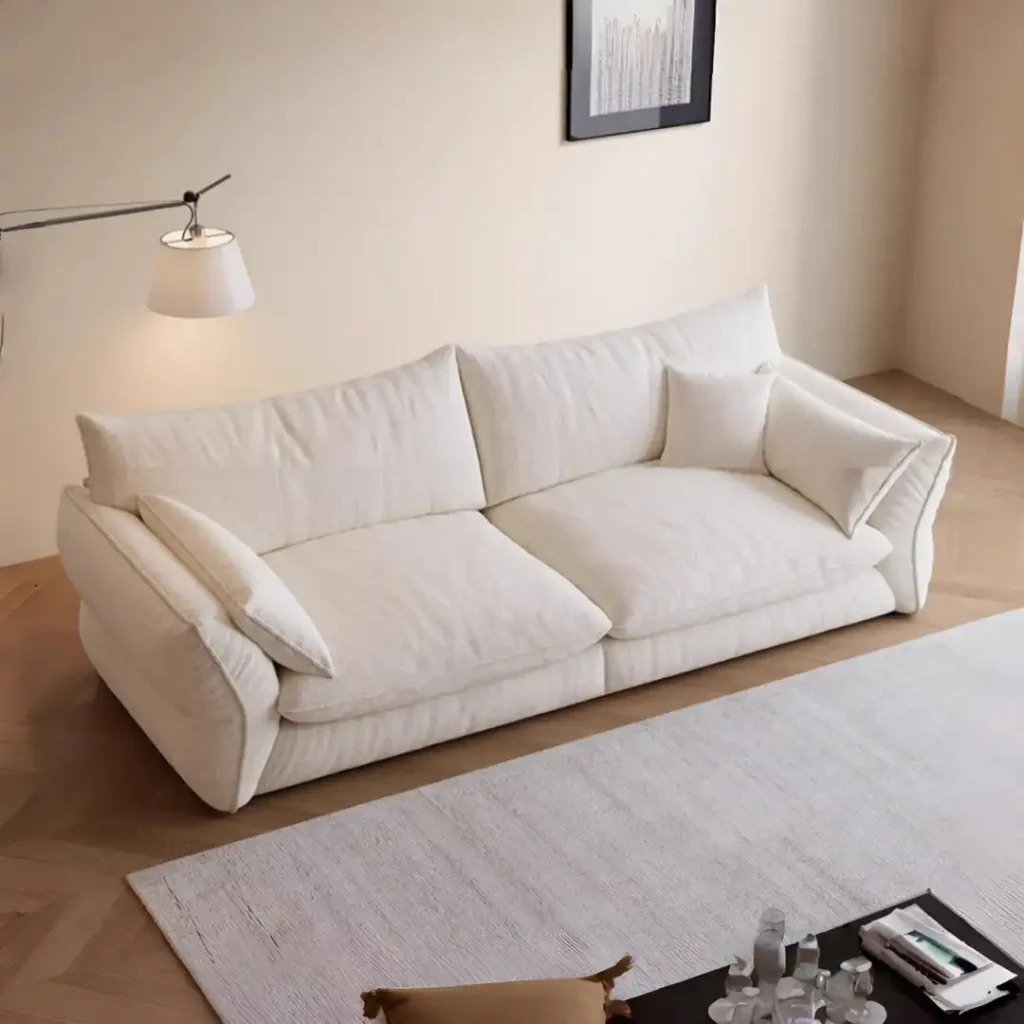
This cream sofa has a much softer personality. The generous cushions make it look like the kind of sofa you can actually sink into at the end of the day.
Cream upholstery can work beautifully in a small apartment because it keeps the room feeling bright. The downside is obvious, though: spills and everyday marks are easier to see.
If you love this look, think about how you really use your living room before choosing the fabric.
Do you eat dinner on the sofa? Have pets? Drink coffee while working from home?
If the answer is yes to several of those, look for a removable, washable, or performance-style upholstery rather than choosing based on appearance alone.
For a similar look without the worry:
- Choose a warm ivory rather than bright white.
- Use washable throws.
- Keep a small stain-cleaning kit nearby.
- Choose removable cushion covers when possible.
6. Scandinavian-Style Gray Loveseat
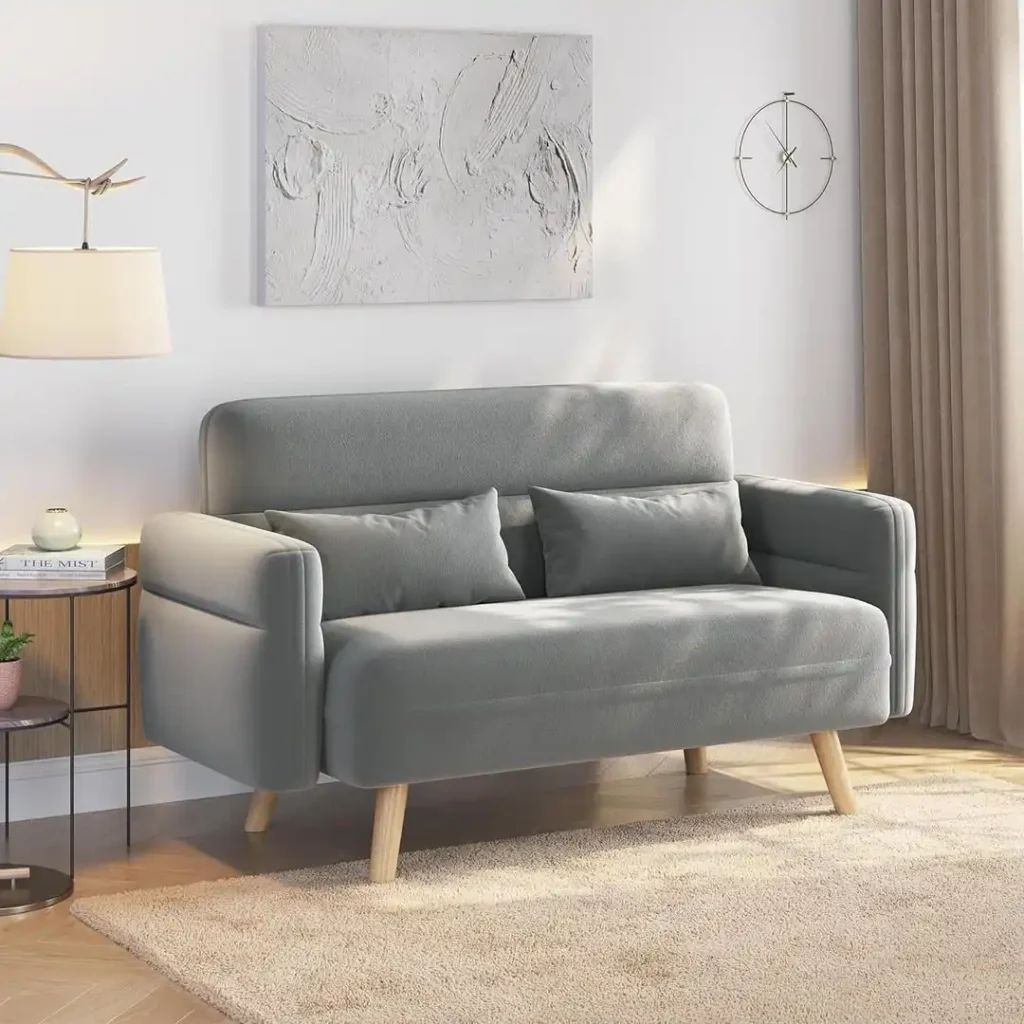
A gray loveseat with simple lines is almost a small-apartment classic.
This design works because it doesn’t demand much visual attention. The slim proportions, raised legs, and neutral upholstery allow the rest of the room to breathe.
That’s particularly useful if your apartment has an open-plan kitchen and living area. You don’t want the sofa to compete with cabinets, dining furniture, and everything else happening nearby.
A loveseat can also be surprisingly versatile. Two people can sit comfortably, while one person can stretch out without needing a full-size three-seat sofa.
Best for: renters, minimalist interiors, small living rooms, and rooms where you need to preserve walking space.
7. Soft Teal Velvet Loveseat
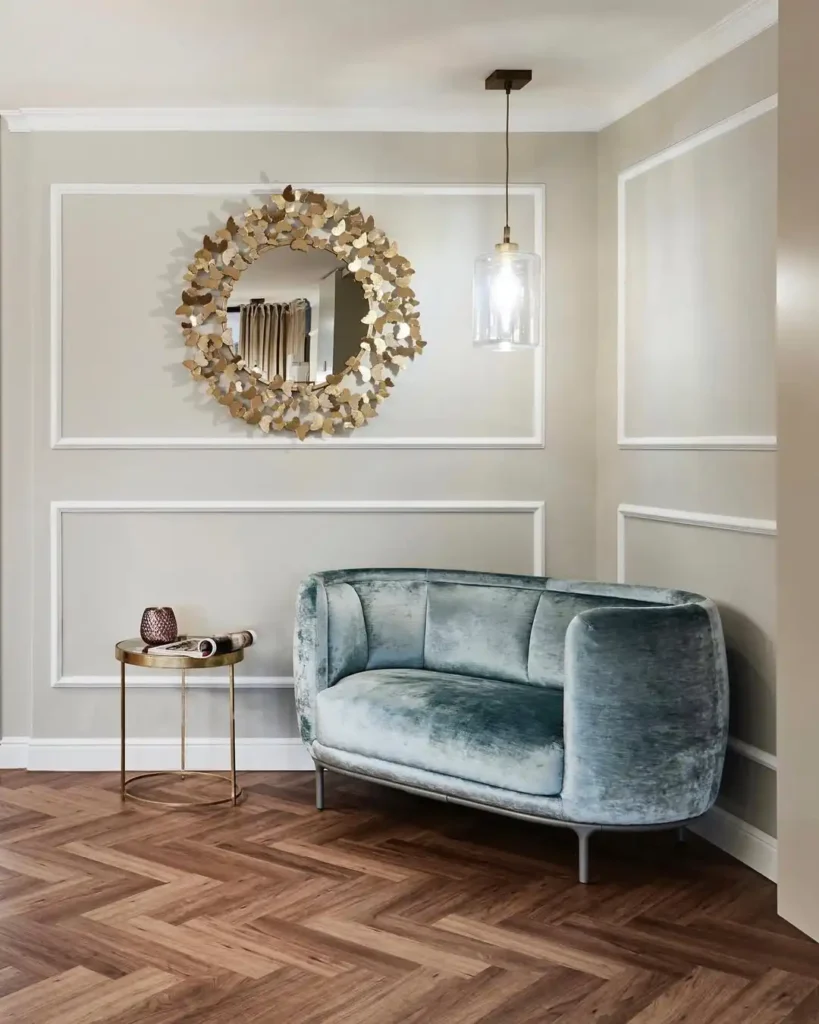
If you’re worried that a small sofa will make your apartment look boring, go for color.
This soft teal loveseat proves that a compact sofa can become the star of the room. Velvet gives the color more depth, so the upholstery changes slightly as light hits it.
That’s part of what makes velvet interesting in a small space. You can keep the rest of the room fairly simple and let the sofa provide most of the visual character.
A small round side table works especially well beside a loveseat because it doesn’t create another hard rectangular shape.
Try this combination:
- Teal or blue-green upholstery
- Warm brass or gold accents
- Cream walls
- Light wood flooring
- A small round table
It feels collected without needing a lot of accessories.
8. Navy Sectional With Tapered Legs
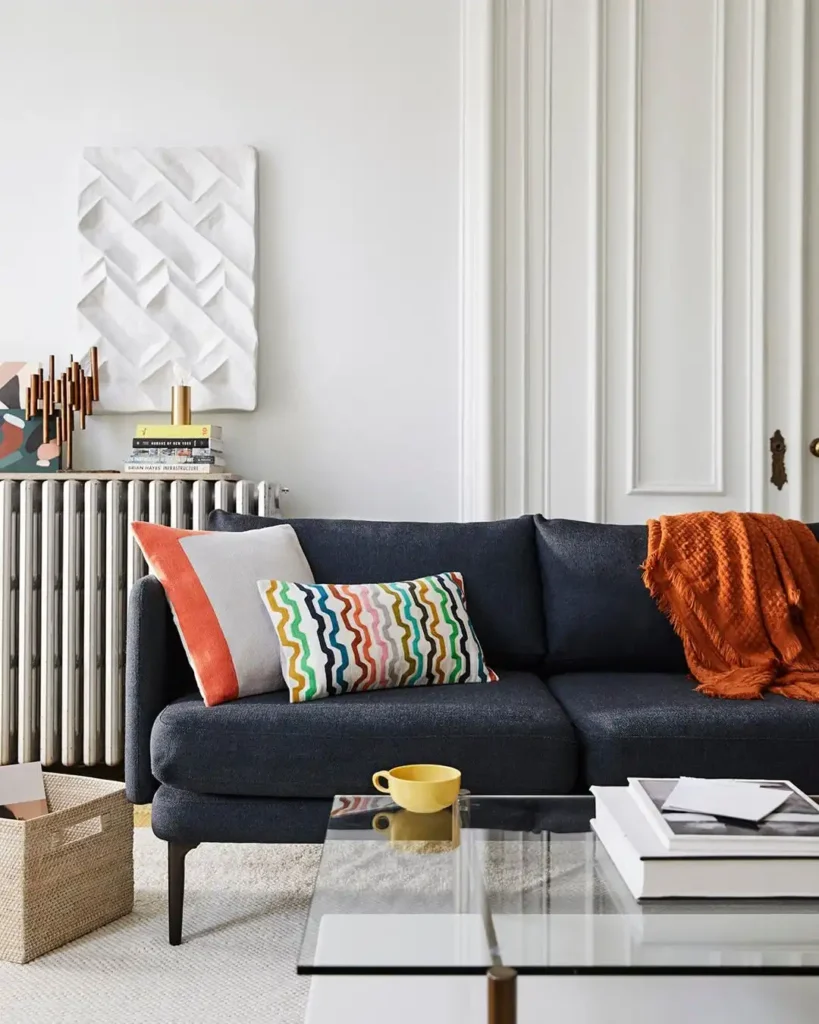
A sectional might sound like the last thing you’d want in a small apartment, but the right compact sectional can actually be more useful than a conventional sofa and chair combination.
This navy design uses tapered legs, which keeps the lower portion visually open. The darker color gives it a strong presence, but the clean shape prevents it from becoming too bulky.
The bigger lesson here is about choosing one substantial seating piece instead of trying to squeeze several smaller ones into the room.
A sofa plus two chairs may technically provide more seating, but it can also create awkward gaps and make the room harder to walk through.
Before buying a sectional, measure:
- The full wall length.
- The chaise projection.
- Doorways and elevators.
- The distance from the sofa to the coffee table.
- The path you’ll use to move around the room.
A sectional that fits on paper may still be impossible to get through the front door.
9. Cream Corduroy Corner Sofa
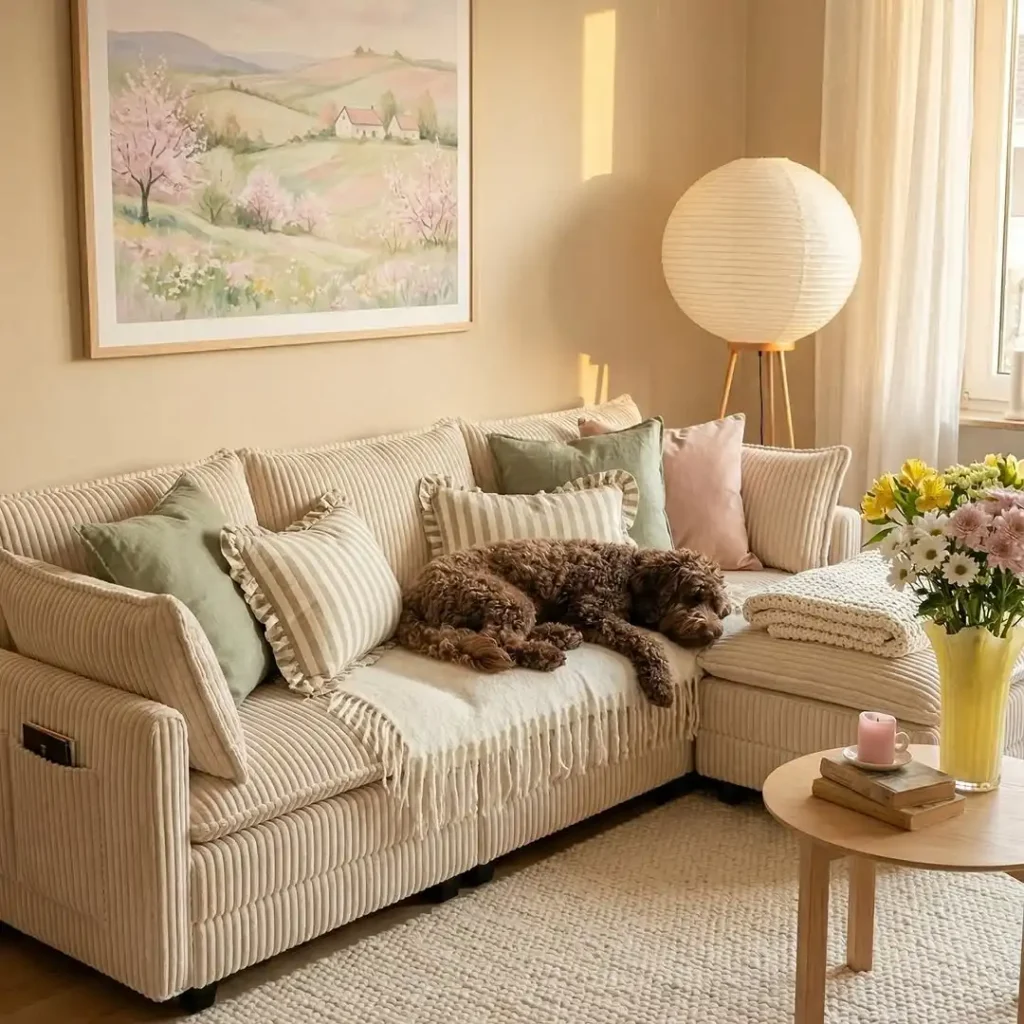
This is the kind of sofa that makes you want to stay home.
The ribbed cream upholstery adds texture without needing a strong pattern, while the corner shape makes good use of the available seating area. Instead of leaving the corner of the room unused, the sofa turns it into a comfortable lounging spot.
This style works particularly well for people who like relaxed interiors.
And if you have a pet, the washable-cover question becomes even more important. A light corduroy-looking fabric can be beautiful, but maintenance should be part of the decision from day one.
For small apartments with pets: consider darker throws on the most-used section and removable covers where possible. You don’t have to sacrifice a light, cozy aesthetic just because your sofa gets real-life use.
10. Casual Three-Seat Sofa in Heathered Gray
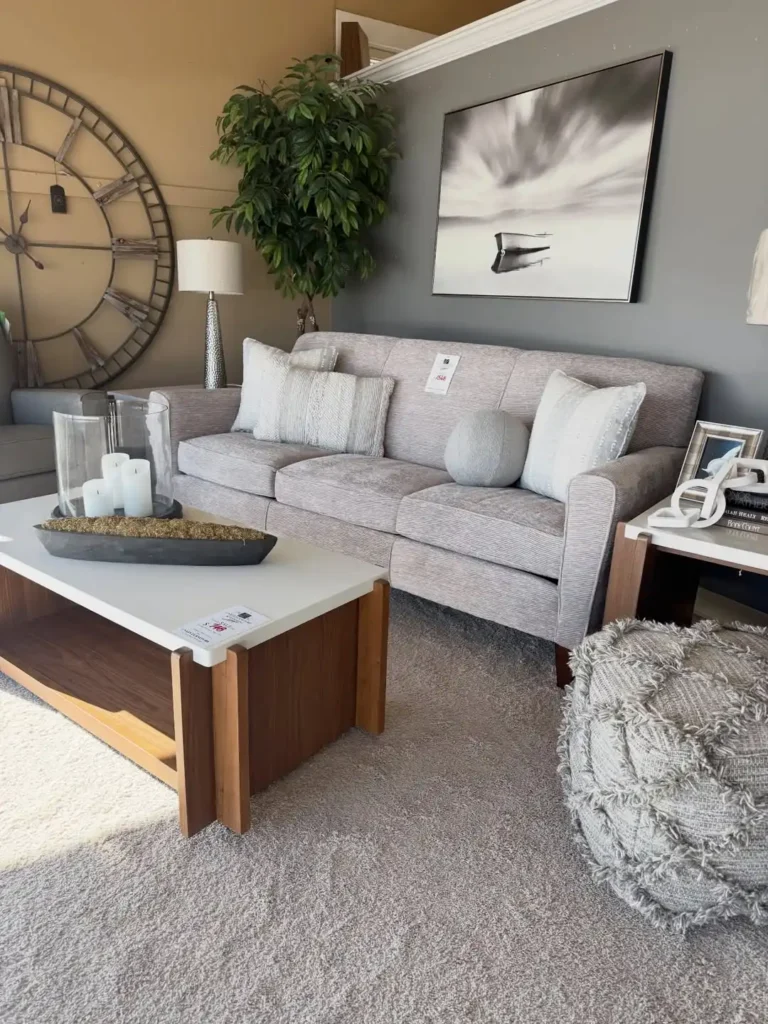
Sometimes you simply need a proper three-seat sofa.
This heathered gray design is a good example of how to make one work in a modest room. The color is quiet, the arms aren’t excessively wide, and the upholstery has enough texture to keep the neutral shade from feeling flat.
Gray is also forgiving when you want to change your decorating style later.
Add rust-colored cushions in autumn. Switch to pale blue and cream in spring. Change the rug and artwork, and the sofa can stay.
One thing I’d avoid: buying an enormous three-seat sofa just because the room technically has enough wall space.
Measure the sofa depth, too. A sofa can be short enough to fit against a wall but so deep that it leaves almost no room in front of it.
11. Clean-Lined Gray Sofa With a Wood Base
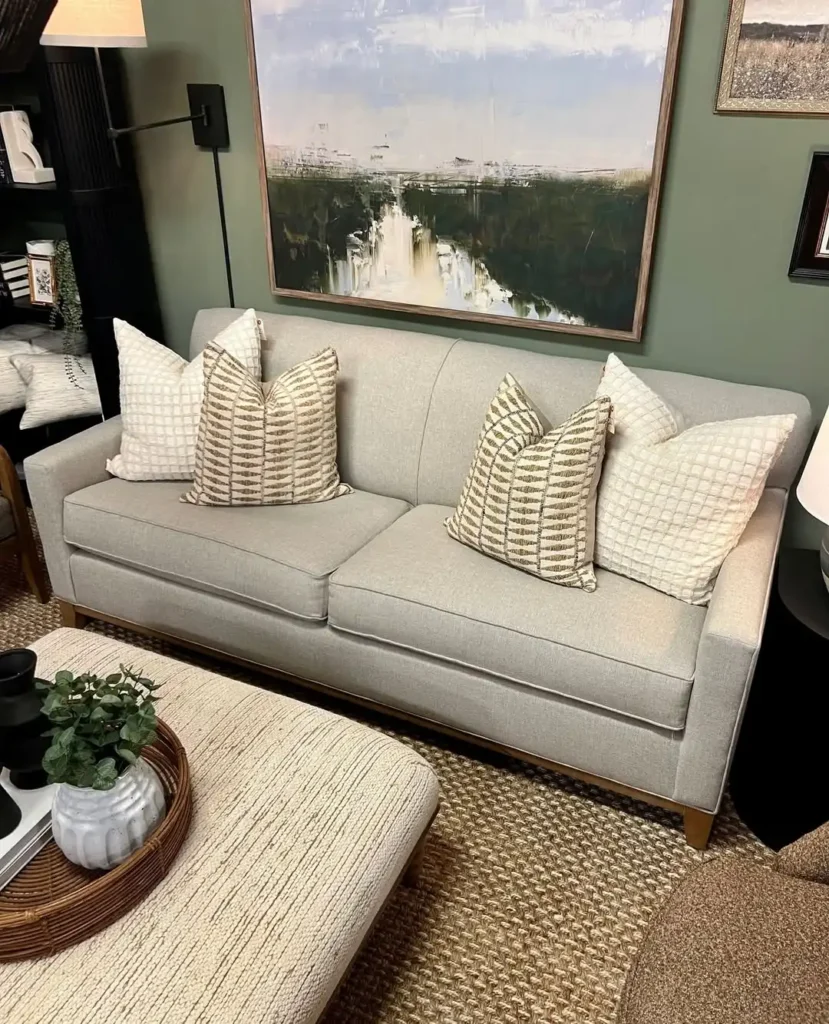
For a small apartment with a modern or transitional interior, a clean-lined gray sofa with a wooden base can be a very safe choice.
The wood brings some warmth to the gray upholstery, while the straight silhouette keeps the room looking tidy.
I particularly like this approach for apartments with limited natural light. Gray can sometimes feel cold, but adding warm wood around it changes the balance.
You could repeat the wood tone through a coffee table, shelving, picture frames, or a small side table.
Keep the room from feeling too gray: introduce one warmer material. It could be wood, woven baskets, a tan cushion, or a natural-fiber rug.
You don’t need to completely redesign the room.
12. Low-Profile Linen Sofa in Slate Blue
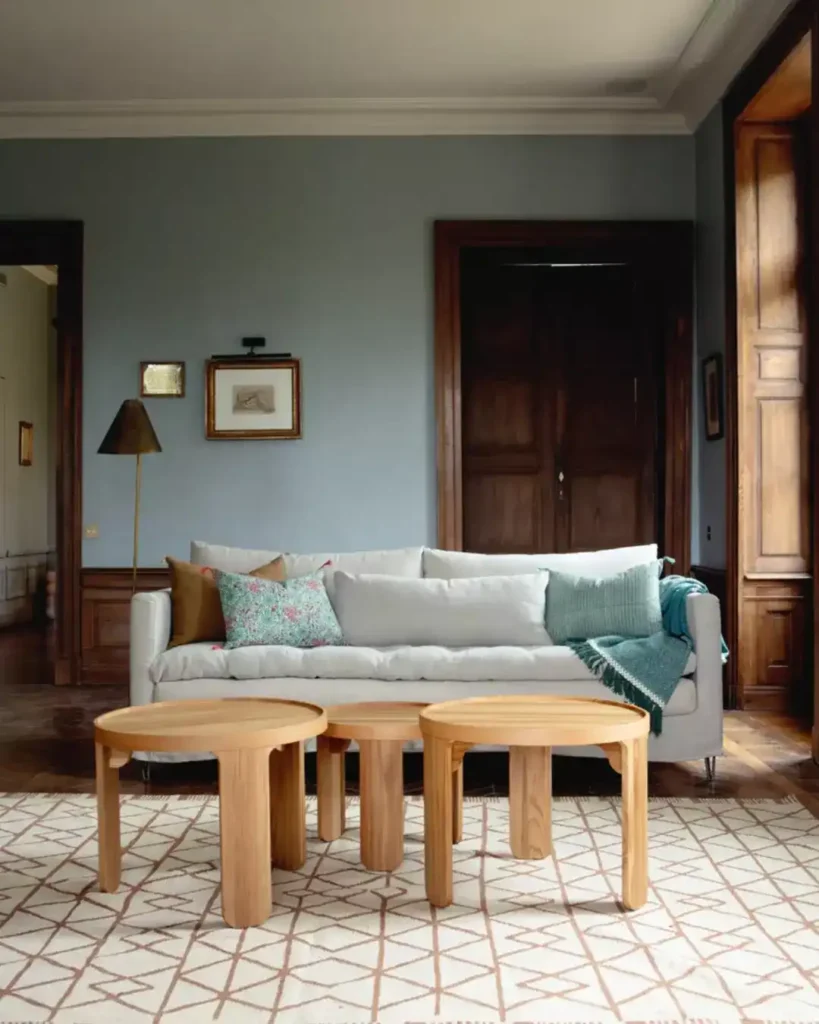
A low sofa can make a room feel wider because it doesn’t take up as much visual height.
This slate-blue linen style has a relaxed, almost architectural quality. Its lower profile works particularly well in rooms with large windows because it doesn’t compete with the view or block the natural light.
This is a useful trick for apartments where the living room and windows are close together.
However, low sofas aren’t for everyone. If you have difficulty getting up from low seating, test the height in person before buying.
Think about comfort as well as appearance:
- Sit all the way back.
- Check where your knees sit.
- Make sure the seat isn’t too deep.
- Test the back support.
- Sit for at least several minutes.
A showroom sit-down tells you much more than a product photo.
13. Button-Tufted Gray Chesterfield Sofa
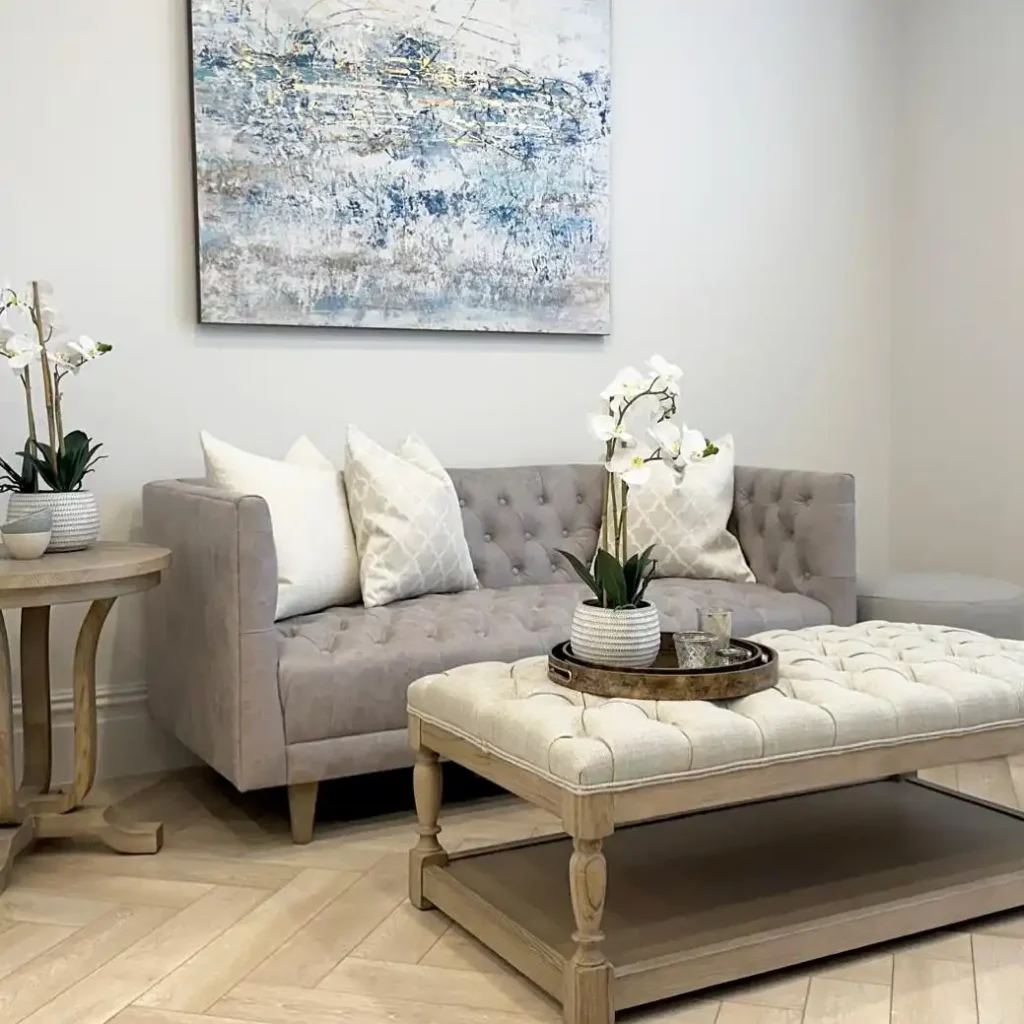
A Chesterfield-inspired sofa brings a completely different mood to a small apartment.
The button tufting gives the sofa visual detail, so you can keep the rest of the room fairly understated. It can work especially well in classic apartments with molding, fireplaces, older hardwood floors, or traditional architectural features.
The gray upholstery keeps the design from becoming overly formal.
If you love traditional furniture but don’t want your apartment to look like a formal sitting room, mix the sofa with something contemporary. A simple coffee table or modern lamp can make the combination feel much more relaxed.
Design trick: don’t try to match every piece of furniture. A little contrast usually makes a small room feel more natural.
14. Raw Linen English Roll-Arm Sofa
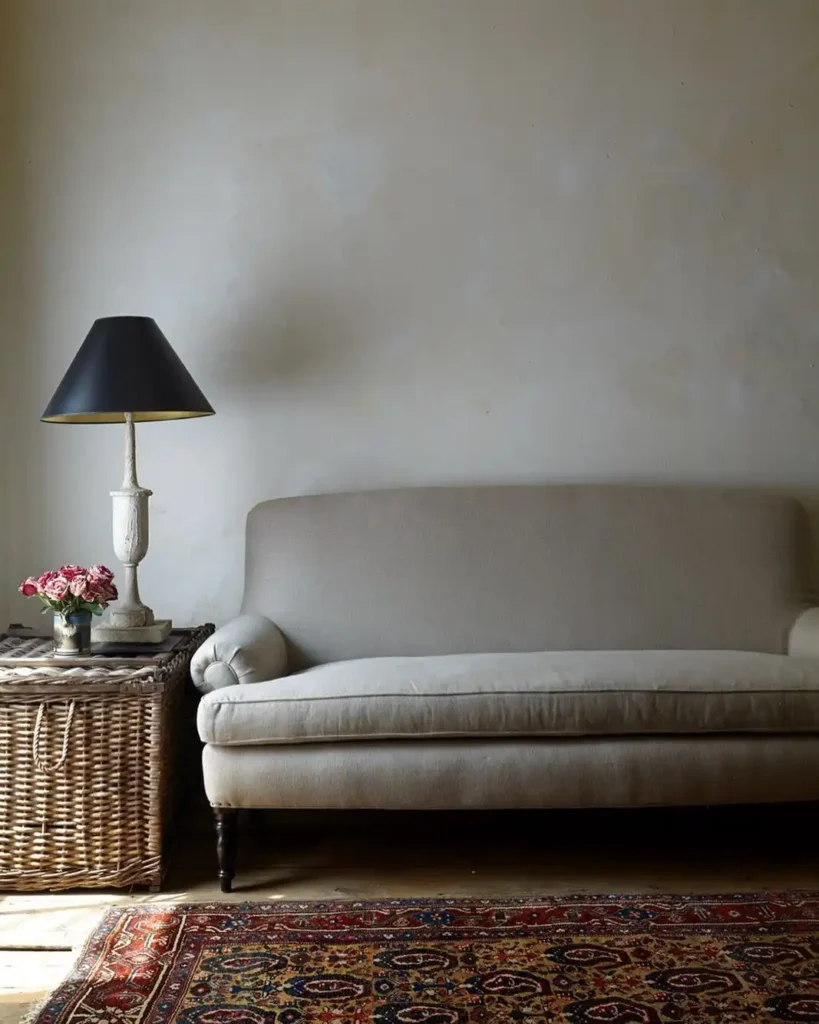
This style has a softer, more traditional country-house feel.
The rounded arms and natural linen upholstery make it look comfortable without being overly casual. It’s especially nice for apartments where you want the living room to feel warm and lived-in rather than heavily styled.
Natural linen also has a quality I like for small spaces: it adds texture while staying visually quiet.
Pair it with a woven basket, an old wooden side table, or a patterned rug and you’ve got a room that feels collected over time.
If you have a small room, pay attention to the arms. Roll arms can take up more usable width than slim arms, so compare the actual seating width rather than looking only at the overall sofa dimensions.
15. Curved Bouclé Sectional
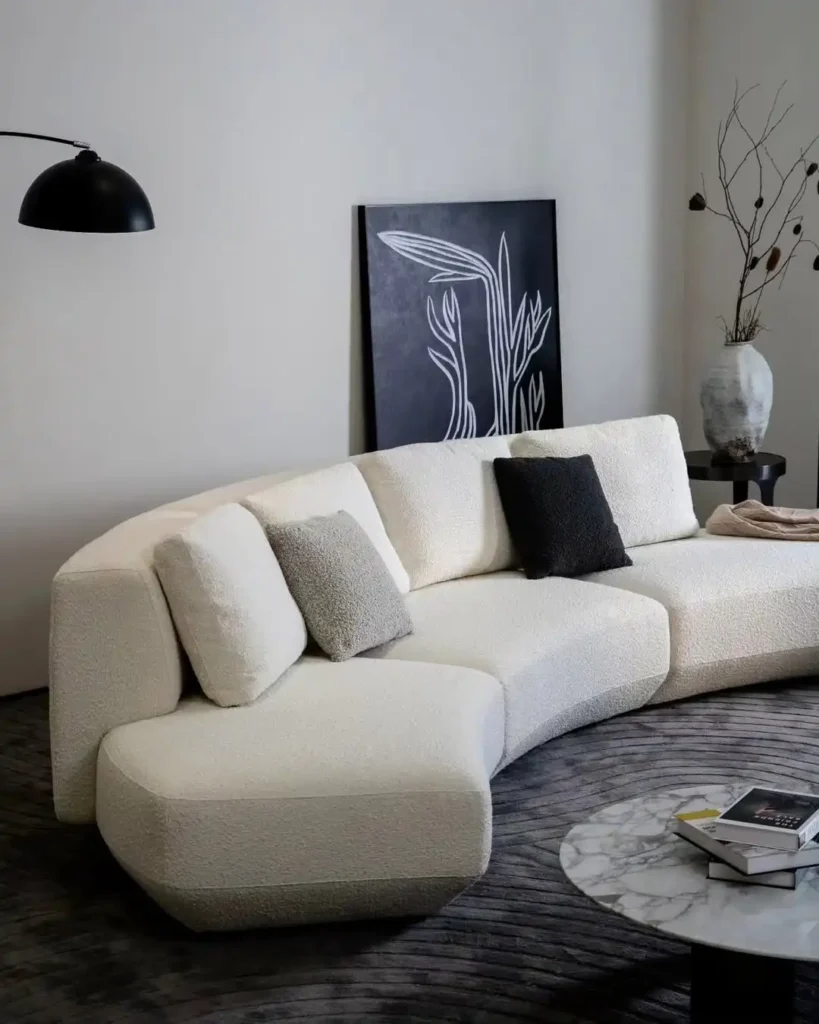
A curved sectional can be an excellent solution when you want something soft and sculptural in a modern apartment.
The rounded shape removes some of the hard corners you see in traditional sofas, while bouclé adds a tactile, cozy quality. It also gives you plenty of lounging space without relying on multiple chairs.
This is probably the boldest silhouette of the group, so I’d give it some breathing room.
Don’t push every piece of furniture against the walls just because the apartment is small. Sometimes pulling the sofa slightly away from the wall creates a better conversation area and makes the room feel intentionally arranged.
The important thing is to measure the curve, not just the widest point. A rounded sectional can project farther into the room than you expect.
How to Choose the Right Small Sofa for Your Apartment
Looking at sofa styles is the fun part. Measuring is where the real decision happens.
Before you fall in love with a particular shape, measure the room and mark the sofa’s footprint on the floor with painter’s tape. Leave the tape there for a day if you can.
Walk around it.
Open nearby doors. Pull out drawers. Sit where the coffee table would go. Check whether two people can pass through the room without turning sideways.
You’ll learn more from doing this than staring at a floor plan.
Don’t Forget the Sofa Depth
Width gets most of the attention, but depth can be the bigger problem.
A 78-inch sofa that’s only 34 inches deep may feel much easier to live with than a 72-inch sofa that’s 42 inches deep.
For a small apartment, look for a proportion that gives you enough sitting space without pushing the coffee table halfway across the room.
Choose Legs Carefully
Furniture with visible legs usually feels lighter than furniture with a solid base.
That doesn’t mean every small sofa needs tall legs. A low-profile sofa can look great too. But if your room is already crowded, some visible floor beneath the sofa can help.
Think About Your Coffee Table
Don’t choose the sofa in isolation.
A bulky coffee table sitting directly in front of a deep sofa can make a small living room feel cramped very quickly. Round or oval tables are often easier to move around, especially when walking space is limited.
A small nesting table can also be useful because you can spread the pieces out when you need them and tuck them away afterward.
Use the Wall Color to Your Advantage
A sofa doesn’t always need to contrast sharply with the wall behind it.
A gray sofa against a soft gray wall can almost disappear into the background, making the room feel calmer. Likewise, a cream sofa against a warm white wall creates a continuous visual line.
If you want the sofa to stand out, use color or texture instead of adding lots of decoration around it.
Make the Sofa the Starting Point
Once you’ve chosen the sofa, build the rest of the room around it.
For a colorful sofa, keep the larger pieces neutral. For a neutral sofa, you have more freedom with artwork, cushions, rugs, and curtains.
And don’t fill every empty corner.
A small apartment needs a little empty space to feel comfortable. One plant, one lamp, and one good piece of artwork can often do more than ten little decorative objects.
The Small-Sofa Rule I Come Back to Most
When you’re furnishing a small apartment, ask yourself one simple question:
Can I comfortably live around this sofa?
Can you walk past it? Can you open the window? Can someone sit down while another person walks through the room? Can you clean underneath it? Can you bring groceries in without bumping into the arm?
Those details aren’t as exciting as choosing a fabric, but they’re what you’ll notice every day.
The 15 sofas here prove that a small living room doesn’t have to mean giving up style. You can go vintage with a dusty pink settee, relaxed with linen, modern with a curved bouclé sectional, or classic with a tufted sofa. The best choice is the one that fits both your room and the way you actually use it.